



Rachel Scott opened Diotima’s season on February 15 with a collection that felt less like safe commerce and more like a provocation—part art show, part craft manifesto, part political statement. Rather than lean on familiar fashion tropes, Scott mined the layered paintings of Wifredo Lam and Caribbean textile traditions, translating painterly ideas into clothes shaped by handwork and community collaboration. The runway also announced a new partnership with Refugee Atelier, a New York nonprofit that pays and trains refugee textile makers, threading ethical commitment through the label’s aesthetic.
Reimagining Lam, not reproducing him
Scott’s designs didn’t copy Lam’s canvases so much as interpret their formal and political impulses for the body. Fabrics were constructed to echo the artist’s textures; palettes and staging referenced his visual logic without resorting to literal motifs. Sculptural intarsia, Cubist-like fabric assemblies and tubular knits ending in fringe suggested natural forms—sugarcane, heliconia—plants whose presence carries deep Caribbean resonance. Small decisions—stitch direction, seam placement, the way fringe moves—acted like a translator, refracting Lam’s grammar into garments that move.
The runway’s design choices reinforced that translation. Muted earth tones sat beside sudden, saturated pigment; matte woven panels alternated with glossy, lacquered surfaces. The result read as lyrical and coded: clothing that asks to be read, not merely admired. A thoughtfully curated soundtrack—Cuban rhythms threaded with Nina Simone and Stravinsky—created a multisensory bridge to Lam’s world, acknowledging his classical affinities while rooting the show in diasporic sound.
Craft as politics
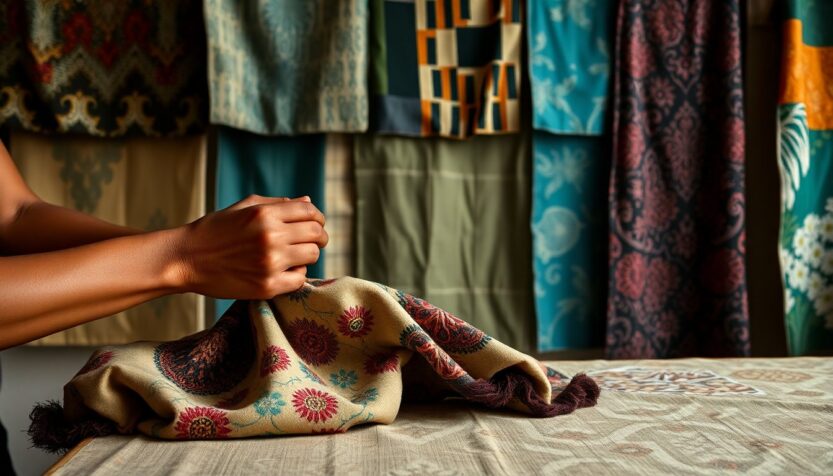
At the heart of the collection was handwork. Crochet from Jamaica, precise finishing, and visible artisanal techniques gave the pieces their practical strength and cultural specificity. Scott positioned these methods as more than decoration: they are political gestures that foreground labour, memory and collective creativity. Carnival-inspired silhouettes and street-inflected detailing referenced long-standing traditions of resistance, where costume and celebration become tools for social critique.
The collaboration with Refugee Atelier deepened that intent. By commissioning paid work from displaced female artisans, Scott expanded Diotima’s commitments beyond provenance and into living labor practices—fair wages, technical exchange and a broadened handmade vocabulary. Those decisions change how luxury is made: attention shifts from surface glamour to who constructs the objects and under what conditions.
Context, curation and conversation
Setting and curation mattered. Part of the runway was staged in a repurposed estate that underscored the collection’s dialogue with place and history; another presentation occupied a raw Financial District space in Manhattan painted a burgundy tone that echoed a room from Lam’s MoMA retrospective. Organizers paired Scott with the estate’s curatorial team to present garments alongside archival material and community testimony, framing the show as both exhibition and statement.
Central to the project was Scott’s collaboration with the Wifredo Lam estate and Eskil Lam, who provided access to archives and personal insights. That partnership supplied conceptual depth and shaped critical reception: provenance here functions as both inspiration and legitimizing frame, complicating questions about authorship and appropriation. Expect those debates to intensify as buyers, critics and institutions weigh the collection’s aesthetic and ethical claims.
What this means for Diotima and beyond
Scott’s dual role—leading Proenza Schouler while directing Diotima—illustrates how institutional platforms can amplify underrepresented makers and make ethical sourcing visible. The show worked as a practical experiment in aligning design principles with collaborative production: an established visual language refitted into garment engineering and everyday wear, made in part by makers who have historically been sidelined.
More than a tribute, the collection reads as a public argument about cultural continuity, influence and responsibility. It invites a broader conversation about how fashion borrows, credits and compensates. Whether buyers embrace the clothes or critics fixate on lineage, the questions raised here—about who gets named, who gets paid, and how we translate art across media—will shape future collaborations and the discourse around craft, provenance and power in fashion for some time to come.