

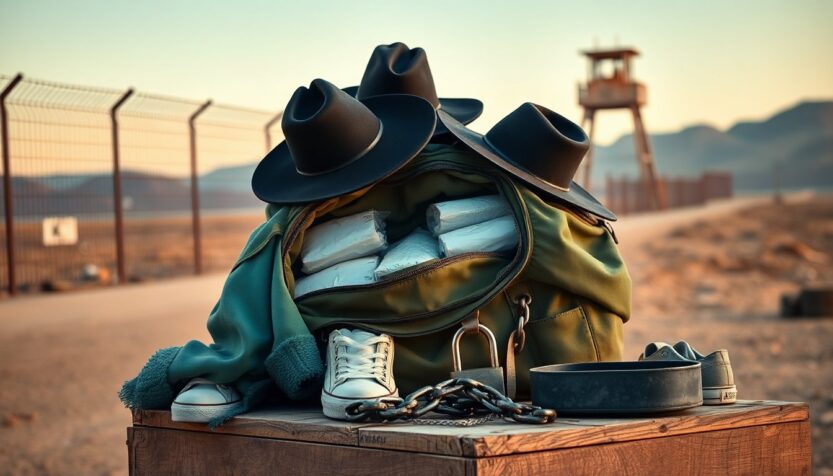
The third season of Euphoria opens by throwing a stark spotlight on how far Zendaya’s Rue Bennett has fallen since high school. In a jarring tonal shift, the premiere shows Rue working as a drug mule, carrying fentanyl across the Mexican‑American border for her former supplier, Laurie (played by Martha Kelly). That arrangement collapses into a debt trap when Laurie demands an astronomical payment — a dramatic escalation from an earlier incident in which $10,000 worth of product was destroyed. The result: Rue is squeezed into a relationship that functions like an indentured servant agreement, forced to pay off what she owes by continuing to run contraband.
The season’s creative leader, Sam Levinson, intentionally reframes the ensemble’s world as a kind of modern Western, drawing on cinematic touchstones and frontier imagery to recast adult life as lawless and perilous. Against that backdrop, new and familiar faces jockey for control of Rue’s fate. A second, very different antagonist emerges in Alamo Brown, a cowboyish club owner played by Adewale Akinnuoye‑Agbaje. Their collision sets up the central conflict of the premiere: two criminal empires, overlapping loyalties, and a single young woman trapped between them.
Rue’s new role: smuggling, risk, and consequences
The premiere investigates how addiction and survival can push a teenager into the logistics of trafficking. Rue’s method involves body‑packing fentanyl and collaborating with acquaintances like Faye (played by Chloe Cherry) to move shipments. Levinson stages harrowing sequences — including a scene of swallowing drug‑filled balloons coated in petroleum jelly — that emphasize both the physical hazards and the moral rot of that world. These moments underline the show’s recurring theme: adolescence bleeding into adult jeopardy, where a single misstep can compound into catastrophe under the pressure of compound interest style debts and criminal reprisals.
What began as an impulsive act in an earlier season — Rue’s mother flushing drugs away — ripples outward. Laurie initially inflates the stakes dramatically, naming a multimillion‑dollar figure before settling for a six‑figure sum as a way to bind Rue into servitude. The dynamic is transactional and predatory: Rue performs dangerous runs to chip away at her obligation while navigating betrayal, temptation, and the very real possibility of violence from competing operators.
Two bosses, two temperaments
Laurie: deadpan menace and chaotic authority
Laurie remains one of the series’ most unsettling presences. Martha Kelly’s portrayal emphasizes a cold, offhand brutality — a character who can be both unexpectedly comic and terrifyingly ruthless. Laurie’s crew includes figures like Harley (James Landry Hébert), his son Wayne (Toby Wallace), and enforcers who smooth the mechanics of her operation. Kelly describes Laurie’s season three incarnation as less singularly monstrous and more fallible in ways that make her ironically more enjoyable to play: she miscalculates, she gaffes, and yet she clings to power through intimidation and opportunism.
Alamo Brown: cowboy iconography and a complicated mentor
Alamo Brown arrives as a contrasting form of authority — a gun‑toting, strip‑club owning figure with a personal mythology rooted in Western imagery. Played by Adewale Akinnuoye‑Agbaje, Alamo was cast after discussions that included the actor’s reflections on cinematic influences such as Sergio Leone and classic Black Western performers. He is both admiring and suspicious of Rue: her audacity draws his attention, and in the premiere he subjects her to a literal and symbolic test — a pistol target exercise with an apple balanced on her head, an echo of a William Tell motif. That trial reveals to him what he needs to know about her composure and usefulness, setting up a mentor/antagonist relationship that veers between paternal and predatory — an oscillation the actor describes as a mentor‑disciple seesaw.
On set dynamics and storytelling choices
Behind the camera, the actors approached the material in different ways. Kelly learned of her return to the show in November of 2026 and often worked from isolated episode scripts, which preserved a sense of surprise about the wider narrative. Akinnuoye‑Agbaje, by contrast, received broader access to the season’s scripts and used that overview to shape Alamo’s long arc, though he notes the production remained fluid, with scenes evolving during shooting. Ensemble chemistry was cultivated off camera as well: Laurie’s team found levity together, while Alamo’s crew bonded through music and ritual before key scenes, aiming to make their on‑screen ties feel lived‑in.
As the premiere closes, the series stakes are clear: a feud is escalating between two criminal figures over a young woman who has become both asset and liability. Levinson’s Western framing amplifies the show’s moral ambiguities, turning neighborhoods into frontier towns where law, loyalty, and survival collide. For viewers, Rue’s path — from teenager to trafficker to potential apprentice in darker trades — raises urgent questions about choice, coercion, and the costs of growing up in a world that treats youth as expendable.