The BBC once paired two Irish stand-up artists, Dara Ó Briain and Ed Byrne, for a three-part travel series that roamed through Southeast Asia. Their Malaysian episode ended with a memorable line: “If you want to see all of Asia, come to Malaysia,” followed by a tongue-in-cheek jab that Thailand “just has Thai food.” The humor masked a sharp observation – the nation’s cuisine is a living map of its layered past.
Malaysia’s identity is built on a centuries-old crossroads of sea routes that converged in the Strait of Malacca. When the British declared George Town a free port in 1786, merchants from China, India, the Malay archipelago and farther afield arrived with spices, techniques, and traditions. Over time, these influences blended, creating a gastronomic tapestry that feels like a global buffet on a single plate.
Comedy meets cuisine: the BBC road to Mandalay
During the 2024 broadcast, the duo’s banter highlighted how food can act as a cultural shortcut. Dara’s comment about Malaysia being a “buffet of different cultures” wasn’t just a punchline; it reflected the reality that every stall, shop, and kitchen in the country carries a story of migration, trade, and adaptation. The series, produced by the BBC, used humor to guide viewers into the deeper narrative that food offers – a narrative that still resonates with travelers and retirees alike.
Penang’s hawker culture: a living museum
In Penang, hawker centres and traditional coffee shops, known locally as kopitiams, serve as the stage for daily culinary theater. Long queues often snake around popular stalls, where families may have been perfecting a handful of recipes for generations. Unlike a Western restaurant with an extensive menu, a typical stall focuses on one or two signature dishes, allowing mastery to shine.
Take char kway teow, a wok-fried rice-noodle dish rooted in Chinese cooking. In Penang, the recipe has been re-imagined with local shrimp, Chinese sausage, and a smoky “wok hei” that cannot be reproduced elsewhere. Penang laksa, a tangy fish and tamarind noodle soup, intertwines Malay sour notes with Indian spices, illustrating the hybrid nature of the island’s palate. Nasi kandar, a rice bowl surrounded by an array of curries, tells the tale of the Indian Muslim community that arrived in the 19th century. Perhaps the most emblematic is Peranakan or Nyonya cuisine, a seamless blend of Chinese techniques and Malay ingredients that has become a hallmark of Penang’s identity.
From daily bites to UNESCO recognition
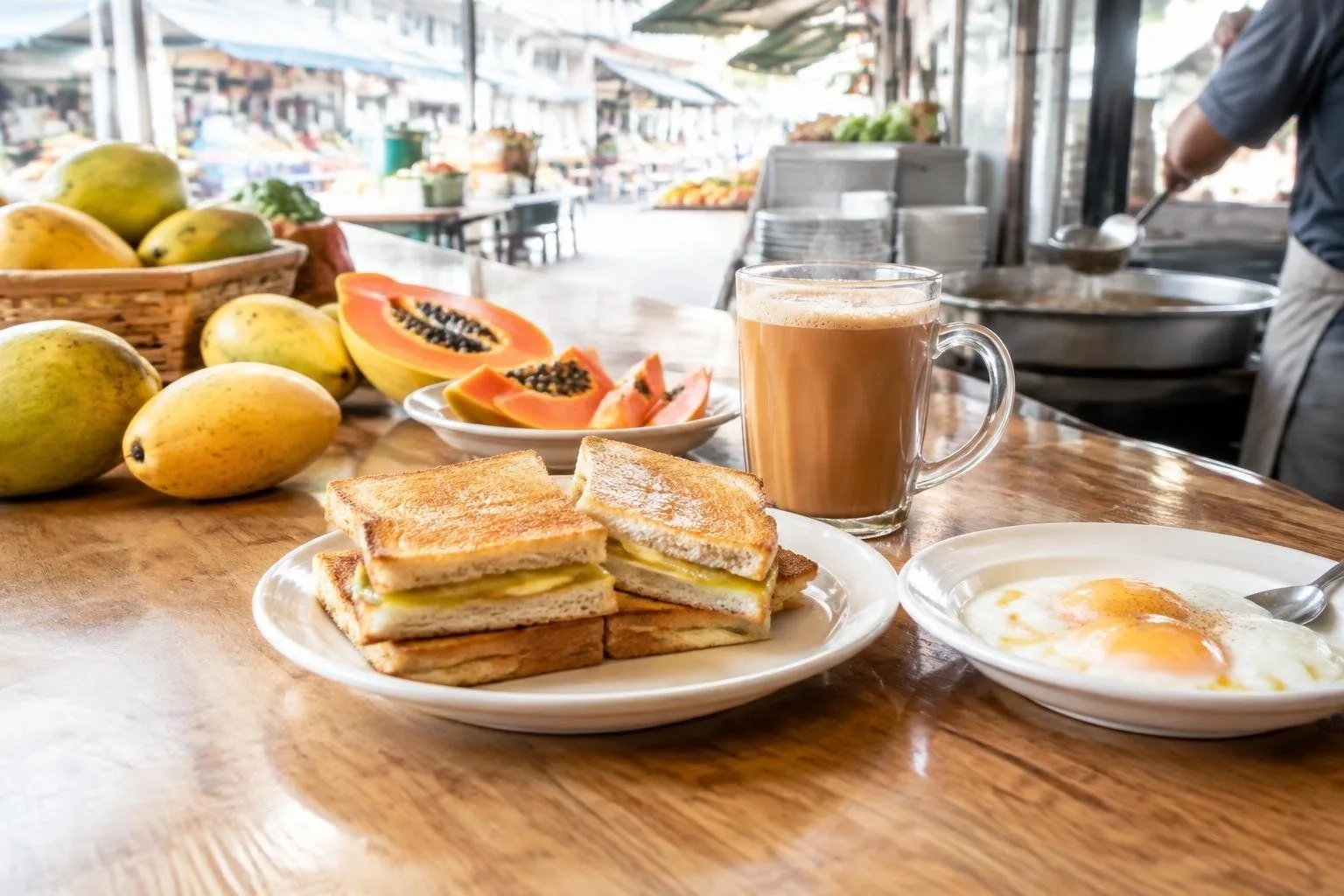
Food in Malaysia is not reserved for special occasions; it threads through every moment of the day. A typical morning might begin with nasi lemak – rice simmered in coconut milk, served with sambal, anchovies, and peanuts – or with roti canai, an Indian-influenced flatbread paired with curry. These dishes are often enjoyed alongside a glass of teh tarik, the nation’s beloved pulled tea made with condensed milk.
In 2024, UNESCO added Malaysia’s breakfast culture to its Intangible Cultural Heritage of Humanity list, acknowledging not just the dishes but the communal rituals that surround them. The inscription highlights how morning meals function as social glue, bringing together people of diverse faiths and backgrounds in shared spaces.
Food as a bridge for new residents
For anyone contemplating a relocation later in life, the daily act of eating becomes a subtle integration tool. Regular visits to a favorite hawker stall or a neighborhood kopitiam can transform a stranger into a familiar face. Ordering a bowl of laksa, learning the local term for “spicy,” or simply sharing a table with locals can open doors to language, customs, and friendships without the pressure of formal clubs or events.
Nevertheless, Malaysia’s diversity also respects dietary boundaries. Religious observances, such as halal requirements, and personal preferences shape what is offered at each stall. This coexistence of shared meals and distinct practices underscores the country’s ability to celebrate both unity and individuality on the same plate.
In essence, the jokes made by Dara and Ed illuminate a deeper truth: Malaysia’s food scene is a microcosm of its history, its peoples, and its future. Whether you are a tourist sampling iconic dishes or a retiree building a new routine, the flavors you encounter are both a taste of the past and a passport to belonging.