

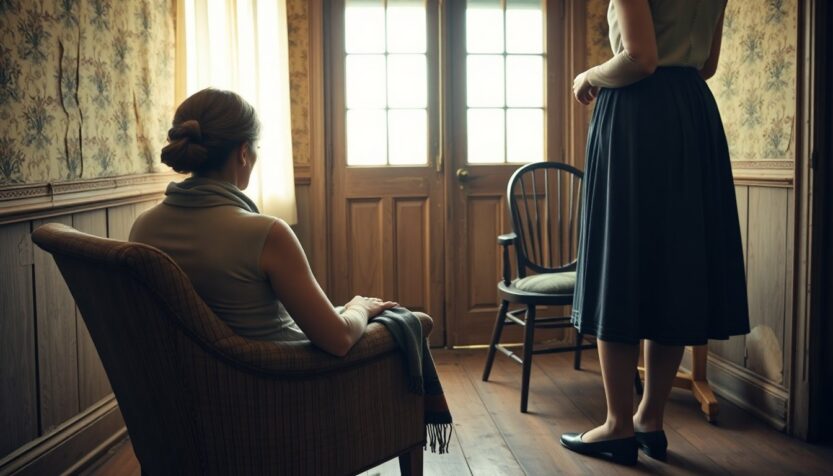
Grey Gardens (1975) still refuses to sit quietly in any single category. The Maysles brothers captured Edith “Big Edie” Bouvier Beale and her daughter Edith “Little Edie” living in a crumbling East Hampton house — relatives of Jacqueline Kennedy Onassis, yes, but above all two compelling, complicated people. Over the decades the film has been hailed as a compassionate character study and denounced as an exploitative spectacle; both readings feel plausible because the film itself is so ambivalent. Its images are intimate and arresting, and they also invite uncomfortable questions about power, consent and responsibility.
How the film was made helps explain that tension. The Maysles practiced cinéma vérité: long stretches of observation, handheld cameras, little staging and minimal voiceover. That method can reveal the rhythms of ordinary life in stark, unforgettable detail — the way a remark lands, the clutter of a room, the cadence of daily routines. It also places most editorial power in the hands of those behind the camera and the editing table. What is filmed, what is left on the cutting-room floor, and how shots are sequenced all shape the story that audiences finally see.
Technically, Grey Gardens favors immediacy over polish. Ambient sound remains; lighting and framing often feel improvised. Those choices produce a raw visual texture that heightens intimacy. Yet editing creates the narrative pulse: juxtaposing gentle humor with scenes of hardship, repeating certain motifs (clutter, cats, flamboyant wardrobes) until they become shorthand for the women themselves. Critics point out — correctly — that such repetitions can ossify a person into an image, turning messy lives into tidy symbols for a wider audience to consume.
The ethical questions linger. Big Edie and Little Edie appear to consent to being filmed, but did they understand how widely the footage would circulate or how it would shape their reputations? The filmmakers screened and distributed the documentary in festivals and on broadcast platforms, raising practical questions about who benefited and who paid the cost. Once private life becomes public property, its owners don’t always control the terms of that exposure.
Editors wield real power in observational documentaries. Three mechanisms are particularly important. First, selection: deciding which moments are captured (and which are ignored) steers what enters the public record. Second, sequencing: the order of scenes builds a narrative arc that can imply causes, motives or decline. Third, framing and sound: camera proximity, lens choices and ambient audio determine how intimate — and how vulnerable — a subject appears. Those are not neutral technicalities; they are ethical levers.
If we want clearer standards, the work of historians and archivists matters. Scholars can help by preserving original footage, documenting cuts and releasing editorial logs that explain key decisions. That kind of transparency helps distinguish what the camera recorded from what the camera helped create. Contemporary ethical guidance for documentary practice increasingly recommends ongoing consent conversations, pre-release counseling and rights-to-review clauses so subjects and their families are not left helpless after a film premieres.
What happened to Little Edie and Big Edie after the cameras left underscores the stakes. The film highlights episodes suggesting constrained choices in Little Edie’s life: a suitor who allegedly proposed under a window, pressure to return home, a recurring pattern of dependence. After Big Edie’s death in 1977, Little Edie sold Grey Gardens and tried to forge a different path. Those are concrete transitions — property changing hands, a household dissolving — but they coexist with more intangible outcomes: reputations reframed, public perception hardened.
Agency in Grey Gardens is complicated. The record suggests Little Edie was not merely passive; she made decisions within a narrow range of options. Selling the house, for example, was an act with material consequences. Yet the film’s focus on missed opportunities and deferred ambitions weaves a throughline of interrupted possibility that can feel deterministic if not carefully contextualized. To evaluate agency here, three kinds of evidence are useful: the subject’s own testimony, contemporaneous archival records, and careful attention to editorial framing. Distinguishing constrained choice from total lack of agency requires that triple perspective.
The cultural afterlife of Grey Gardens is another paradox. The film immortalized the Beales — it made Little Edie a cultural figure and a source of inspiration for conversations about aging, eccentricity and feminine autonomy. But that immortality didn’t necessarily translate into material security. Fame amplified curiosity about their lives while leaving structural issues — poverty, isolation, lack of institutional support — largely untouched. This pattern is familiar across media: visibility can produce new opportunities and new vulnerabilities at once.
Reading Grey Gardens now calls for a three-part focus. First, legacy: how the film reshaped documentary form and lodged the Beales in public memory. Second, feminism: how the story prompts questions about women’s choices, family duty and social constraints across generations. Third, empathy: how viewers can feel for the subjects without collapsing hardship into merely quirky eccentricity. These lenses don’t cancel one another out; they illuminate different facets of the same work.
How the film was made helps explain that tension. The Maysles practiced cinéma vérité: long stretches of observation, handheld cameras, little staging and minimal voiceover. That method can reveal the rhythms of ordinary life in stark, unforgettable detail — the way a remark lands, the clutter of a room, the cadence of daily routines. It also places most editorial power in the hands of those behind the camera and the editing table. What is filmed, what is left on the cutting-room floor, and how shots are sequenced all shape the story that audiences finally see.0
How the film was made helps explain that tension. The Maysles practiced cinéma vérité: long stretches of observation, handheld cameras, little staging and minimal voiceover. That method can reveal the rhythms of ordinary life in stark, unforgettable detail — the way a remark lands, the clutter of a room, the cadence of daily routines. It also places most editorial power in the hands of those behind the camera and the editing table. What is filmed, what is left on the cutting-room floor, and how shots are sequenced all shape the story that audiences finally see.1