Grandmother at a family party reframes legacy as everyday practice
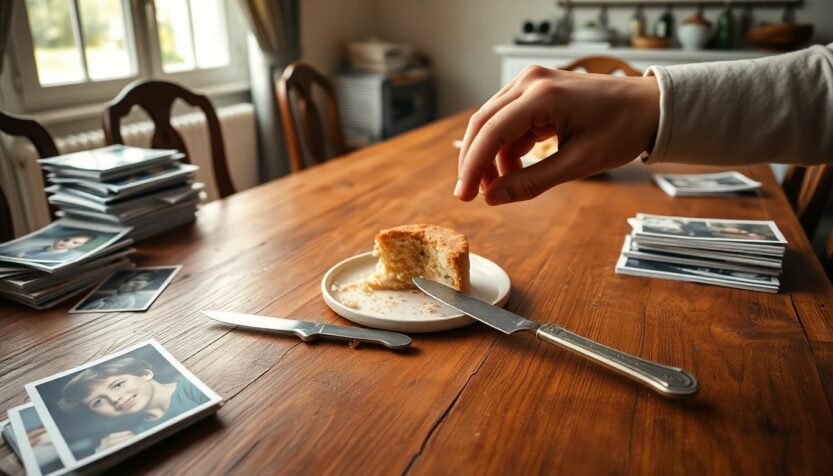
At her granddaughter’s birthday, a grandmother found herself thinking differently about what survives us. Surrounded by cake crumbs, laughter, and a lazy pile of old photographs, she didn’t dwell on plaques or wills. Instead she pointed to the small, ordinary things: the way someone always slices the bread, a private joke that resurfaces at every meal, the particular bedtime story told in the same voice. Those quiet routines, she said, are the real inheritance — the habits that nudge children into becoming adults who remember where they came from.
What she noticed felt immediate and domestic rather than formal or monumental. Public recognition fades; a well-worn recipe or a recurring toast shapes memory. Over and over, those tiny acts — a shared song in the kitchen, an offhand compliment during a hard week — stitch themselves into the fabric of family identity. They don’t announce themselves as legacy, but they last.
How simple gifts and gestures grow into memory
Small, repeated gestures accumulate into a narrative. They are rarely dramatic. Their power lies in consistency: playlists that get replayed, a hand-written recipe kept in a drawer, a voice recording of someone’s laugh. Those artifacts make habits transmissible — they turn private rhythms into things others can pick up and carry forward.
That same logic applies beyond the household. Whether in neighborhoods or workplaces, culture changes when predictable patterns become the default. Incremental, everyday choices quietly shift expectations and behavior over time. Measuring and sharing small wins — the kind of things you can point to and repeat — keeps momentum alive.
Practical ways families and groups pass on habits
Making these routines easy to pass on requires low effort and gentle structure. Pick one short ritual to do together regularly. Keep simple notes or recordings so the practice isn’t lost when storytellers are gone. Encourage people to tell the story behind a habit; linking present acts to past choices deepens meaning.
A modest present can reframe a life. A child’s first book can open a long habit of reading. A grandparent who teaches a grandchild a recipe or how to fix a bike hands over more than a skill — they hand over a way of approaching the world. These acts don’t romanticize loss; they make cultural continuity visible and usable.
Stories, fear, and the courage we model
When you hand someone a book, you’re passing along more than information. You’re also passing a stance: a way to interpret experience, a vocabulary for thought, a little permission to try. That lowering of the threshold — from “I could never” to “I might” — is how courage spreads.
Real courage is usually small and visible. Publishing a short essay, lending a treasured volume, volunteering to read to a classroom — these are low-cost, high-impact moves. They normalize experimentation and show others a concrete first step. Over time, those actions turn into communal norms that make risk-taking acceptable and repairable.
You can see the effects in community reading programs, mentorship schemes, or company initiatives that encourage small experiments. When people share their failures and what they learned, curiosity grows and resistance falls away. The private lesson becomes public capacity.
Concrete examples that teach daring
- – Admit a mistake out loud and describe the fix. That kind of visible repair teaches accountability more effectively than lectures.
- Let a child lead a simple household task or a class project. Manageable autonomy builds calibrated confidence.
- Share a vulnerable moment — a rough draft, a difficult decision — and show how you moved forward. That makes emotional risk feel less exotic and more doable.
Embed low-stakes opportunities for practice, offer feedback aimed at learning rather than blame, and make a habit of brief reflections. These small choices ripple outward.
Preserving what matters without clinging
What she noticed felt immediate and domestic rather than formal or monumental. Public recognition fades; a well-worn recipe or a recurring toast shapes memory. Over and over, those tiny acts — a shared song in the kitchen, an offhand compliment during a hard week — stitch themselves into the fabric of family identity. They don’t announce themselves as legacy, but they last.0
What she noticed felt immediate and domestic rather than formal or monumental. Public recognition fades; a well-worn recipe or a recurring toast shapes memory. Over and over, those tiny acts — a shared song in the kitchen, an offhand compliment during a hard week — stitch themselves into the fabric of family identity. They don’t announce themselves as legacy, but they last.1
Why laughter helps
What she noticed felt immediate and domestic rather than formal or monumental. Public recognition fades; a well-worn recipe or a recurring toast shapes memory. Over and over, those tiny acts — a shared song in the kitchen, an offhand compliment during a hard week — stitch themselves into the fabric of family identity. They don’t announce themselves as legacy, but they last.2
How to start, simply
- – Pick one repeatable practice this year.
- Note its origin and why it matters — briefly.
- Invite two others to lead it next time.
What she noticed felt immediate and domestic rather than formal or monumental. Public recognition fades; a well-worn recipe or a recurring toast shapes memory. Over and over, those tiny acts — a shared song in the kitchen, an offhand compliment during a hard week — stitch themselves into the fabric of family identity. They don’t announce themselves as legacy, but they last.3
A living legacy
What she noticed felt immediate and domestic rather than formal or monumental. Public recognition fades; a well-worn recipe or a recurring toast shapes memory. Over and over, those tiny acts — a shared song in the kitchen, an offhand compliment during a hard week — stitch themselves into the fabric of family identity. They don’t announce themselves as legacy, but they last.4