



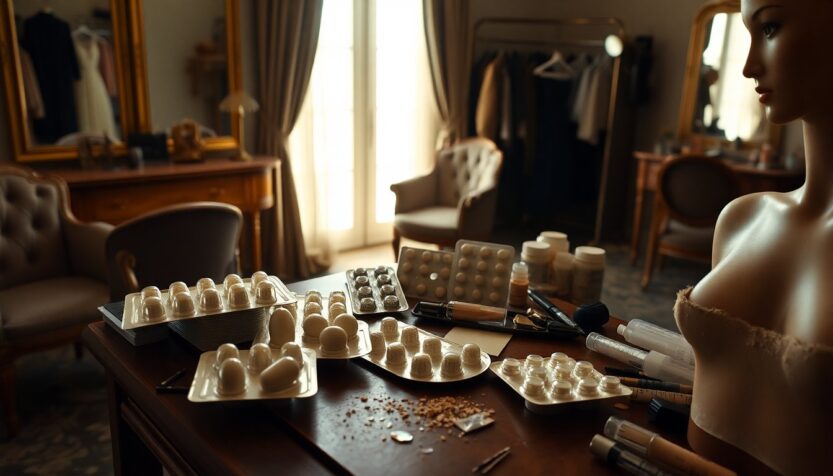
FX’s The Beauty pulls viewers into a world where glamour and grotesque collide, and it does so with brazen, often unsettling confidence. The show pivots around a contagious drug that promises to deliver society’s narrow ideals of attractiveness. From ambition and celebrity to the physical costs of chasing perfection, the series explores how desire, commerce, and identity feed one another — and how quickly the promises of beauty can curdle.
At the center of this uneasy spectacle is Isabella Rossellini, whose quietly potent performance grounds the show’s moral register. She brings a lived-in gravity to a role that negotiates allure and decay, making restraint feel radioactive. Around her, production design, costume, and makeup compose a visual language that flips between high-gloss fantasy and clinical disturbance. Those choices aren’t decorative; they’re argumentative. Every seam, every prosthetic, every runway camera angle helps tell a story about aspiration, commodification, and loss.
Casting and performance
The ensemble functions like a series of counterpoints to the show’s main question: what will people surrender to fit a mandated ideal? Actors move between seduction and unease, often within a single scene, creating a persistent dramatic friction. Rossellini’s scenes serve as emotional fulcrums: she times silences as precisely as she times speech, using small gestures to register vast internal shifts. Costuming around her tends toward muted, light-gathering textures that make later transformations feel all the more jarring.
Supporting players accentuate the show’s tonal swings. Some embody the glossy promises of contemporary beauty culture; others reveal the corrosive toll under that sheen. Together they alternate between theatrical excess and intimate specificity, letting the narrative live as spectacle and as human drama. Makeup, prosthetics, and wardrobe aren’t just surface effects here — they read like biography. A contour, a bespoke silhouette, a stubborn scuff on a garment becomes shorthand for hope, history, and the pressures that shape identity.
Design as storytelling
Costume and production design don’t merely dress the story — they argue it. Sharp tailoring and clinical palettes send corporate messages of control; warmer, textured fabrics suggest characters who resist or remember. Runway sequences, staged like performative tribunals, blur spectacle with surveillance: cameras hover like instruments, choreography reads as aspiration and entrapment, and garments become both propaganda and evidence.
The design team reaches back and forward at once. Archival nods to mid-century glamour sit beside restorative garments and avant-garde prosthetics, creating a visual archive that suggests both nostalgia and technological encroachment. Textiles and finishes carry meaning — faded pastels and oxidized metals hint at corrosion under polish; matte cloths absorb while glossy surfaces reflect the machinery of public spectacle. Small costume elements — a pin, a label, a clasp — are used as plot markers, letting viewers follow alliances and betrayals without exposition.
Tone and technique: where satire meets horror
The Beauty balances dark comedy with body horror in a way that feels deliberate rather than gratuitous. Satire arises through exaggerated perfection that tips into caricature, exposing the absurd rituals of maintenance that undergird youth culture. Horror emerges when those rituals fail and the body begins to betray its owners. Fabrics that once concealed become reminders of cost; textures that offered sheen start to fracture.
Directorial choices reinforce this uneasy mix. Abrupt edits and prolonged close-ups collapse temporal certainty, converting abstract fears about aging and image into tactile television moments. Sound design punctuates metamorphosis with clinical clicks and insistently calibrated noise, turning beauty routines into surgical procedure. The show stages transformation like a series of recipes: layers and balances matter, and even pacing is treated like seasoning. That culinary lens — a perspective born of the writer’s past life — helps make sense of how visual textures translate into emotional aftertaste.
The contagion as metaphor and mechanism
The contagious drug at the center of the plot functions on multiple levels. Viscerally, it provokes physical change; narratively, it accelerates conversations among friends, lovers, and corporations. Personal transformations collide with market incentives, and the show tracks how industries profit from insecurity. Boardroom charts and glossy ad campaigns sit alongside intimate, tender scenes of loss, showing how responsibility is distributed between individuals and systems.
The series refuses easy verdicts. A character who attains conventional beauty may gain social power but lose autonomy, memory, or a coherent sense of self. Another who resists the shift preserves ethical clarity but pays other costs. These reversals force viewers to reconsider assumptions about attractiveness, aging, and authenticity. Rather than moralizing, the show stages questions: what do we value at surface level, and what do we sacrifice beneath it?
At the center of this uneasy spectacle is Isabella Rossellini, whose quietly potent performance grounds the show’s moral register. She brings a lived-in gravity to a role that negotiates allure and decay, making restraint feel radioactive. Around her, production design, costume, and makeup compose a visual language that flips between high-gloss fantasy and clinical disturbance. Those choices aren’t decorative; they’re argumentative. Every seam, every prosthetic, every runway camera angle helps tell a story about aspiration, commodification, and loss.0
At the center of this uneasy spectacle is Isabella Rossellini, whose quietly potent performance grounds the show’s moral register. She brings a lived-in gravity to a role that negotiates allure and decay, making restraint feel radioactive. Around her, production design, costume, and makeup compose a visual language that flips between high-gloss fantasy and clinical disturbance. Those choices aren’t decorative; they’re argumentative. Every seam, every prosthetic, every runway camera angle helps tell a story about aspiration, commodification, and loss.1
At the center of this uneasy spectacle is Isabella Rossellini, whose quietly potent performance grounds the show’s moral register. She brings a lived-in gravity to a role that negotiates allure and decay, making restraint feel radioactive. Around her, production design, costume, and makeup compose a visual language that flips between high-gloss fantasy and clinical disturbance. Those choices aren’t decorative; they’re argumentative. Every seam, every prosthetic, every runway camera angle helps tell a story about aspiration, commodification, and loss.2
At the center of this uneasy spectacle is Isabella Rossellini, whose quietly potent performance grounds the show’s moral register. She brings a lived-in gravity to a role that negotiates allure and decay, making restraint feel radioactive. Around her, production design, costume, and makeup compose a visual language that flips between high-gloss fantasy and clinical disturbance. Those choices aren’t decorative; they’re argumentative. Every seam, every prosthetic, every runway camera angle helps tell a story about aspiration, commodification, and loss.3
At the center of this uneasy spectacle is Isabella Rossellini, whose quietly potent performance grounds the show’s moral register. She brings a lived-in gravity to a role that negotiates allure and decay, making restraint feel radioactive. Around her, production design, costume, and makeup compose a visual language that flips between high-gloss fantasy and clinical disturbance. Those choices aren’t decorative; they’re argumentative. Every seam, every prosthetic, every runway camera angle helps tell a story about aspiration, commodification, and loss.4