

The Met Gala on May 4, 2026, arrived as both spectacle and argument. The event’s theme—branded across invitations and galleries as Costume Art and framed under the idea that fashion is art—pulled celebrities, designers, and critics into a single conversation about what clothing does to, and for, the human form. High-profile returns and appearances punctuated the night: Beyoncé returned after a decade away, while figures such as Rihanna and A$AP Rocky dominated press attention. At the same time, the gala was shadowed by protests linked to major donors, yet the benefit still achieved a record-breaking $42 million for the Costume Institute.
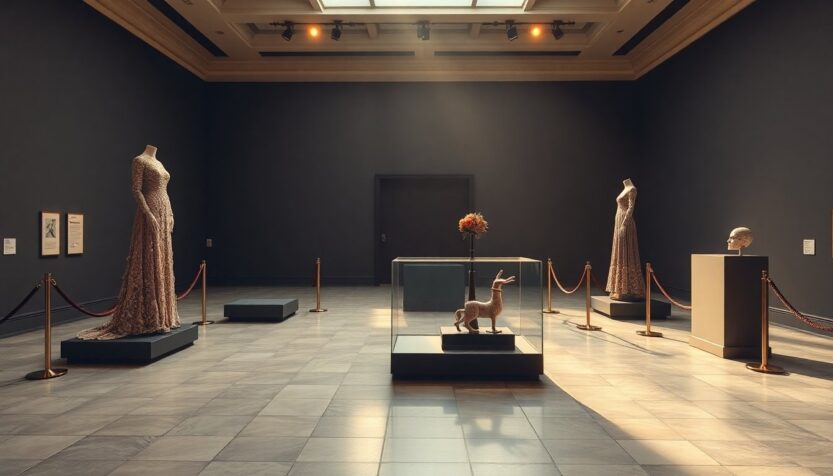
Behind the scenes, curator Andrew Bolton opened a major exhibition intended to expand how visitors think about the dressed body. The show pairs garments with artworks across eras and situates clothing as a historical and cultural force. Galleries are organized around bodily categories—aging, nakedness, anatomy, pregnancy, disability and corpulence—presenting both archive pieces and contemporary designs on mannequins modeled after real people. The new gallery space near the Great Hall was created to give fashion a prominent, permanent home; the exhibition will be on view from May 10 through Jan. 10, 2027, offering extended time for public engagement.
Red carpet as live museum piece
The carpet itself became an extension of the exhibition, where garments functioned as performance and commentary. Some attendees treated the steps like a stage, turning couture into narrative: Bad Bunny arrived wearing hyper-realistic aging prosthetics by artist Mike Marino and adopted a slowed gait and altered vocal tone to complete the effect—a deliberate enactment of the aged body theme. Other looks operated as visual echoes of art history: Hailey Bieber’s Saint Laurent referenced a 1969 Yves Saint Laurent design with a gilded breastplate developed with Claude Lalanne, while Madonna invoked a fragment of Leonora Carrington’s painting in a memorable carpet moment. Streaming options, including the Vogue livestream with hosts and on-the-spot interviews, let a global audience watch these performances as they unfolded.
Reclaiming bodies inside the galleries
Within the galleries, Bolton’s curatorial strategy aimed to reclaim marginalized body types that art history has often sidelined. The show begins with a gilded Dolce & Gabbana gown that references classical beauty before shifting into spaces dedicated to pregnant, disabled, corpulent, and aging bodies. Designers and artists are presented alongside ancient sculptures and modern paintings to make the case that both fashion and fine art have always engaged with bodily representation. Designers such as Georgina Godley, Michaela Stark, and Nadia Pinkney appear in the narrative, and the display foregrounds garments that celebrate or interrogate form rather than conceal it, emphasizing a museum-wide push toward inclusion.
Mannequins, prosthetics, and collaborative curation
A particularly visible intervention is the use of new mannequins based on real people of different sizes, abilities, and life experiences. Paralympian Aimee Mullins is referenced with an ensemble featuring prosthetic elements and boots that echo Alexander McQueen’s theatricality; Sinéad Burke contributed poses and proportions for mannequins that challenge standard display metrics. The exhibit also includes pieces tied to specific conditions—Nadia Pinkney’s coat, for instance, incorporates patterning inspired by brain scans to reflect Alzheimer’s. These choices underscore the curatorial claim that garments are not neutral objects but active participants in how societies visualize and value bodies.
Controversy, fundraising, and the wider cultural ripple
No Met Gala is without debate, and this edition amplified existing tensions. The presence of donors Jeff Bezos and Lauren Sánchez Bezos prompted protests and calls for a boycott outside the museum; on the steps a disturbance was quickly quelled. Yet despite the controversy, the gala secured a historic $42 million for the Costume Institute, showing the event’s enduring financial and cultural power. Observers compared the evening—and the exhibition—to earlier flashpoints in fashion’s museum history, recalling initial resistance to couture at major institutions and the conversations that exhibitions by Yves Saint Laurent and others once provoked.
Whether experienced as a red carpet performance, a museum argument, or a contested philanthropic moment, the 2026 Met Gala and the Costume Art exhibition have pushed the question of what fashion can be. By pairing garments with canonical artworks and by making inclusion an explicit part of the curatorial vocabulary, the show positions clothing as central to human expression. For those who missed the live broadcast, the Vogue livestream and press coverage captured the spectacle; for museumgoers, the galleries now offer the opportunity to see how clothes have always shaped both individual identity and collective imagination.