



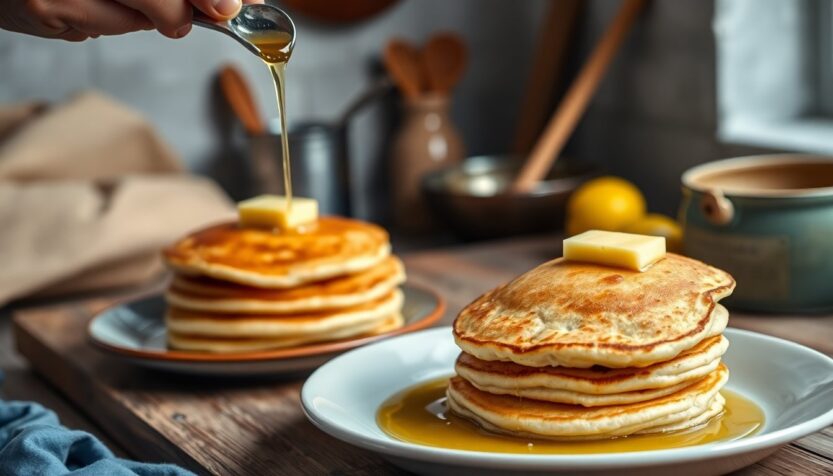
The recipe I share here is adapted from Tanya Bush, who credits a Minneapolis spot called Ideal Diner for the inspiration. If you usually fall back on a trusted mix—be it buttermilk, Bisquick, or banana—you’ll recognize the comfort of the familiar technique. Still, this version adds two small but meaningful adjustments that change texture and flavor: a teaspoon of malted milk powder for a toasty depth and frying the cakes in ghee or clarified butter to achieve crisp, golden edges without burning the butter. The result is a pancake with a crisp rim and an almost custardy center, crafted to be liberally drenched in maple syrup.
What makes these pancakes different
At first glance this is a reassuringly straightforward batter: flour, leavening, milk, buttermilk, eggs, and melted salted butter. The two distinguishing choices give the pancakes their diner-born personality. The addition of one teaspoon of malted milk powder introduces a gentle toasted, almost nostalgic note—think subtle caramel and milk-sugar complexity—while frying in ghee raises the cooking temperature tolerance and prevents the bitter notes associated with burnt butter. To be precise, malted milk powder is simply powdered malt and milk solids that contribute flavor and a subtle chew; clarified butter or ghee is butter with the milk solids removed so it can be heated hotter without smoking. Together these choices produce a pancake that toasts beautifully at the edges while remaining tender in the middle.
Ingredients and proportions
Staples plus the small additions
This batter makes about 6–10 pancakes depending on size. You will need: 125 g (1 cup plus 1 1/2 tsps) all-purpose flour; 2 1/2 tsps baking powder; 1 tsp malted milk powder; 113 g (1/2 cup) salted butter, melted (plus extra at room temperature for serving); 118 g (scant 1/2 cup) whole milk; 100 g (1/2 cup minus 1 tbsp) whole milk buttermilk; 100 g (2 large) eggs; scant 2 tbsps maple syrup; and ghee or clarified butter for frying. Measure carefully but remember the method—especially not overmixing—is what preserves the texture. If you want to make your own clarified butter, melt unsalted butter slowly, skim and discard the foam, and separate the clear fat from the milky solids; the fat left behind is what gives you the higher smoke point for frying.
Technique: mixing, resting, and cooking
Mixing the batter and storage
Begin by whisking the dry ingredients—flour, baking powder, and malt—together in a small bowl. In a larger bowl combine the melted salted butter with whole milk, buttermilk, eggs, and the maple syrup, whisking until smooth. Fold the dry into the wet and stop when just combined; a few small lumps are fine. Overmixing develops gluten and yields dense pancakes, so resist the urge to make the batter perfectly smooth. This batter is forgiving: it can be stored in an airtight container in the refrigerator for up to three days or frozen for up to two months for convenient breakfasts. Thaw overnight in the fridge before using if frozen.
Pan, heat, and frying method
Use a heavy skillet—cast iron is ideal—or a reliable nonstick pan over medium-high heat. Melt about one teaspoon of ghee in the pan and when it shimmers drop approximately 60 g (a heaping 1/4 cup) of batter for each pancake; use less batter for smaller cakes. Cook until the pancake’s edges set and small surface bubbles form, around two minutes, then flip and cook until the second side develops crispy, golden edges, another one to two minutes. The first pancake is your test: cut it in half to confirm it is cooked through, then adjust heat if needed. Add more ghee between batches if the pan looks dry. To keep pancakes warm, transfer them to an oven set at 200°F (95°C) until all are ready to serve.
Serving and final notes
Plate the pancakes with a pat of butter at room temperature and a generous drizzle of maple syrup—the combination of salted butter, rich syrup, and the malted note is the point. Because these cakes were designed to be drowned in syrup at the diner, don’t be shy with the pour. If you want to vary the topping, toasted nuts, a smear of brown butter, or fresh fruit work well. Credit for this approachable yet distinct version goes to Tanya Bush and her cookbook Will This Make You Happy, and the inspiration of Minneapolis’s Ideal Diner. Try making just a few the first time to dial your pan and timing, then enjoy the small, predictable upgrade these two simple swaps deliver to a classic breakfast.