



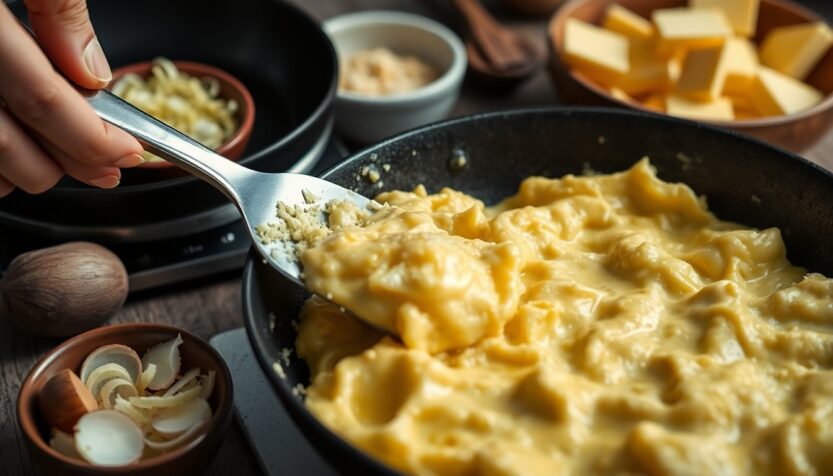
A single small change can transform ordinary scrambled eggs into something lusciously silky. Cook them very gently over low heat and stir slowly — the result is tender, custardy curds rather than dry, rubbery eggs. A little shallot sautéed until translucent and a handful of grated Comté add sweet, nutty depth without overpowering the eggs. The idea — patient cooking and one thoughtful cheese — comes from Ella Quittner’s cookbook Obsessed with the Best.
What you need
– 4–6 fresh eggs (adjust to appetite) – 10–20 g butter (for cooking and finishing) – 30–40 g grated Comté (about a small handful) – 1 small shallot, thinly sliced – Optional: 1 tbsp cream or crème fraîche for extra silkiness – Salt and freshly ground black pepper
Technique, simply put
This is the slow, soft end of the scramble spectrum: small, tender curds with a glossy finish. Keep the heat low so the proteins don’t seize up, and stir steadily to break the eggs into delicate curds. Whisk the eggs until smooth but not frothy; too much air changes the mouthfeel. Use a nonstick pan or a well-seasoned skillet for even heat. If you’re cooking for more than two, do it in batches — overcrowding the pan makes temperature control harder and risks overcooking.
Step-by-step
1. Thinly slice the shallot so it softens in a few minutes. 2. Melt the butter over medium-low and gently sauté the shallot until it’s translucent and fragrant. Slide the shallot to the side of the pan or transfer it to a bowl. 3. Turn the heat down to low. Pour in the whisked eggs and stir continuously with a spatula, scraping the pan to form small, tender curds. 4. When the eggs are almost set but still glossy, take the pan off the heat. Fold in the grated Comté so it melts in the residual warmth. If using cream or crème fraîche, add a splash just before finishing for extra silk. 5. Add a final pat of butter for sheen and season to taste with flaky salt and plenty of black pepper.
Serving ideas
Spoon the scramble onto warm toast, a lightly toasted brioche, or a plate of dressed greens. Sprinkle chives or microgreens for brightness and a little textural contrast. If you don’t have Comté, Gruyère or a young Manchego will give similar melting, nutty notes; swap shallots for finely chopped red onion or leeks if you like.
Why it works
Slow heat prevents the proteins from tightening and squeezing out moisture. The gentle agitation creates those soft curds we love, while the shallot lends a subtle sweetness and the cheese brings savory, nutty umami. The result is creamy, spoonable eggs with a layered aroma — humble, but unmistakably elevated.
Play around
Once you’ve got the method down, try different cheeses or delicate aromatics. The key remains the same: low heat, patience, and a single quality ingredient that complements rather than competes with the eggs.