



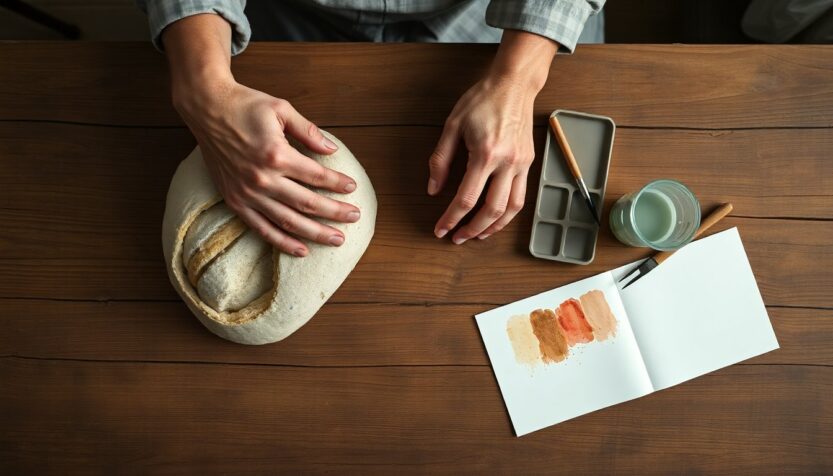
The years spent prioritizing family, work and the care of aging relatives shape many lives. For those who have habitually measured worth by productivity, the idea of choosing self-directed creative time can feel foreign. Here the reader encounters a different framing: creative ageing is not a consolation prize but a reclaiming of identity. This introduction sketches why saying yes to personal projects matters and why the simple act of making—whether a loaf of bread, a watercolour sketch or a patch of herbs—can shift how you feel about yourself.
What follows explains the psychological pattern that keeps people busy at the expense of joy, describes what happens when creativity is reclaimed, and offers practical nudges to begin. The aim is not a prescriptive manifesto but a gentle argument: investing time in self-care and hands-on activities rewires routine and nurtures wellbeing. Throughout, the text uses everyday creativity as a lens to see how late-life changes can become a source of renewal rather than loss.
Why we habitually put ourselves last
Many people grow comfortable defining themselves by roles—parent, partner, employee—and those roles reward steady usefulness. Over decades this creates a shield: staying busy protects against quiet questions about happiness and purpose. That protective habit becomes a habit of omission; the things that feed the spirit are postponed indefinitely. The phrase “I don’t have time” functions less as a literal statement and more as a social script that explains away neglected desires. Recognizing this script is the first step: the truth is often that time is allocated according to what we are allowed to value.
The language of avoidance: “I don’t have time”
Claiming there is no time for personal projects is a culturally reinforced excuse that rarely faces scrutiny. In practice, it can be a way to avoid vulnerability—starting a hobby risks failing or discovering uncomfortable truths. Reframing the phrase into a diagnostic question—what am I protecting myself from?—reveals whether the choice is practical or defensive. Adopting small, deliberate experiments with creative practices allows curiosity to replace fear, and the act of trying becomes proof that identity can shift without catastrophic consequences.
What happens when you reclaim a creative life
When someone decides to invest time in painting, gardening or baking, the immediate result is often a profound sense of relief. These activities demand patience and presence rather than measurable outputs, and that absence of external metrics becomes therapeutic. The process reconnects a person with the inner artist—the part of identity that existed before roles and responsibilities took center stage. This reconnection supports mental health, improves mood, and promotes a positive view of ageing when practiced regularly.
Everyday practices that change perspective
Small routines can have outsized effects. Planting a few herbs or tending a raised bed teaches patience and attentiveness; kneading dough centers the body and mind in a way many find calming; painting allows experimentation with colour and form without a performance goal. Each of these practices is a form of active self-care that returns tangible rewards—fresh herbs, warm bread, a painted page—and intangible ones such as pride and calm. The measurable outcomes are secondary to the consistent habit of doing something for oneself.
Family dynamics, modelling and wellbeing
Choosing personal creative time also changes how family members perceive ageing and care. When an older parent or partner takes up a hobby, it models a different calculus for the next generation: time invested in joy is not wasted time. That modelling can subtly reshape children’s and grandchildren’s expectations about adulthood. Moreover, research into positive views of ageing shows that belief systems influence cognitive and emotional health; reframing later life around purposeful creativity supports resilience and recovery from setbacks.
Starting does not require dramatic gestures. Begin with ten minutes of sketching, a single page in a journal, a loaf attempted on a weekend. Keep expectations minimal and the permission to be imperfect explicit. The real shift comes from giving yourself permission repeatedly: choosing a moment that is yours, defending it, and returning to it. Over time, those small choices accumulate into a visible, meaningful change in identity and wellbeing.
In the end, reclaiming creative life is less about mastering skills and more about meeting yourself again. The tools are simple, the barrier is often internal, and the payoff is a quieter, more enlivened existence. If you have postponed your own interests for years, consider this an invitation to open the shelf and try what has waited there. The act of beginning is the clearest signal that you matter.