



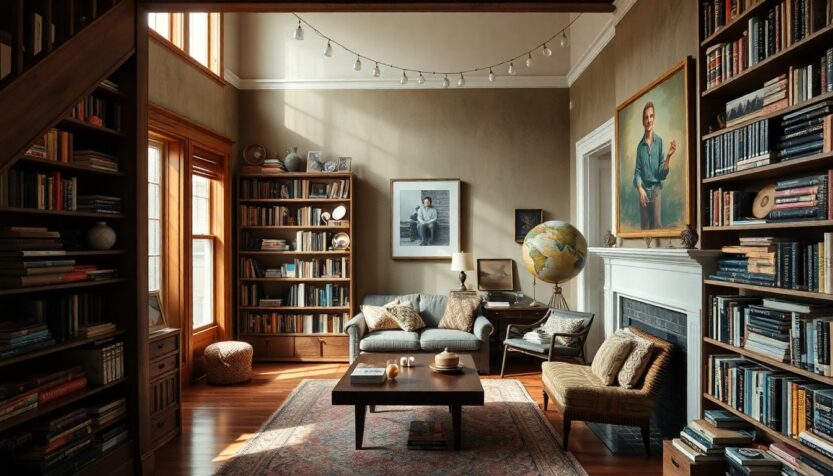
Inside a restored 19th-century house in brooklyn
Alison Piepmeyer and her family live in a 19th-century house in Brooklyn they bought in 2026. The property arrived in a plainly rough state, she says. Since then, the house has undergone steady restoration and gradual personalization.
The first impression on entering is sensory and tactile. Walls show layers of dramatic paint. Shelves are dense with books. Surfaces hold small treasures gathered over a long marriage. The arrangement reads like a lived archive.
Piepmeyer shares the house with her husband, Zach, and their children, Linus and Georgie. The family’s interventions blend structural work with accumulated personal style. The result emphasizes preservation as much as contemporary comfort.
The palate never lies, the writer and former chef notes, linking domestic restoration to culinary practice. Behind every room there is a story of choice, care and material decisions. As a chef she learned that texture and provenance shape experience; she applies the same logic to a household.
As a chef I learned that texture and provenance shape experience; she applies the same logic to a household. Photography by Lyndsay Hannah captures the warmth and idiosyncrasy of each room. The images show how layers of paint and stacks of reading material sit beside small, curated objects the family has gathered over fifteen years. This report outlines Alison’s principal design choices, the family’s phased renovation approach, and the guiding principles that make the home feel both intentional and lived-in.
The house and the renovation approach
Alison and her family purchased a 19th-century brownstone that needed substantial repair. They rejected a single, sweeping overhaul and instead adopted a gradual, room-by-room strategy. This allowed the house to evolve alongside family life. The interior reads as layers: original architectural features sit alongside selective, purposeful updates.
Moldings and period details were retained wherever feasible. Paint and lighting were used to define rooms and inject personality without erasing history. The result is a disciplined eclecticism: each space feels curated, yet comfortable for daily use.
The palate never lies. Behind every decorative choice is a story of taste, provenance and function. As in a well-composed dish, contrast and restraint guide the composition here. Natural materials and considered finishes anchor the design, while collected objects provide texture and memory.
Natural materials and considered finishes anchor the design, while collected objects provide texture and memory. The palate never lies, and here the same principle guides color choices: tones are selected for how they age and how they mingle with light. The family preserved structural elements that define the house’s historical character. They introduced contemporary touches — bold palettes, updated wet rooms and modern fixtures — to make the spaces functional for everyday life.
Color, paint and how atmospheres are created
Behind every dish there’s a story, and behind every room there is a decision about atmosphere. Paint becomes a tool to shape that atmosphere. Deep, saturated hues frame seating areas and bedrooms. Lighter, reflective tones open circulation spaces and hallways. The effect is deliberate. Each choice was tested against existing timber, plaster and stone to ensure harmony.
As a chef I learned that contrast and balance matter as much as provenance. The same logic informed the palette: dramatic accents sit alongside neutral grounds. Finishes were chosen for durability as well as appearance. Kitchen and bathroom updates prioritized materials that withstand family life and show patina attractively over time.
The renovation was staged to match family rhythms. Projects were prioritized so changes could be made without disrupting daily routines. The result is a home that feels lived-in and able to evolve with its inhabitants. Practicality and preservation remain the guiding principles of the work.
The palate never lies. In this house, color works like a seasoning that defines each space’s character. Alison’s use of dramatic paint does more than refresh surfaces. It sculpts mood. Deep, saturated hues frame bookcases and give weight to shelves. Moody tones fold intimate corners inward. Brighter shades energize more active rooms. The result reads like a design shorthand: color signals whether a room is for quiet reading, family gatherings, or daily life.
Paint as a room-defining strategy
Rather than relying only on furniture to mark areas, Alison uses paint to anchor both function and feeling. Dark walls create a cocooning effect in a reading nook. Lighter, warmer tones widen play and dining areas. This tactic amplifies the home’s architectural bones and complements the large collections of books that line many rooms. As a chef I learned that contrasting notes—salt and acid, bitter and sweet—make a dish sing; here, contrasts of hue perform the same role for the interior.
Books, objects and the art of collecting
The palate never lies, and in Alison’s house the eye answers much the same way. Textures, tones and objects combine to create a steady, lived rhythm. Books stacked on shelves set a scholarly tempo. Scattered ceramics and travel souvenirs act as punctuation across rooms.
How collections shape a home
Alison’s approach to collecting is intentional and unapologetically eclectic. She avoids rigid staging, allowing surfaces to gather items that hold meaning. A thrifted vase, a child’s drawing and a favorite book sit alongside considered paint and lighting choices.
This layering produces an edited yet authentic interior. Personal narratives are visible and celebrated rather than hidden. The effect is subtle: design choices support the collection, and the collection animates the design. Personal history becomes part of the house’s structure, not merely its ornament.
How practicality and preservation shape a lived home
The palate never lies: a house reveals itself through daily use as surely as a recipe reveals its balance. Behind every dish there’s a story, and behind every room there is a history made visible by choices that respect both form and function. As a chef I learned that technique and generosity both matter; the same applies to a family home.
Alison Piepmeyer’s Brooklyn brownstone demonstrates that lesson. The family retained period details while adapting rooms for everyday life. Family areas are designed to be durable and welcoming. Display zones are rotated as new finds come home. Practicality is woven into the aesthetic rather than added as an afterthought.
The family’s approach shows how an interior can be beautiful and functional when design honours daily life. They used bold paint to define atmosphere and filled rooms with books and objects collected over fifteen years. Those decisions create a layered, coherent interior where personal history becomes part of the house’s structure, not merely its ornament.
Image credits
Photographs by Lyndsay Hannah document the sequence of choices that produce the house’s character. The images record how small, intentional actions accumulate into a cohesive whole and make the home legible to visitors and residents alike.
How the home records everyday choices
The palate never lies: sensory memory guides the telling of a house as much as a recipe reveals balance. Objects, finishes and the wear of materials register repeated use. Photographs show where light lands, where chairs are pulled close to a table and where pathways form across rugs.
A narrative built in layers
The renovation unfolded in stages. Each intervention answered a practical need or reinforced a habit. Paint, textiles and hardware were selected to support daily routines. Small repairs became deliberate gestures that clarified circulation and comfort.
Technical choices, accessible effects
As a chef I learned that technique elevates simple ingredients. The same applies to interiors. Thoughtful insulation, durable finishes and targeted lighting transform mundane actions into reliable experiences. These choices make maintenance easier and preserve the home’s character over time.
Terroir, tradition and supply chains
Materials sourced locally and attention to the filiera corta shaped the project. The house retains traces of place through timber, stone and handcrafted details. Such decisions tie aesthetics to sustainability and to the family’s relationship with the surrounding area.
Behind every change there is a story of use and preference. The images and the interventions together map a household’s priorities. Visitors read that map as clearly as residents live it. The result is a dwelling that registers time and invites repeat discovery.