
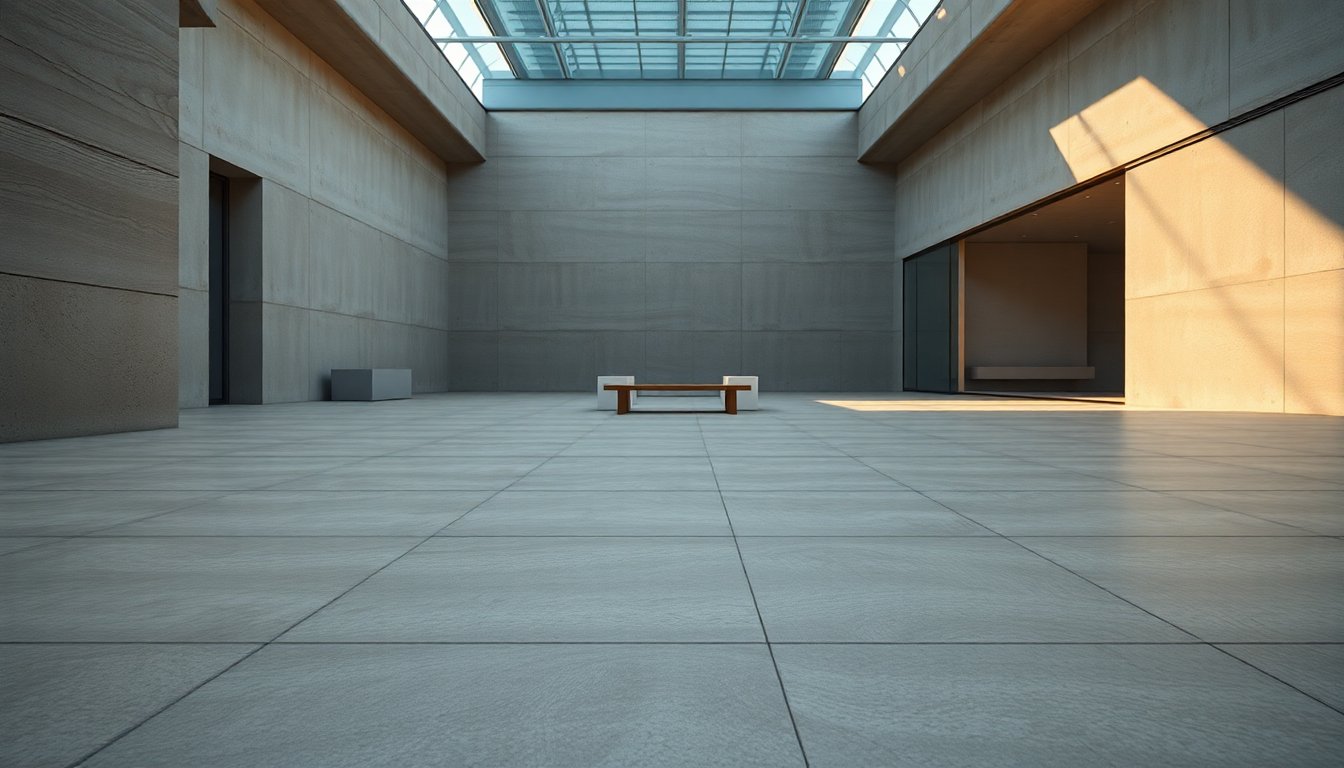
The Los Angeles County Museum of Art has taken a major step with the public unveiling of the David Geffen Galleries, a low-slung, concrete-and-glass addition by Pritzker Prize–winning architect Peter Zumthor. The project, anchored by a headline donation from David Geffen, is meant to reframe how visitors move through thousands of years of art in one continuous plane. At its core, the building combines bold architectural gestures with museum-scale engineering to create a single-level experience elevated above Wilshire Boulevard.
The opening week included a high-profile gala that drew collectors, artists, Hollywood figures, and museum leaders, and raised roughly $11.5 million for the institution. Behind the celebration is a longer story of fundraising, civic investment, and curatorial ambition: the museum reports a final project cost near $720 million, and the County of Los Angeles contributed an additional $125 million toward construction and infrastructure.
Design ambitions and what visitors will see
Zumthor’s scheme stretches across the campus as an arcing bridge 30 feet above street level, connecting a set of ground pavilions to a sweeping 110,000-square-foot gallery plate above. The expansion increases LACMA’s exhibition footprint from about 130,000 to 220,000 square feet, offering curators an unprecedented contiguous plane to juxtapose artworks. The plan emphasizes the single-floor schematic as a way to invite unexpected visual dialogues between eras and regions, rather than dividing galleries by medium or chronology.
The architecture alternates glazed perimeter galleries where daylight filters through floor-to-ceiling glass with more sheltered, interior rooms that protect sensitive objects. Custom metallic curtains by designer Reiko Sudo help modulate light while adding a tactile layer to gallery thresholds. The result is a building that, by design, lets viewers wander without a prescribed route and encourages serendipitous encounters among ancient ceramics, modern commissions, and contemporary sculpture.
Curatorial approach and notable works
LACMA’s inaugural installation organizes spaces around oceanic and geographic frameworks—Pacific, Atlantic, Indian, and the Mediterranean—so that artworks from different times and places can converse. This approach aims to free the display from strict art-historical categories and lean into a more associative model of interpretation. The opening presentation includes a mix of canonical holdings and recent commissions, with works by artists such as Lauren Halsey, Doh Ho Suh, Todd Gray, and Tavares Strachan.
New commissions and large-scale pieces
Highlights include Doh Ho Suh’s architectural re-creation of a section of the Joseon royal palace, a ten-foot reclining sphinx and wall reliefs by Lauren Halsey, and a 27-foot tapestry by Sarah Rosalena installed at the plaza-level restaurant. Outdoors, site-specific projects such as a tall stone carving by Pedro Reyes complement the museum’s expanded 3.5-acre public park and the famous Urban Light installation at the entrance.
The cultural politics of a blockbuster museum
The gala underscored more than architecture: it signaled the city’s intertwining of entertainment, philanthropy, and institutional ambition. Attendees ranged from tech and media executives to musicians, artists, and film talent—people who see museums as platforms for cultural influence as much as preservation. Key cultural figures publicly praised the project as a major national achievement; for collectors and donors, it represents an investment in Los Angeles’s stature as an encyclopedic art city.
Director Michael Govan framed the building as a starting point rather than a finish line, describing it as a platform for experimentation where installations and histories can be reconsidered over time. A central philanthropic moment was David Geffen’s $150 million gift in 2017, which catalyzed the project; other supporters, including long-time trustees and civic funders, helped translate the architectural vision into reality.
Reception and what comes next
Museum professionals, peer directors, and artists in attendance reacted positively to the daring single-level plan and the patinated concrete surfaces that give the galleries a particular character. The institution plans rotational displays across the 110,000-square-foot plate, meaning the experience will evolve, and repeat visits will reveal new pairings. With public opening set for April 19, the building will soon be accessible to a broader audience eager to test Zumthor’s museum-making in the context of Los Angeles’s cultural landscape.
Ultimately, the David Geffen Galleries aims to function as both a civic gesture and a curatorial instrument: a place where light, material, and collection meet to produce fresh narratives. Whether it becomes the defining museum moment of this era will depend on the exhibitions and public engagement that follow, but for now the city has a new architectural stage on which its art and stories can play.


