
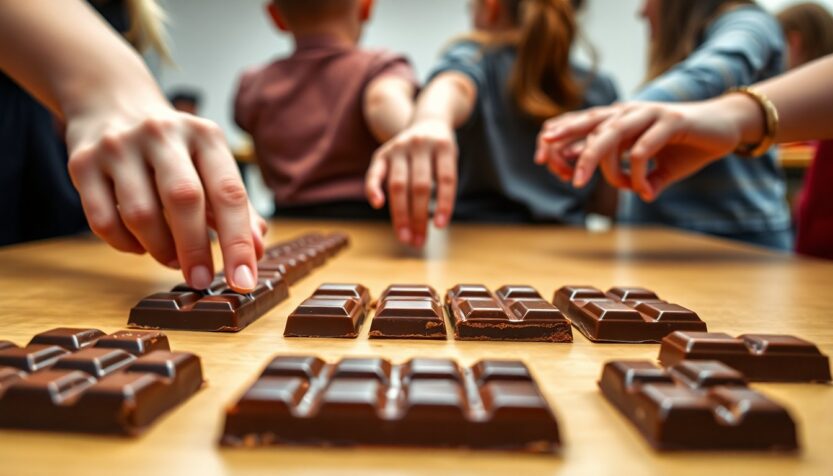
Six years after an earlier chocolate experiment and a reader’s cheeky comment that the best dark chocolate is milk chocolate, we repeated the exercise with a different angle: a children’s panel. To keep the focus on texture and taste, we included only plain milk chocolate bars—no nuts, fillings, or added flavors. The lineup featured eleven well-known options, from mass-market to specialty bars, and our judges were five seventh graders: Nick, Anton, Sienna, Juliet, and Ella. The setup was a classic blind taste test—samples coded, brands hidden, and a standardized palate-cleansing routine so each bite started on equal footing.
Preparation followed a simple but careful protocol. I acted as master of ceremonies while Joanna played the enthusiastic assistant; we used Jenny’s procedural guidance for arranging the samples, numbering each piece and keeping the brand key private. To minimize carryover, we provided sparkling water and unsalted crackers as a palate cleanser between samples. Bars with identifiable embossing were turned upside down so logos wouldn’t give anything away. Testers rated each sample on a 1–5 scale for attributes like sweetness, creaminess, bite, and overall flavor. They were asked not to guess brands, but of course middle-school conversation won out—enthusiasm trumped instructions.
How the scoring worked
Each child recorded private scores that we later averaged to produce a composite ranking for every bar. The ratings were numeric, with 5 being the top score; participants occasionally reported highly precise values—because children are wonderfully literal and exact—so our averages included decimals. In hindsight, we might have asked for rounded scores to make calculations tidier, but that little quirk did not obscure the results. The combination of objective attributes (texture, melt, sweetness) and the testers’ candid language produced both quantitative and qualitative data, giving us a balanced picture of which bars performed best in this blind taste experiment.
Standouts: creaminess, flavor, and shape
Creamiest
Two bars tied for perceived smoothness and rich mouthfeel: Lindt Classic Recipe and Cadbury Dairy Milk, both averaging 4.8. Testers praised their velvet-like texture and consistent melt. Cadbury earned comments about a distinct “pure milk” profile, while Lindt’s thinner, graceful bar shape appealed to several kids. These observations highlight how mouthfeel and visual portioning influence enjoyment just as much as taste.
Best flavor
MilkBoy led the flavor category with a 4.44 average, followed by Chocolove at about 4.35. MilkBoy provoked notes of raspberry, almond, and even a cool mint hint from a few palates, while Chocolove was repeatedly described as fruit-forward and pleasantly sweet. Both brands were among the least immediately recognizable by brand, which suggests that distinct flavor profiles can both delight and disorient young tasters.
Shape and texture favorites
Dove scored 4.5 in this area; its small, domed squares were a hit for portioning and bite. Ritter Sport Fine Milk Chocolate (4.38) impressed with chunky, satisfying squares that dissolved nicely, and the Whole Foods 365 bar (4.182) drew attention for a slightly waxy texture that several kids—surprisingly—loved because it delivered a pronounced, gratifying bite. These results underline a simple truth: bar geometry changes how people perceive texture and taste.
Outliers, dislikes, and the champion
Outliers
Trader Joe’s averaged about 4.268; one tasters immediately gave it a perfect score while others were indifferent. Endangered Species landed at 3.84 and confused a few judges who thought it might be a dark chocolate due to its higher cocoa content; many found it too firm and bitter for their preferences. These mixed reactions show how varying formulations can split a small panel.
Least favorite and winner
The lowest average belonged to Hershey’s Symphony (3.8), which some kids likened to a s’more—comforting, but not special. In contrast, the clear overall favorite was Tony’s Chocolonely, with an impressive 4.98 average. Tony’s combined balanced flavor, a satisfying chunky bar that breaks into uneven, fun pieces, and instant recognition—one tester celebrated finding the coin-shaped center piece. The bar’s equilibrium of taste, texture, and playful format made it both a sensory and social winner: good chocolate and fun chocolate in one.
Final notes
Thanks to our diligent and unfiltered judges—Nick, Anton, Sienna, Juliet, and Ella—for taking the assignment seriously and sharing vivid descriptions. The exercise reaffirmed that milk chocolate can delight in many ways: from the silkiest melt to the quirkiest chunk. If you want to repeat this at home, try the same simple rules: blind samples, palate cleansers, and a clear scoring sheet. You might be surprised which bar becomes the household favorite.