
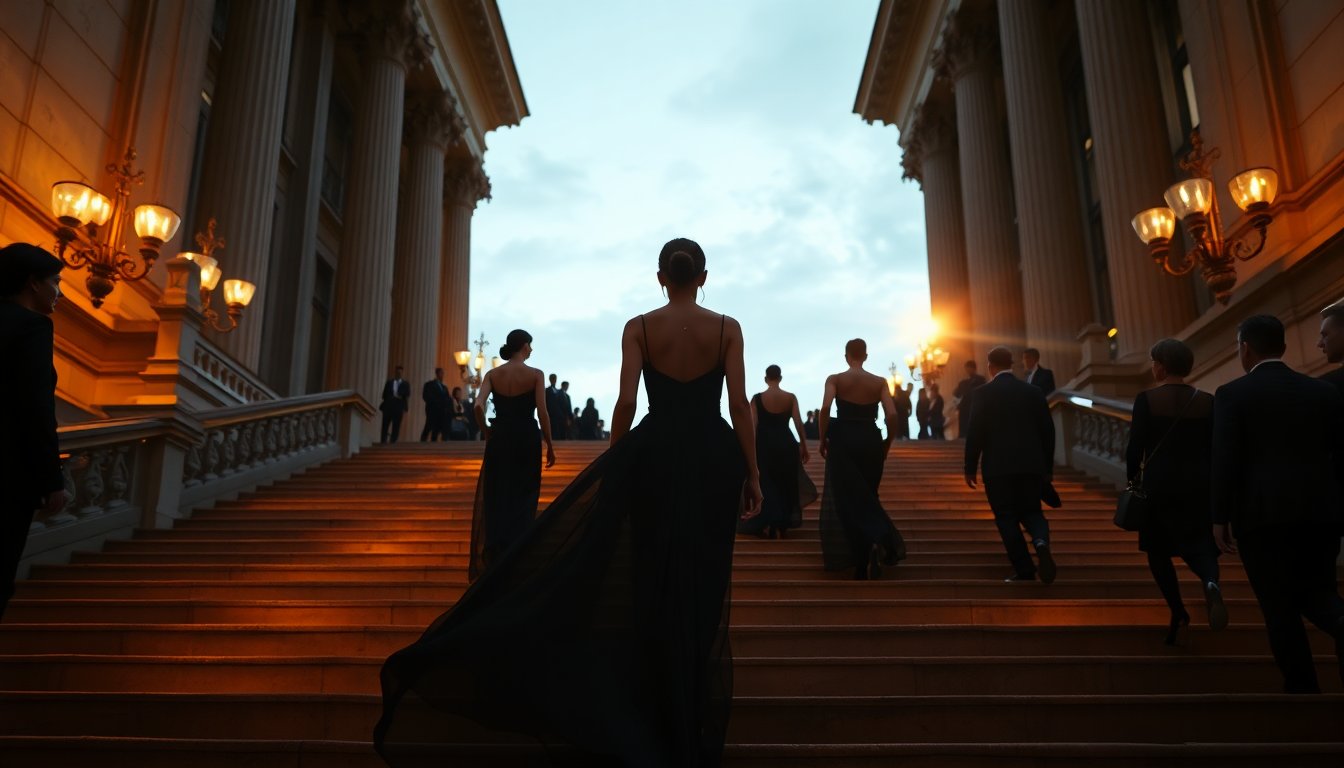
The Met Gala has been a landmark stage for Kim Kardashian since she first appeared on its steps in 2013. That arrival, captured by photographers and fashion critics alike, featured a close-fitting Givenchy gown that publicly acknowledged her pregnancy with North West, and introduced a pattern: Kardashian treats the event as both a personal statement and a cultural moment. The gala itself functions as an exclusive fundraiser for the Costume Institute, and for celebrities it is a choreographed intersection of costume, publicity, and personal branding. Over the years her choices have become part of a continuous conversation about celebrity, craft, and the limits of sartorial risk.
Her attendance has been consistent: after 2013 she returned yearly, transforming a single appearance into a series of defining looks that critics dissect. Some ensembles were celebrated for technical daring, while others provoked debate. The trajectory runs from subtle spectacle to deliberately provocative costume, with a recurring emphasis on tailoring, body silhouette, and archival references. This piece traces the highlights, offering context for each turning point and the designers or institutions involved, and concludes with what her Met Gala appearances say about contemporary fashion performance.
First steps and early impressions
Kardashian’s 2013 entrance in Givenchy remains a pivotal moment because it combined personal narrative with couture craft: a fitted, patterned dress that made a pregnancy visible on one of fashion’s most photographed staircases. That decision signaled an understanding of the Met Gala as a place where clothing acts like communication, and it positioned her as someone willing to use red-carpet moments to shape public perception. In fashion terms this was not merely about silhouette but also about the statement garment—a piece whose value extends beyond its materials to the story it carries.
Controversies and headline-making moments
Some of Kardashian’s choices have generated intense scrutiny. In 2019 she wore a skin-tone Thierry Mugler dress described by many as a wet look, an example of how a single aesthetic decision can dominate headlines. Two years later she borrowed a historically significant Bob Mackie gown famously associated with Marilyn Monroe and a presidential moment; the dress was on loan from Ripley’s Believe It or Not. After the garment returned, public debate emerged around alleged damage and the difficulty of fitting an archival piece, and Bob Mackie later reflected that lending it had been a mistake. Ripley’s released a statement disputing claims of damage, and Kardashian said she had lost significant weight in a short period to meet the garment’s requirements. Those episodes underscore tensions between preservation, performance, and press narratives.
Public reaction and institutional response
When historic pieces are involved, reactions rarely focus only on aesthetics. Institutions, designers, and audiences weigh in on authenticity, stewardship, and celebrity access. The controversy over the Monroe-linked dress highlighted how an item in a museum-adjacent context becomes entangled with celebrity logistics, such as fitting and transport, and with modern media cycles that amplify disputes. The situation illustrates the collision of museum practice with contemporary spectacle: a single dress can become a flashpoint for debates about cultural ownership, celebrity responsibility, and the ways institutions negotiate loans to high-profile wearers.
Recent interpretations and tailoring tributes
In 2026 Kardashian embraced a theatrical approach with a Sleeping Beauty–inspired gown by Maison Margiela Artisanal by John Galliano that required extreme shaping and a studio regimen to wear comfortably; she described the tightness of the piece as demanding careful practice to breathe and move. That moment showcased the marriage of haute couture construction and celebrity performance—where the corset and silhouette become central to the concept rather than mere ornament. The following year she responded to the Costume Institute’s theme with a black two-piece by Chrome Hearts, worked in an alligator print and explicitly nodding to Lenny Kravitz‘s dandy-inflected approach. On social media she connected the look to a lineage of Black tailoring and musical icons like Jimi Hendrix and Miles Davis, framing the outfit as part of a broader cultural tradition.
Stylistic through-lines and legacy
Across these moments, certain through-lines emerge: an emphasis on tailoring, a willingness to reference archive garments, and a readiness to court controversy when a look serves a narrative. Whether dripping in pearls or hidden beneath layered black fabric, Kardashian’s Met Gala wardrobe functions as both spectacle and statement. As the fashion world turns its attention to the next gala, observers will watch to see how she balances homage and innovation, practicality and performance, and how institutions and designers continue to negotiate the optics of lending and collaboration. Follow Vanity Fair for live coverage of the Met Gala 2026 on Monday, May 4 as the evening unfolds.
Final note
Ultimately, Kim Kardashian’s Met Gala history is less a list of outfits than a running commentary on the state of celebrity and couture. Each selection has been a calculated contribution to public image and to conversations about preservation, design authorship, and the cultural meanings sewn into garments.


