

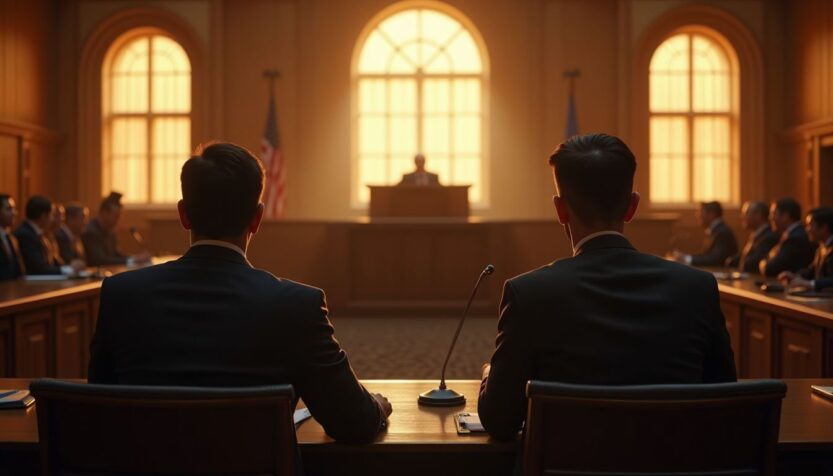
The courtroom confrontation between Elon Musk and Sam Altman is more than a legal dispute; it is a clash of competing visions for artificial intelligence and the institutions that steward it. What began as a collaborative effort to build AI “for the benefit of humanity” has evolved into a federal lawsuit that accuses OpenAI leaders of turning a nonprofit mission into a lucrative for-profit enterprise. At stake are not only corporate structures and money but also how society governs powerful technologies.
For audiences watching from silicon valley and beyond, the spectacle combines boardroom drama, private messages, and wartime-style litigation. The plaintiffs allege a betrayal of trust and seek remedies that include reversing corporate reorganizations and forcing payments earmarked for charity. Defendants counter that the pivot to a hybrid model was necessary to secure funding and compete with major tech players. The trial spotlights a long-running rift that dates back to the company’s founding and is now playing out under the supervision of U.S. District Judge Yvonne Gonzalez Rogers.
How a shared experiment became a legal battle
OpenAI was founded in 2015 by a group that included Elon Musk, Sam Altman, and others who wanted to develop safe AI outside the incentives of conventional venture capital. Musk contributed significant early funding and recruited top researchers, including Ilya Sutskever. Over time, differences emerged about funding and governance. By 2017 some leaders argued for creating a revenue-generating branch to attract the computing power and capital required for large-scale models. Musk resisted that move, warning that the original charitable orientation should remain intact. Tensions culminated in his 2018 resignation from the board and a later $1 billion investment from Microsoft, which helped finance breakthroughs such as ChatGPT.
Those operational choices set the scene for the lawsuit filed in August 2026. The complaint alleges two central wrongs: a breach of charitable trust—claiming donations meant for a nonprofit mission were diverted toward a profit-seeking enterprise—and unjust enrichment—asserting that certain executives personally benefited from funds intended for public good. The case was later expanded to name Microsoft as a defendant, and celebrity intermediaries and high-powered litigators have shaped its public face. In the weeks before trial, the court allowed the plaintiffs to refine their claims while trimming some allegations, including the recent permission for Musk to drop certain fraud counts.
People, personalities, and the paper trail
The dispute is as much about personalities as it is about corporate law. Key figures appear throughout the discovery record: Greg Brockman, who handled engineering and wrote candid notes about financial and leadership trade-offs; Ilya Sutskever, a research leader who played a pivotal role in the 2026 board upheaval; and former executives like Mira Murati. Board members such as Helen Toner and Tasha McCauley were involved in governance decisions that later became focal points in depositions. Public and private messages between executives and investors, including communications with Satya Nadella of Microsoft, illustrate how quickly informal alliances solidified into binding arrangements.
Key documents and witness narratives
Emails, internal notes, and personal entries form the evidentiary backbone. These records reveal the motivations behind the 2017 divergence, the 2026 board crisis, and the rapid commercial scaling that followed. Plaintiffs emphasize language suggesting intent to profit or centralize control, while defendants point to regulatory approvals—such as state attorneys general accepting reorganization—and to the practical need for private capital to sustain research. The jury will weigh whether donors’ expectations were respected and whether leadership acted within fiduciary bounds.
Broader stakes and public perception
Beyond the immediate legal remedies, the litigation could reshape the governance of advanced technologies. A ruling that unwinds a corporate structure or orders restitution would create tension between federal courts and state regulators that previously reviewed OpenAI’s changes. It could also complicate plans for public offerings that rely on clear for-profit status. Meanwhile, public sentiment about AI is fraught: many Americans worry about job displacement and safety, and the trial amplifies those anxieties. Incidents of protests and threats around tech leaders underscore how polarized the debate has become.
At its core, the Musk–Altman case is a human story about ambition, trust, and control. Each side brings a narrative of principle or pragmatism: one emphasizing the preservation of an altruistic mission, the other stressing the realities of building competitive, resource-intensive technology. Whatever the jury decides, the outcome will reverberate through the industry and influence how future organizations attempt to balance public interest with private investment. The legal fight may resolve narrow claims, but the larger question—how society organizes powerful innovations—remains unresolved.