



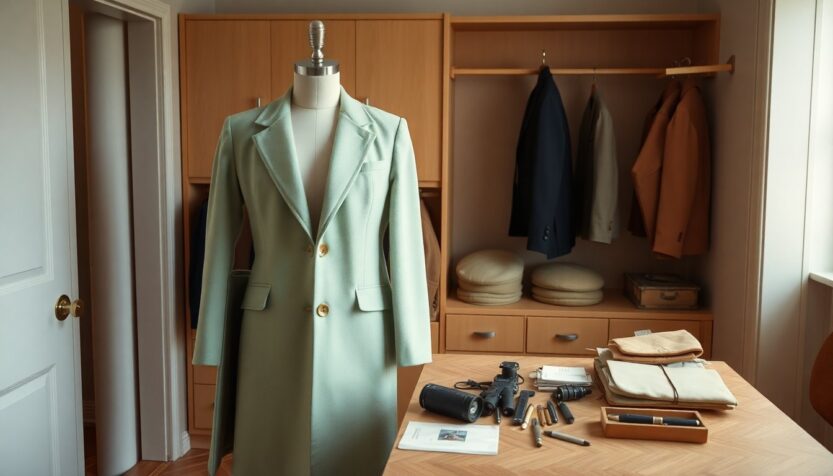
The public image of Queen Elizabeth II was never left to chance. Her reputation for precision extended beyond ceremony into the minutiae of dressing: fabrics, fastenings, and even the interior finish of garments were considered instrumental to maintaining a composed presence. Over decades, this attention to detail became a hallmark of her style, a carefully maintained performance that balanced tradition with practicality. These measures were not merely cosmetic; they functioned as a toolkit that allowed the monarch to move through official life with ease and a consistent visual identity.
That meticulous approach is highlighted in the upcoming exhibition Queen Elizabeth II: Her Life in Style, opening on April 10 at the King’s Gallery at Buckingham Palace. Billed as the largest exhibition dedicated to her fashion, it casts new light on seemingly small choices—one of the most revealing being pockets. What many consider a mundane detail actually played a purposeful role in how the queen presented herself during public and institutional engagements.
Practical innovations behind a timeless look
Many of the queen’s sartorial tricks were engineered to solve simple problems. For example, hems often contained added weight to prevent skirts from catching the breeze and disrupting a formal appearance. Footwear followed a similar logic: the queen favored a single model of shoe that was patiently broken in by her dresser, Angela Kelly, using a shoehorn to ensure comfort without sacrificing the silhouette. Perhaps the most famous accessory was her black Launer handbag, which doubled as a low-key communication device when moved between hands to signal staff. These adaptations show how functionality and symbolic language coexisted within royal dress.
The quiet code of pockets
Pockets may be overlooked in everyday wardrobes, but for the queen they served both practical and classified purposes. Caroline de Guitaut, the exhibition curator and deputy surveyor of the queen’s works of art at the Royal Collection Trust, explained to Hello! that there was a deliberate system in place—what she described as a hierarchy of pockets. Different linings and finishes indicated intended uses: some pockets were built with durable cotton for heavier items, while others were silk-lined, perhaps intended for delicate objects such as riding gloves. The distinction reinforced the idea that every element of a royal outfit had been thought through.
A practical hierarchy
According to de Guitaut, pockets were not uniform components but tailored features assigned for specific tasks. A cotton-lined pocket would be preferred for carrying frequently used items, given its resilience. Conversely, a silk-lined pocket signaled gentler use, protecting more fragile contents. This technical layering—choices about fabric, reinforcement and placement—reflects a broader design philosophy in the queen’s wardrobe: clothing had to look authoritative from a distance while remaining useful up close. Such details underline how material choices supported both appearance and function.
A gesture with limits
Despite these practicalities, the queen rarely used pockets as casual resting places for her hands. Reports suggest a long-standing prohibition—dating back to her childhood—against the habit, which was seen as an unbecoming mannerism in formal settings. That makes a 2019 portrait particularly striking: photographed by Barry Jeffery and published by Hello! to coincide with Angela Kelly’s book The Other Side of the Coin, it shows the queen with both hands tucked into the deep side pockets of a white dress. The image was unusual precisely because it broke the expected protocol; Kelly later revealed it had been the queen’s secret wish to be seen that way, despite advisers’ warnings.
Why these small choices matter
Examining such minutiae reveals how the queen used clothing as an operating system for royal duty. Weighted hems, standardized shoes, coded handbag movements and a considered pocketing strategy all contributed to a consistent public persona. They smoothed the daily logistics of ceremonial life while enabling discreet communication and comfort. The new exhibition at the King’s Gallery invites visitors to appreciate the technical and symbolic work embedded in garments, reminding us that in royal dressing, the smallest components often carry the biggest messages.
Final reflections
Far from mere vanity, these effects demonstrate a disciplined approach to visibility: design choices were integrated with protocol to produce an image that was at once familiar and functional. Whether through fabric linings or a handbag shifted between hands, the queen’s wardrobe was a network of intentional signals—each one designed to support a sovereign’s presence on the world stage.