



The appeal of Sabrina Carpenter’s stage makeup is not just about color; it’s about structure and finish. Her distinctive flush reads as both youthful and sculpted, a look created by her makeup artist Carolina Gonzalez through a reliable blush technique that blends shade mixing with strategic placement. At its core, the approach is practical: combine a few tones, place pigment where it lifts the face, and lock it in for longevity. This method translates easily from backstage to a quick morning routine because it focuses on enhancing natural contours rather than masking them.
Before anything else, this technique begins with a dewy base—a slightly luminous skin finish that keeps pigment from sitting flat. Brands like Armani Luminous Silk are often cited by the artist for foundation because they offer medium coverage while preserving a skin-like sheen. That skin-like canvas lets the blush appear integrated rather than pasted on, so when you blend and layer the colors they behave like a natural flush that happens from within. The result is simultaneously soft and arresting under stage lights or in daylight.
The layer-and-mix approach to the signature flush
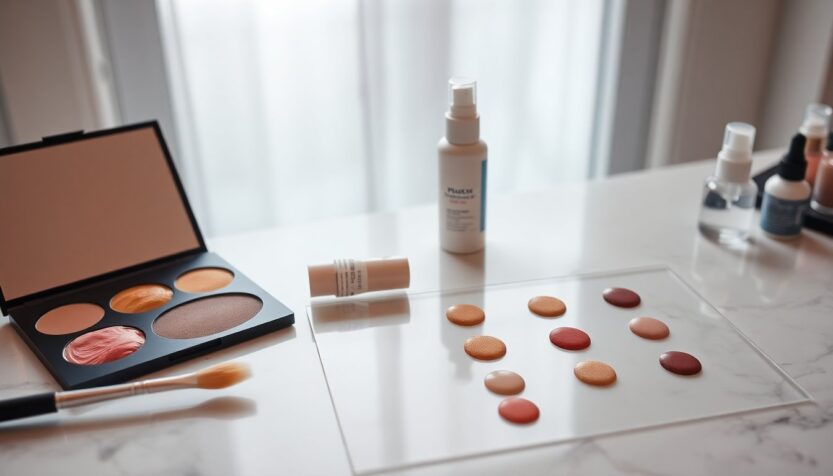
Carolina’s hallmark is to use more than one color to create depth: a technique I sometimes call shade blending. For Sabrina, two favored tones from Armani Luminous Silk Cheek Tint—Bold Pink and Delicate Mauve—are often combined, with Rosewood Pink used when a less candy-pink, more neutral rose is desired. The principle is simple: mix a brighter hue with a muted one to craft a custom shade that flatters your skintone. You can replicate this by placing tiny dots of each shade on the back of your hand or directly on the cheek and blending with a brush to produce a seamless, multi-dimensional color that reads like a natural glow.
How to apply for lift and diffusion
Placement is part of what makes the look feel modern. Instead of confining color to a small circle on the apples, the product is swept upward toward the temples in a soft V—this creates a lifted silhouette. Think of the application as a combination of blush and highlighter territory: spread pigment across the apples of the cheeks and blend outward and slightly upward so the cheekbones look pronounced. In fast scenarios, dabbing dots of product on both cheeks and blending with a fluffy brush will yield the same effect as mixing on the hand, but the key remains the same: soft edges and a gentle gradient, never hard lines.
Locking in the color and intensifying radiance
For durability—critical when performing or dancing—the method layers a powder over the cream or liquid blush. A fine dusting of a luminous powder blush such as Armani Luminous Silk Glow Blush helps set the color and prevent shifting. To amplify sheen without visible glitter, a tiny amount of a fluid highlighter, like the Armani Fluid Sheer Glow Enhancer, can be mixed with the cream tint or tapped lightly onto the highest points of the cheekbone. This creates an almost mirrored light rather than chunky shimmer, which is what gives Sabrina’s cheeks that stage-friendly pop while keeping the finish chic and wearable offstage.
Start with the right base and tools
A dewy base is non-negotiable: it ensures the pigments sit naturally. Beyond Armani, alternatives for those seeking similar finishes include luminous powder blushes and creamy formulas from brands like Rare Beauty, Dior, or MAC. Brushes matter too—use a rounded, fluffy brush for blending and a softer, tapered brush for targeted placement. If you prefer liquids, build in light layers with a brush and then diffuse with a larger, clean one to avoid streaks. The combination of product texture and the right tools will determine how seamlessly the layered technique reads on skin.
Why this method works and how to make it your own
The charm of this approach is its adaptability: mixing shades creates a tailored tone, upward blending sculpts the face, and layering secures wear. For many, the immediate benefit is brighter under-eyes and the appearance of lifted cheekbones, because the flushed color distracts from dark circles and adds dimension. You can personalize the palette—mix pinks with peaches for warmth or mauves with roses for a cooler glow—while keeping the same layering and placement rules. Whether you’re prepping for a performance or refining an everyday makeup routine, this system offers a simple roadmap to a flushed, luminous finish inspired by Sabrina Carpenter and executed by Carolina Gonzalez.