



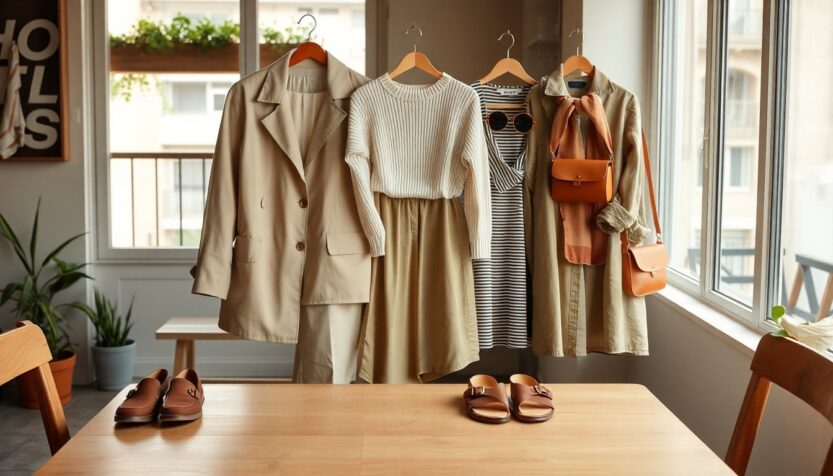
Elena Marchetti — a former Michelin-starred chef who now writes about food and lifestyle — approaches spring dressing the way she once approached a tasting menu: with restraint, attention to texture, and a taste for quality. You don’t need a closet overhaul to feel refreshed for the season. With seven considered pieces and a few thoughtful accessories, you can create a versatile, effortless rotation that takes you from cool mornings to warm evenings.
A few guiding ideas
– Edit, don’t replace. Aim to pare down and improve what you already own rather than buying a new outfit for every occasion.
– Favor durability and ease of styling: natural fibers, clean construction details and pieces that layer well.
– Think in systems, not single looks: each garment should work alone and as part of several combinations.
The seven essentials to build around
1. A floaty, breathable top
Choose a lightweight cotton or linen-blend shirt with relaxed shoulders and a slightly longer hem. It should breathe, move, and tuck or blouson depending on how you feel. This is the kind of top that partners with jeans one day and tailored trousers the next.
2. A pretty, mid-length dress
Look for a neutral or subtle seasonal print in a fabric that drapes and holds its shape. A mid-length dress can be a standalone outfit, a base layer under a blazer, or an easy pairing with a lightweight sweater.
3. A structured blazer
A jacket with a quiet silhouette and good construction elevates everything. Seek sculpted lines, reinforced seams and light shoulder structure that lift the profile without fuss. Good tailoring should be available across sizes so the look reads the same on different bodies.
4. A seasonless coat
A simple, well-made coat extends the wardrobe through spring’s temperature swings. Clean lines and durable fabric make it a dependable outer layer for mornings and evenings.
5. A cozy, versatile sweater
Pick a knit with body and drape—something that layers comfortably over shirts and under coats. Neutrals or soft pastels are easy to mix; subtle texture like a fine rib or moss stitch adds interest without stealing the show.
6. White denim
White jeans brighten a rotation and feel surprisingly seasonless. Wear them tonal with creams for a soft, modern look (sometimes called “stick-of-butter dressing”) or with sharper tailoring for contrast. Reserve them for lower-risk days and treat stains promptly.
7. A pair of low-heeled shoes in a saturated color
A bold shoe—red loafers or a low-heeled pump—acts as a controlled punctuation mark. It lifts simple neutrals, works for errands or a casual dinner, and gives outfits a confident focal point.
Accessories that matter
– A reliable, structured leather bag that holds daily essentials while keeping its shape.
– A woven belt or compact scarf to introduce texture without clutter.
– Sunglasses with a modest frame and durable hardware.
Choose materials that age well—vegetable-tanned leather, high-quality coated canvas or sturdy synthetics—and prefer shorter supply chains and transparent provenance where possible.
A few guiding ideas
– Edit, don’t replace. Aim to pare down and improve what you already own rather than buying a new outfit for every occasion.
– Favor durability and ease of styling: natural fibers, clean construction details and pieces that layer well.
– Think in systems, not single looks: each garment should work alone and as part of several combinations.0
A few guiding ideas
– Edit, don’t replace. Aim to pare down and improve what you already own rather than buying a new outfit for every occasion.
– Favor durability and ease of styling: natural fibers, clean construction details and pieces that layer well.
– Think in systems, not single looks: each garment should work alone and as part of several combinations.1
A few guiding ideas
– Edit, don’t replace. Aim to pare down and improve what you already own rather than buying a new outfit for every occasion.
– Favor durability and ease of styling: natural fibers, clean construction details and pieces that layer well.
– Think in systems, not single looks: each garment should work alone and as part of several combinations.2
A few guiding ideas
– Edit, don’t replace. Aim to pare down and improve what you already own rather than buying a new outfit for every occasion.
– Favor durability and ease of styling: natural fibers, clean construction details and pieces that layer well.
– Think in systems, not single looks: each garment should work alone and as part of several combinations.3
A few guiding ideas
– Edit, don’t replace. Aim to pare down and improve what you already own rather than buying a new outfit for every occasion.
– Favor durability and ease of styling: natural fibers, clean construction details and pieces that layer well.
– Think in systems, not single looks: each garment should work alone and as part of several combinations.4