



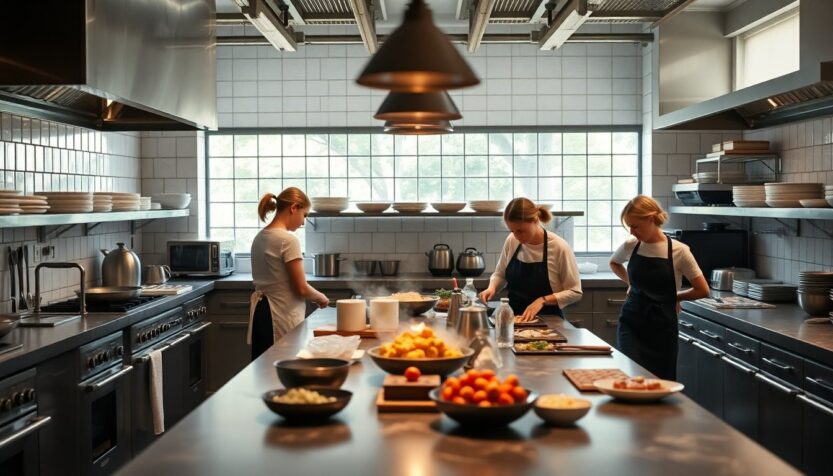
For decades, professional kitchens were widely viewed as arenas reserved for men while women were expected to tend the family table. That division has been dismantled by a cohort of women whose careers reshaped culinary culture.
This article profiles six influential figures and examines how their work transformed the way people cook, eat and discuss food. Each profile highlights leadership, innovation and cultural influence. Together, these chefs combined technical skill with distinct philosophies that broadened opportunities across restaurants, media and public institutions.
Redefining fine dining: grit, precision and a softer leadership
Clare Smyth rose through rigorous brigade kitchens before founding her own restaurants in the United Kingdom. She trained within hierarchical systems and later opened venues that combine exacting standards with accessible service. Smyth has criticized traditional restaurant cultures for an aggressive tone, while implementing a more collaborative approach in her brigades. Her work demonstrates that excellence and compassionate leadership can coexist in high-pressure culinary environments.
What hospitality looks like now
Building on recent shifts in the industry, Smyth’s projects aim to make luxury more approachable. Menus pair elevated comfort dishes with formal service and careful curation. The model challenges the notion that toughness is a prerequisite for authority in the kitchen.
Her teams operate with disciplined technique and clearer communication. Managers and chefs emphasize mentorship, staff welfare and consistent standards. The result is maintained culinary ambition delivered through less confrontational management.
Popularizing technique and confidence through media
Smyth has extended her influence beyond restaurants through televised appearances, cookbooks and public talks. Those platforms translate professional methods into teachable techniques for wider audiences. The result is greater public familiarity with technical practice and a visible pathway for aspiring chefs.
Industry observers say this visibility has practical effects. More trainees seek formal culinary education and mentorship. Employers report increased demand for kitchens that balance high standards with sustainable working conditions.
As contemporary hospitality evolves, Smyth’s model remains a reference point for chefs and managers. Her approach suggests that culinary ambition can be sustained alongside improved workplace culture and broader access to professional opportunities.
Building on Smyth’s model of sustained ambition and improved workplace culture, television-era figures established another channel for culinary transmission. They translated professional technique into home practice and reshaped public expectations about cooking.
Julia Child brought formal French technique into American kitchens. She also modeled an attitude that prized experimentation over flawless execution. Her early television appearances made the act of learning to cook visible, communal and forgiving. That public, explanatory style became a template for later food presenters.
Television and the democratization of cooking
Broadcasters and hosts expanded the audience for culinary knowledge. Personalities such as Rachael Ray reframed everyday cooking as an accessible lifestyle category. By emphasizing quick, practical recipes and an upbeat delivery, they pushed back against the notion that home cooking was insignificant. Media thus converted domestic cooking into a site for entertainment, instruction and commercial activity, extending culinary influence well beyond restaurant kitchens.
Roots, seasonality, and cultural storytelling
From farm to table to national conversation
Alice Waters advocated for a direct, seasonal link between restaurants and local agriculture. By prioritizing seasonal menus and partnerships with small-scale producers, she helped stimulate global interest in sustainable, ingredient-led cooking. That practice reframed restaurants as ecological actors rather than passive consumers of commodities, influencing procurement, menu design and public debate about food systems.
Chefs drawing on multicultural backgrounds have also shifted palates and public narratives. Rachel Khoo leveraged her mixed heritage and a modest Paris kitchen to develop a distinct media voice, demonstrating that intimacy and personality can rival scale and formality in shaping culinary culture. Together, these developments extended culinary influence from kitchen technique to broader conversations about roots, seasonality and cultural storytelling.
These chefs translated technique and sourcing choices into public debate about health, provenance and culinary identity. Their work influenced peers, consumers and policymakers. It remains central to discussions on sustainability and cultural respect in gastronomy.
Service at the highest civic level and celebrating cultural legacies
Cristeta Comerford brought professional culinary craft to a national platform as an executive chef at official residences. She used menus and service protocols to reflect cultural sensitivity and nutrition priorities. Her stewardship demonstrated how high-level food service can perform culinary diplomacy. At state events, hospitality conveyed symbolic meaning as much as taste. Her example showed that provenance, ceremony and dietary guidance can coexist in official kitchens.
Her example showed that provenance, ceremony and dietary guidance can coexist in official kitchens. Other chefs have used similar approaches to place culinary history at the center of their work. By documenting recipes and restoring neglected techniques, Mashama Bailey has sought to reclaim regional foodways linked to specific communities. She supports agricultural projects and cultural initiatives that sustain local producers and keep culinary narratives alive. This activism treats food as both heritage and a living practice.
Comfort, publishing and mainstream influence
The expansion of culinary education into books, columns and digital series has broadened public access to professional knowledge. Figures such as Ina Garten and writers like Samin Nosrat and Claire Saffitz have translated technical skills into clear, usable guidance for home cooks. Their titles and series range from comforting, practical recipes to in-depth primers on technique. The result is a mainstream influence that makes advanced culinary ideas approachable and places expert knowledge in everyday hands.
The result is a mainstream influence that makes advanced culinary ideas approachable and places expert knowledge in everyday hands. Taken together, these women illustrate how innovation, visibility and persistent advocacy have reshaped the culinary landscape.
They moved beyond mastering technique to reshape how restaurants operate, how food media is produced and how communities reconnect with regional and cultural foodways. Their work has altered hiring practices, menu development and the editorial priorities of food coverage. It has also created pathways for younger chefs and food professionals to build careers on both skill and public presence.
Their stories demonstrate that lasting change in the field stems from a combination of technical skill, public engagement and the willingness to pursue different models. That combination now informs mainstream practice and ongoing debates about equity, tradition and innovation in food culture.