
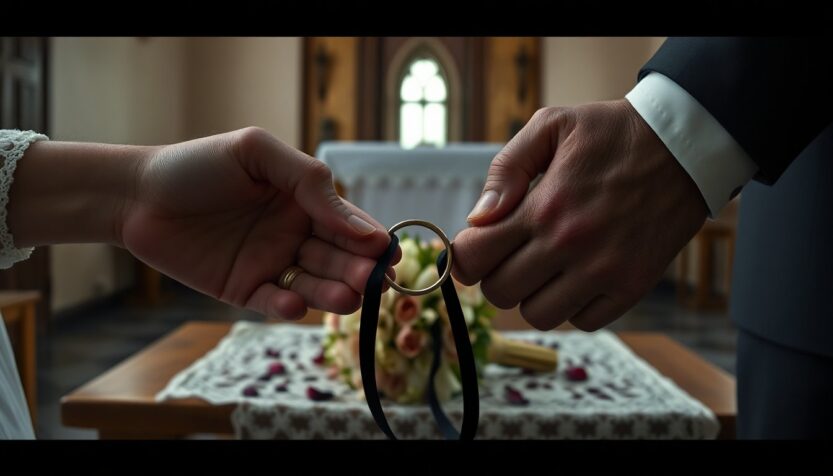
The final episode of Something Very Bad Is Going to Happen concentrates all of the show’s dread into one catastrophic wedding. Over the course of the season Rachel uncovers a family legacy that is equal parts myth and menace: a pact with Death that demands a very specific kind of devotion. The finale forces characters into urgent decisions, and the consequences ripple beyond a single couple to affect entire bloodlines. This piece explains the origin of the curse, the events at the altar and reception, and the startling transformation that closes the series.
For viewers who prefer spoilers, the sequence at the reception delivers both gore and a moral dilemma about trust, belief, and what it means to know another person. The show uses the wedding as a pressure cooker that tests relationships — not just the central pair but extended family members with their own secrets. By the end, responsibility shifts in a way that feels simultaneously poetic and cruel: one woman is freed from a marriage she didn’t want, only to inherit an eternal obligation she never asked for.
The origin and rules of the curse
The curse begins with a desperate bargain centuries earlier, when a bride begs Death to restore a lost groom. In exchange, every descendant in her line must marry someone they genuinely believe to be their soulmate by the end of their wedding day — otherwise they will die in a gruesome way involving blood from the eyes. That compact is strict: belief, not biology, is the trigger. The series treats the idea of soulmate as an emotional threshold: it is an unwavering conviction rather than merely attraction or compatibility. A secondary rule is crueller still: if the wedding is abandoned and the bride does not marry, the curse can jump into the jilted partner’s family, spreading the hazard outward.
The wedding collapse and who it affects
At Rachel and Nicky’s ceremony, mounting tensions explode. Rachel spends the week trying to decide if she truly believes in Nicky as her soulmate, while Nicky wrestles with his own doubts after learning family betrayals that make him question marriage itself. At the altar the couple’s faiths diverge — Rachel’s belief falters because Nicky appears not to have always seen or trusted her, and then Nicky loudly declines to continue with the marriage. That refusal is the catalyst: the curse transfers into Nicky’s bloodline and begins to claim victims among his relatives, including married people whose own marriages lack that essential conviction. The reception turns horrific as several guests begin to bleed from their eyes, illustrating the rule that the curse kills only where the emotional criteria are unmet.
Who survives and why
Not everyone present succumbs. Some characters are spared because, within the story’s logic, they truly trust their partners — a detail that reveals quieter relationship strengths amid the chaos. Others die because their unions were built on other foundations. There is also the technicality that unmarried relatives do not die immediately but become carriers: the bloodline now carries the curse forward. The series gives small narrative rewards here, such as surprising demonstrations of commitment in partnerships viewers assumed were shaky, and it uses those moments to underscore how belief — and not surface harmony — determines fate.
Rachel’s death, rebirth and new responsibilities
After the curse spreads to Nicky’s family, Rachel ultimately collapses when she no longer believes him to be her soulmate; she appears to die in the reception hall. But the show adds a mythic twist: with the curse moved to a new bloodline, the role of The Witness — an immortal figure who has been forced to attend these tragedies for generations — is transferred. Rachel is resurrected in order to fill that role, effectively becoming the next keeper of an awful vigil. The change is both punishment and release: she is freed from the failed relationship she could never reconcile, yet condemned to observe future nuptials as a living reminder of the pact’s cost.
What the ending means for future weddings
The finale leaves several unanswered but deliberate notes. The curse’s mechanics remain logical within the myth: it punishes emotional doubt and rewards authentic belief, and it migrates across family lines when marriages are broken. Rachel’s new existence as The Witness suggests that the show values accountability and historical memory — someone must bear witness to these rituals so the pattern continues but is also recorded. The last scenes, in which Rachel claims mundane details like a lost lighter before she departs, underline the series’ final tone: grief and absurdity coexist, and life moves forward even when an ancient bargain persists in the background.