



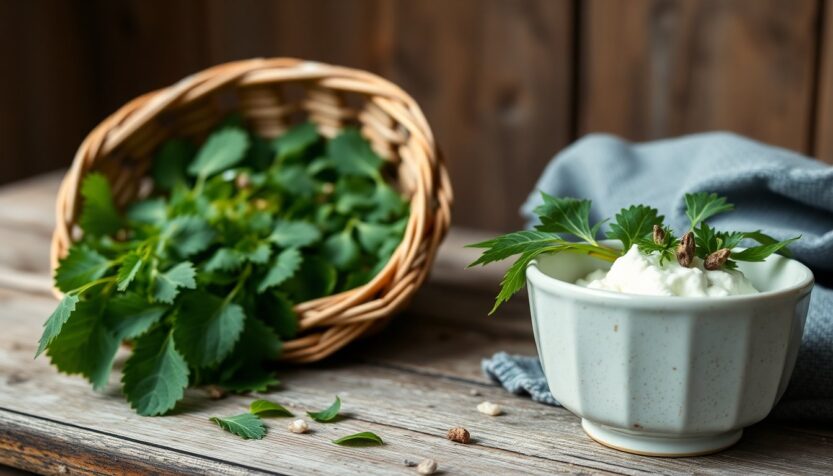
a tasting of spring: nettles, ricotta, and the art of simple cooking
open your senses
Close your eyes. Picture the bright green bite of early spring: a breeze that carries cut grass, the memory of wet earth, and a leaf that tastes of spinach yet sings with a wild, herbaceous edge. Seasonal cooking begins with that first inhale—the moment terroir meets appetite. The palate never lies… The mouth recalls place before the mind does.
the story behind the ingredient
The mouth recalls place before the mind does. The palate never lies: nettles retain the memory of damp banks, of first shoots and winter’s retreat. Behind every dish there’s a story; nettles carry a seasonal narrative that links table to landscape.
For centuries across Europe, households harvested young nettles as a spring tonic. Home cooks transformed them into soups, pasta fillings and sautés to lift the early-season menu. As chef I learned that pairing nettles with fresh cheeses such as ricotta moderates their verdant intensity and adds creamy balance.
Technical detail matters. Blanching neutralizes stinging hairs and softens cellulose, while brief sautéing preserves chlorophyll and umami compounds. Gentle acid—lemon or vinegar—brightens leaf aromatics without masking terroir. These simple techniques keep texture and flavor aligned with the ingredient’s origin.
Sustainable sourcing and ethical foraging are intrinsic to the nettle story. Knowledge of the land, respect for regeneration and limiting harvest to young shoots protect local biodiversity. For sellers and cooks, documented provenance and a short supply chain support both quality and conservation.
Dietro ogni piatto c’è una storia… Behind that Italian maxim lies a practical ethic: traceability, seasonality and culinary technique together preserve flavor and heritage. In practice, a modest jar of ricotta and a basket of freshly picked nettles can map a small region’s spring on the plate.
Technique made accessible
From that small tableau of ricotta and nettles, technique turns simple elements into a composed dish. Begin by blanching the leaves for 30–60 seconds to neutralize the sting. Immediately shock them in iced water to preserve a vivid green. Squeeze gently to remove excess moisture and coarsely chop.
Warm a modest jar of ricotta over low heat and fold in the chopped nettles with a splash of good olive oil, lemon zest and a pinch of salt. Finish the filling with grated Pecorino or a thin drizzle of browned butter to add savory depth. The result is creamy, herb-forward, and sustained by a bright umami backbone.
Fermentation can play a supporting role. A smear of cultured butter or a spoonful of plain yogurt will lift acidity and add subtle tang. As a chef I learned that gentle contrasts—temperature, fat and acid—make small plates sing.
The palate never lies… Behind every plate there is a place. Here, nettles recall riverbanks and early springs; pairing them with aged cheese or cultured butter ties the dish back to a regional filiera. Serve the filling on grilled sourdough or use it to stuff pasta; either way, the technique preserves terroir while remaining accessible to the home cook.
Cooking notes and variations
The palate never lies… Start with a sensory memory of the nettles’ green perfume and the gentle cream of ricotta. Keep the opening short and tactile to carry the transition from blanching and composition.
Use the filling in three main ways. Fold it into pasta shapes for a compact, elegant bite. Incorporate it into gnocchi dough for a softer, pillowy texture. Or serve it rustic on grilled sourdough as a crostini topping.
For contrast, add toasted elements. Pan‑toast chopped hazelnuts or dry breadcrumbs until golden. Finish with a whisper of lemon zest to lift the fat and sharpen the aroma. These touches create texture and clarity without masking the primary flavors.
For deeper, rounded flavor, sweat shallot briefly with the nettles before mixing with ricotta. Cook just until translucent to release sweetness without browning. Keep salt restrained so the terroir of the greens remains the protagonist and the filling reads as fresh rather than salty.
Small technical choices matter. A brief toast or a quick sweat adds layers of umami and complexity while preserving the ingredient’s identity. Behind every dish there’s a story, and these modest steps let that story come through.
Connection to territory and tradition
Behind every dish there’s a story, and these modest steps let that story come through. The palate never lies: nettles carry the blunt, green perfume of a place. In regions where foraging remains common, those scents mark seasonal shifts and communal rhythms.
This preparation celebrates filiera corta, the short supply chains that bind field, farm and table. Choosing local ricotta and small dairies preserves livelihoods and maintains traceability. Institutions such as Slow Food and regional guides underline how daily choices support sustainable practices and respect for wild foraging grounds.
More than a flavor pairing, nettles and ricotta map a landscape of memory. Texture, salt and herb register terroir as clearly as soil or pasture. As a chef I learned that technique amplifies origin: gentle cooking, careful draining and precise seasoning let the ingredient’s provenance speak.
The dish therefore functions as culinary testimony. It links harvesters, producers and home kitchens across seasons and generations. Expect variations to reflect local dairies’ fat content, foragers’ timing and the region’s herbal tradition.
an invitation to taste and practice
Expect variations to reflect local dairies’ fat content, foragers’ timing and the region’s herbal tradition. Try this at home with caution and intention. Hunt responsibly for a small bundle of nettles or buy them from a trusted producer. Wash them thoroughly and blanch briefly to remove stinging hairs. As a chef I learned that timing and temperature preserve texture and brightness.
Serve the prepared greens on warm toasted bread or fold them into fresh hand-rolled pasta. Finish simply with a drizzle of good olive oil, a squeeze of lemon and a scattering of grated hard cheese. The palate never lies: let the memory of soil and sun come through with each bite. Behind every dish there’s a story, and sharing this one with friends reinforces both flavour and provenance.
When foraging, follow local rules and pick sparingly. Prioritise younger shoots and avoid polluted areas. Preserve seasonality by cooking small batches and rotating ingredients according to availability. Sustainable practice protects producers, ecosystems and culinary traditions.
sources and further reading
For guidance on preservation of tradition and sustainable practices, consult trusted organisations such as Slow Food, Gambero Rosso and the Michelin Guide. These resources offer practical advice on producers, seasonality and supply-chain integrity that supports simple dishes at their best.
The palate never lies: behind every dish there’s a story that links producer, technique and terroir.
As a chef I learned that small acts in the kitchen protect flavor, culture and the land.
Elena Marchetti — former starred chef turned food writer.