



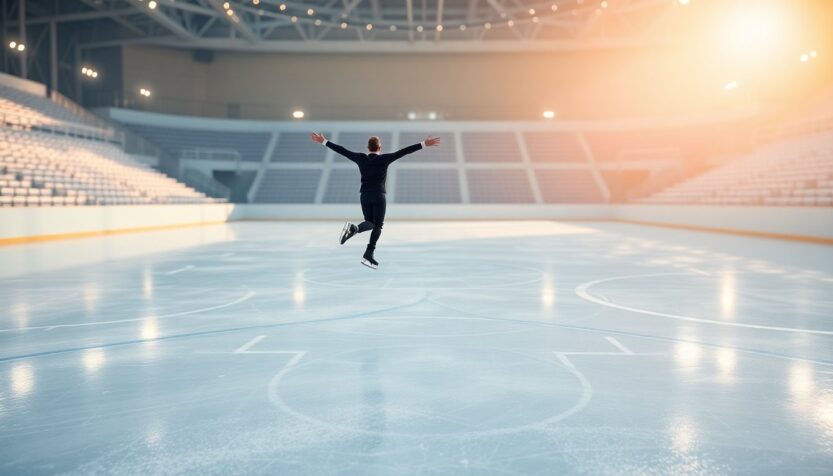
As the Winter Olympics approach, the excitement for figure skating intensifies. This captivating sport combines athleticism with artistry, allowing skaters to showcase their skills through jumps, spins, and choreographed routines. Understanding the terminology associated with figure skating can significantly enhance the viewing experience. This guide outlines essential terms and elements that define this extraordinary discipline.
Figure skating comprises various components, including individual and pair events. Below, we examine key terms that are integral to the sport.
Key jumps and spins
In competitions, jumps are a fundamental aspect of figure skating. Each type of jump has unique characteristics. The axel jump is particularly significant, as it is the only jump requiring a forward takeoff. It involves a complex rotation, with a single axel completing one and a half revolutions. More advanced variations include the double and triple axels, which complete two and three and a half revolutions, respectively. The quadruple axel has only been successfully executed by one skater, Ilia Malinin, also known as the Quad God.
Understanding spins
Spins are also crucial in figure skating routines. The biellmann spin is a challenging maneuver that showcases a skater’s flexibility. In this spin, the skater balances on one foot while extending the other leg overhead, forming a striking teardrop shape. This move is mandatory for female competitors and is occasionally performed by male skaters, such as Yuzuru Hanyu, to earn additional points.
Another common spin is the camel spin, where the skater holds their leg in an arabesque position while maintaining balance at hip level. Variations of this spin may include grasping the leg or blade for added complexity.
Pair skating and artistic elements
Figure skating also includes pair events, where skaters perform together. A dance lift is a highlight of these performances, requiring significant strength and coordination. Unlike more dramatic lifts seen in pairs skating, dance lifts emphasize creativity and balance. Partners may balance on each other’s shoulders or legs while gliding across the ice.
The death spiral is another thrilling move in pair skating. In this maneuver, the male partner pivots around a curve while holding the female partner’s hand, who remains low and horizontal to the ice. This move elegantly showcases both strength and grace, captivating audiences and judges alike.
Scoring in figure skating
Understanding the International Judging System (IJS) is essential for comprehending how skaters are evaluated. Introduced in 2004, this scoring system aimed to enhance objectivity in judging, replacing the previous method that awarded a perfect score of 6.0. Under the IJS, points are assigned to each element performed, with deductions for errors in execution.
Competitors participate in both short and long programs. The short program consists of seven required elements, including jumps, spins, and footwork. Failure to complete these elements results in a score of zero for that move. In contrast, the long program allows for greater creative freedom and can last up to five minutes.
Technical elements and artistry
In addition to jumps and spins, other technical elements contribute to a skater’s score, such as footwork sequences and program component scores (PCS). Footwork consists of intricate patterns performed on the ice, requiring skaters to demonstrate their agility and control. Meanwhile, the PCS evaluates the artistic interpretation and performance quality of the routine, reflecting how well skaters convey emotion and connect with their music.
Figure skating comprises various components, including individual and pair events. Below, we examine key terms that are integral to the sport.0
Figure skating comprises various components, including individual and pair events. Below, we examine key terms that are integral to the sport.1