



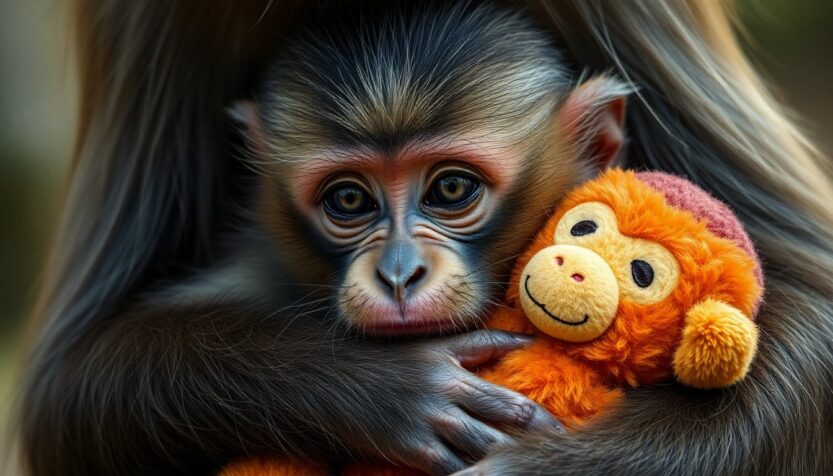
A tiny Japanese macaque named Punch has become an unlikely global symbol of both fragility and bounce-back. Born at Ichikawa City Zoo in Chiba last July, the infant was rejected by his mother at birth and has since been hand-reared by keepers. The image that captured hearts worldwide: Punch curled around a stuffed orangutan toy, clutching it like a lifeline.
What happened
Zoo staff began posting videos and photos of Punch on the facility’s social channels: the macaque sleeping with the plush, toddling around with it in tow, and seeking comfort from human carers. Those simple, intimate snapshots spread fast, drawing a stream of sympathy, curiosity and debate from audiences at home and abroad.
Why people cared
The footage tapped into something basic — the sight of a newborn denied maternal care, seeking solace in an inanimate friend and in human hands. Viewers saw vulnerability and tenderness; some reacted with hope, others with skepticism. The story forced a broader question: how do social animals cope when separated from their mothers, and what role should humans play in their recovery?
How the zoo is managing care
Ichikawa’s team says it is closely monitoring Punch and adjusting care to support both his physical health and social development. The stuffed toy — an IKEA DJUNGELSKOG orangutan — appears to have calmed stress-related behaviours early on, allowing staff to introduce routines, hygiene measures and enrichment without overwhelming the infant. At the same time, keepers are balancing intensive hand-rearing with efforts to encourage species-typical interactions so Punch can eventually join his peers.
Experts caution that surrogate objects and human contact can help in the short term but may influence long-term social behaviour. Good rehabilitation blends temporary supports with structured opportunities to interact with conspecifics, supervised gradual exposure, and behavioural monitoring that can show whether progress is real and lasting.
The corporate moment
The story quickly attracted outside attention. On February 17, IKEA Japan delivered several identical plush orangutans and other soft toys to the zoo — a donation that drew wide press coverage and a visit from Petra Fare, IKEA Japan’s president. Some lauded the gesture as practical aid; others treated it as a public-relations move.
That split reaction illustrates a bigger point: corporations can mobilize resources and shine a spotlight on causes, but their involvement works best when tied to clear, accountable support — funding for veterinary care, staff training or conservation programs rather than a one-off publicity stunt. Zoo managers and donors alike need explicit agreements that protect animal-welfare decisions from marketing pressures.
Signs of recovery
Keepers now report encouraging early signs. Recent footage shows Punch being groomed by a troop member, playfully poking other macaques and experiencing the everyday social frictions of group life — being scolded, explored, tolerated. These interactions don’t guarantee full reintegration, but they are the right kinds of progress: small, measurable, and social. The zoo has also seen an uptick in visitors and donations, which has helped fund care while occasionally straining staff capacity.
What the episode reveals
Punch’s story is both wrenching and hopeful. It shows how a mix of human intervention, a comforting object and gradual peer contact can create a path toward social recovery. It also exposes the tensions that come with viral attention: fast-moving public sentiment, corporate offers, and the pressure to communicate without oversimplifying complex welfare decisions.
Moving forward, the clearest measures of success will be observable behaviour and independent oversight: documented social milestones, transparent reporting of outcomes, and commitments from partners that extend beyond a single headline. If those pieces fall into place, the episode could become a useful template for rescue and rehabilitation—one born out of an emotional moment but grounded in careful, evidence-based practice.
What happened
Zoo staff began posting videos and photos of Punch on the facility’s social channels: the macaque sleeping with the plush, toddling around with it in tow, and seeking comfort from human carers. Those simple, intimate snapshots spread fast, drawing a stream of sympathy, curiosity and debate from audiences at home and abroad.0