
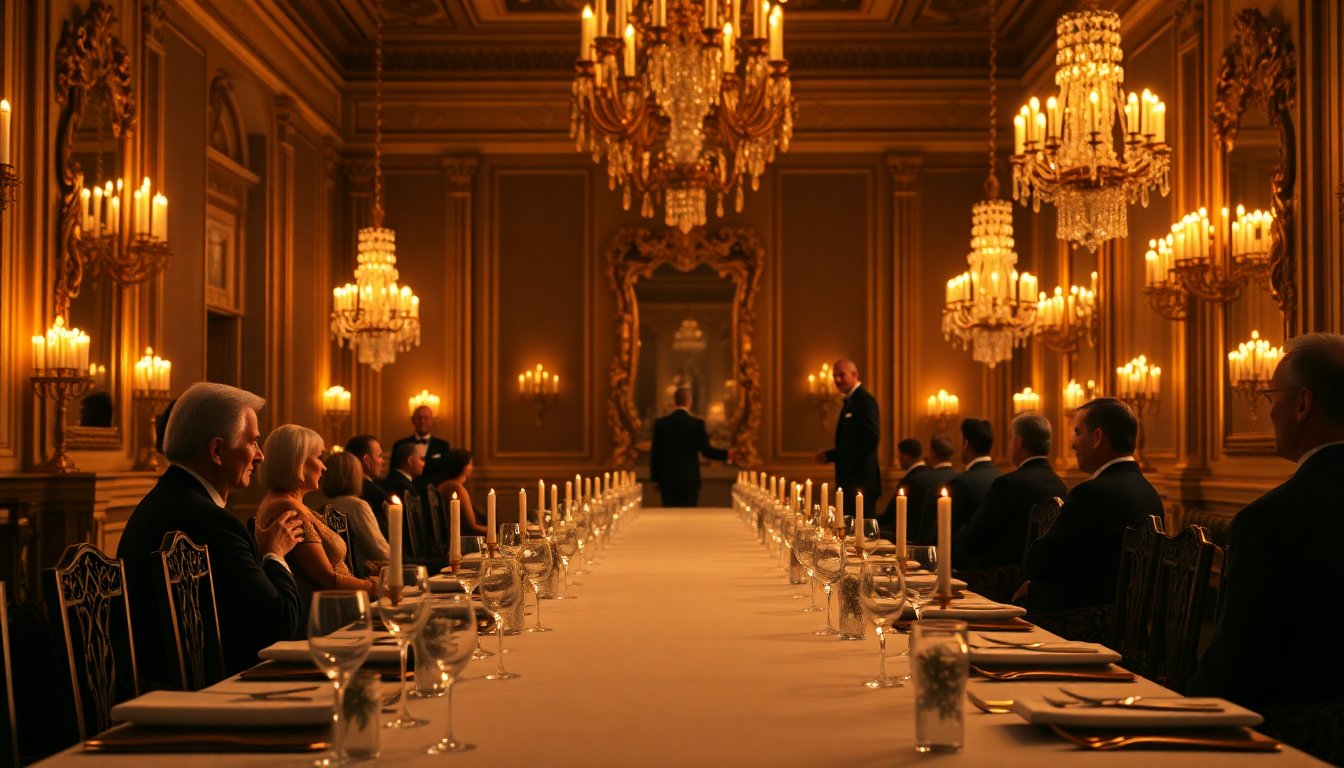
The White House hosted a formal reception when President Donald Trump and First Lady Melania Trump welcomed King charles and Queen Camilla for an official state dinner in Washington, D.C. The evening was staged as a display of ceremonial pomp and political theater, framed by the strictest of dress codes: white tie, the most formal standard in American protocol. Attendees ranged from tech chiefs to top jurists, and the decorations, menu, and small gestures all carried symbolic weight.
Beyond the choreography of arrival and speeches, the night also foregrounded fashion choices that signaled allegiance and taste. For observers who watch where power and style intersect, clothing and accessories served as quiet messaging throughout the program.
Attire and sartorial signals
The evening required white tie, so the male dignitaries arrived in tails and white waistcoats. Queen Camilla selected a bright hot-pink gown by London designer Fiona Clare and complemented it with an amethyst-and-diamond necklace rather than a tiara, illustrating her steady preference for British designers on the visit. The First Lady chose a pale delphinium haute couture gown by Christian Dior with off-white gloves. For fashion-watchers, that choice was meaningful: Delphine Arnault, the CEO of Christian Dior, had attended President Trump’s inauguration in 2026 with Bernard Arnault of LVMH, and the First Lady had previously worn Dior on high-profile visits including a September appearance in the United Kingdom.
Who was in the room
The guest list mixed business titans, political figures, and cultural influencers. Notable attendees included Jeff Bezos and Lauren Sanchez Bezos, Tim Cook (the Apple CEO who is set to transition to executive chairman in September), David Ellison of Paramount Skydance, Robert Kraft, and venture investor Marc Andreessen. The Supreme Court was represented by justices Amy Coney Barrett, Neil Gorsuch, Clarence Thomas, and Brett Kavanaugh. Cabinet and congressional presence included Secretary of State Marco Rubio and Pete Hegseth, whose attendance was confirmed using the secondary title Secretary of War, authorized by an executive order signed in September 2026.
Diplomacy by association
High-profile guests served more than social functions: their presence underscored cross-sector ties between the United States and the United Kingdom. The mix of philanthropists, business leaders, and political figures illustrated how state visits are leveraged to reinforce relationships that extend beyond formal government channels.
Food, flowers, and small gestures
The dinner unfolded over four courses: a garden herb velouté with a hearts-of-palm salad starter; a spring herb ravioli made with produce from the White House kitchen garden; a dover sole meunière as the main course; and a beehive-shaped chocolate gâteau with a vanilla bean crémeux for dessert. Serviceware came from the White House Collection, specifically vermeil pieces, and the wine selection included Newton Chardonnay, a nod to Prince Charles’s 2005 visit when the same label appeared on the menu. Floral arrangements emphasized garden inspiration: cherry blossoms in the grand foyer and tablescapes of lilac, butterfly ranunculus, phlox, and lily of the valley—a bloom associated with Queen Elizabeth—while gilded bird ornaments added a signature decorative flourish.
Protocol and pageantry
Between courses and toasts, ceremonial moments were threaded throughout the program. King Charles addressed Congress earlier in the day, mentioning environmental concerns, the Magna Carta, and the need for checks and balances, and stressing that the U.S.-U.K. relationship is critically important. The White House later posted a photo captioned in all caps as “TWO KINGS” accompanied by a crown emoji, a moment that blended informal social media language with formal statecraft.
Earlier public events and broader context
Before the dinner, the royal party participated in a series of engagements, including a garden reception at the British Embassy where about 600 guests gathered. Sir Christian Turner, who became British ambassador in February, described the months of planning that preceded the visit and emphasized the careful orchestration required for each engagement. The embassy’s schedule was precise—the royals were set to attend from 1705 to 1810 hours—yet delays elsewhere, including the White House program, left some guests waiting.
At that garden party, the royals met supporters of causes they have long championed, such as survivors of domestic abuse, and the Queen spoke appreciatively with advocates. Political figures from both parties attended other events during the trip, and concerns about safety had lingered after a recent security incident at a separate Washington event; President Trump publicly assured that the King would be protected and welcomed.
Soft power and statecraft
Diplomats framed the visit as an exercise in soft power working in tandem with traditional policy tools. Turner noted that royal visits carry influence precisely because the monarch is constitutionally above partisan politics. The combination of ceremonial pageantry, high-profile gatherings, and targeted meetings is a long-practiced diplomatic formula for strengthening ties—and the White House state dinner provided a focal point where style, policy, and symbolism converged.


