
The shift from one or two children to a household with many kids often feels like changing lanes on a crowded highway: everything moves faster and requires more coordination. Parents who live with large families tend to rely on repeatable systems rather than constant improvisation. In this piece you will find a mix of practical tips and small mindset shifts that experienced families use daily. These ideas are less about perfection and more about creating steady rhythms that reduce friction, preserve energy, and let people breathe.
Most strategies shared by parents of many children revolve around built-in expectations and shared responsibility. The advice below blends time management, household logistics, and emotional habits that scale well when numbers grow. You’ll see references to routines, communication shortcuts, and creative ways to keep individual needs visible within a crowded home. For clarity, some practices are introduced with an explanation of what they mean and why they matter, then followed by real-life examples you can adapt.
Set rhythms that reduce decision fatigue
One major theme is creating predictable patterns so fewer decisions are needed each day. Parents emphasize the value of a clear morning and evening routine that the whole family knows, because consistency frees up mental space for unpredictable moments. An example is a five-step morning checklist pinned near the door—dress, teeth, packed lunch, shoes, and a quick tidy—that children follow independently. Over time that small structure becomes automatic, and parents report that it lowers stress levels and helps the household move as a unit rather than as a series of frantic one-offs.
Design logistics around momentum
When you have many children, logistics is less about doing everything and more about creating sustainable momentum. Simple systems like meal batching, shared laundry days, and labeled cubbies create a flow that keeps tasks from accumulating. Families describe using a predictable rotation—assigning chores with short, clear instructions so even young kids can contribute. The goal is to turn repetitive tasks into habits; that steady momentum prevents small jobs from becoming overwhelming mountains and helps each child develop a sense of capability and ownership.
Practical tools for coordination
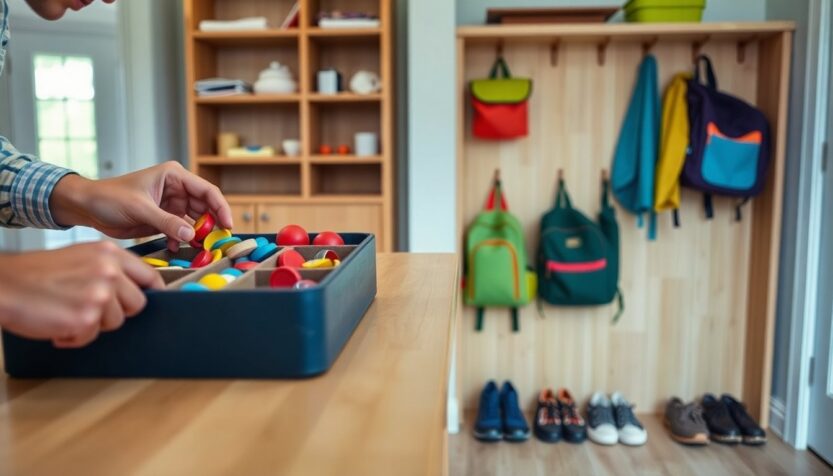
Parents frequently recommend low-tech aids: a large family calendar on the wall, color-coded backpacks, and a pegboard for permission slips and keys. These tools act as external memory so adults aren’t constantly repeating instructions. A related tactic is the communication shorthand—one-word signals or brief phrases that convey more than they seem to and save time. The shorthand becomes part of the household language, reducing interruptions and keeping everyone aligned without long explanations.
Lean on teamwork and emotional habits
Managing many children requires both practical teamwork and deliberate emotional habits. Parents cultivate a culture where children help one another and older siblings take on mentoring roles, which becomes a multiplier of capacity. At the same time, families prioritize small rituals—an evening check-in, a weekly family meeting, or one-on-one time slots—that maintain connection amid activity. These are not grand events but consistent practices that make individuals feel seen and keep relationships strong even when schedules are full.
Quick strategies that make a difference
Several quick, repeatable tactics come up again and again: designate a single inbox for school papers, use a rotating menu of easy dinners, set a fixed bedtime for younger kids, and practice simple conflict-resolution phrases. Parents also describe the power of humor and flexibility—when a plan fails, they reset quickly without casting blame. These approaches create an atmosphere where competence grows over time, small wins are celebrated, and the household becomes a system that reliably supports both parents and children.