



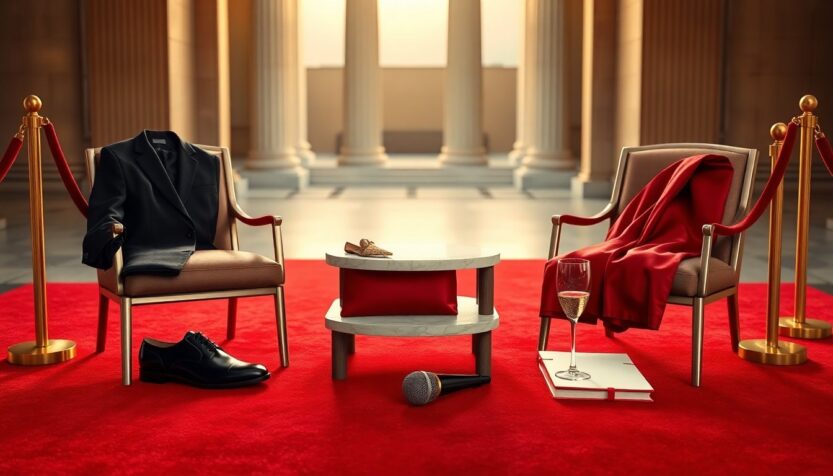
The White House Correspondents’ Dinner began as a private gathering for journalists and has steadily transformed into a public moment where fashion, media, and politics intersect. Originally founded in 1921, it has evolved in both tone and spectacle. Over decades the evening has alternated between a sober press function and a star-studded party; today it is often treated as a seasonal marker on the social calendar, with the red carpet serving as a shorthand for who is mingling at the crossroads of power and celebrity. Observers now scan arrivals not only for newsmakers but for stylistic cues they will replicate across social feeds.
Understanding that shift requires looking at both the event’s formal changes and the personalities who amplified its glamour. The dinner’s rules and rituals changed dramatically at key moments — for example, the all-male dining practice ended during the Kennedy administration, and the event’s comedic roast format became dominant in the 1980s. These institutional shifts created space for public figures and designers to use the platform as a visible stage. As a result, what once was an insiders’ dinner became, in fashion terms, an annual statement about the relationship between style and political image.
The institutional turning points
The trajectory of the White House Correspondents’ Dinner can be read through a few institutional pivots. When membership in the White House Correspondents’ Association opened up to women, change was formal; however, the dining practice itself remained exclusive until the Kennedy administration insisted on integration in 1962. Later, the shift in entertainment from speeches to stand-up and roast-style segments in the 1980s reshaped expectations, and by the early 21st century the event often included a high-profile comedian as an anchor for that tone. These procedural and programming choices directly influenced the event’s public persona, making it more attractive to Hollywood names and fashion houses seeking visibility during a politically charged evening.
Fashion chapters and defining moments
JFK Jr. and Carolyn Bessette Kennedy: a mood-board moment
Some photographs from the dinner have become enduring fashion references. One iconic pairing is JFK Jr. and Carolyn Bessette Kennedy, who were photographed at the dinner in 1999. Carolyn wore a Jean Paul Gaultier haute couture gown from that season’s spring collection, an outfit that continues to circulate as inspiration on style boards and feeds. That image helped cement the dinner’s reputation as an occasion where subtle, enduring taste could get as much attention as overt glamour. For many style watchers—especially younger audiences who view them as guides—this moment distilled the elegant, understated side of political sartorial culture.
The Obama years: celebrity crossover and haute couture
The presence of Barack and Michelle Obama signaled another evolution: the dinner began to resemble other celebrity-driven galas more regularly. Early in his presidency, Mrs. Obama appeared in a simple Michael Kors sheath in 2009, and by the end of their tenure she was wearing a Givenchy haute couture look in 2016. Those shifts in wardrobe paralleled the arrival of big-name entertainers and film stars on the guest list: from musicians and sitcom faces to established actresses and models. The event acquired a nickname—the so-called “nerd prom” shed its irony—and fashion lists started treating the dinner’s arrivals as legitimate runway moments.
The Trump era and the question of attendance
The tone changed again with the arrival of Donald Trump on the national political stage. While he and Melania had attended in years prior, his decision not to appear during his presidency and the absence of a roast-like comedic centerpiece shifted expectations. The 2011 roast of Mr. Trump, featuring jokes from Seth Meyers, is frequently cited in Washington lore as a moment of public humiliation that presaged later political developments. With reports suggesting a more limited Hollywood presence at dinners when he does attend, the mix of guests and entertainers has become a reflection of broader cultural alignments rather than a fixed formula; entertainment this year is reportedly provided by magician Oz Pearlman rather than a comedian.
What to watch now and why it matters
As the calendar brings the dinner close to other major fashion events like the Met Gala, observers will watch for visual contrasts: which designers appear, whether first ladies choose risk-taking ensembles, and whether A-list celebrities return in numbers. The presence or absence of certain guests signals more than taste; it reflects the alignment of entertainment industry figures with political leadership. Recent red carpets have included viral moments—couples’ debuts in 2026, artistic makeup in 2026, and notable couture choices in 2026—each illustrating the event’s ongoing role as a cultural mirror. Ultimately, the dinner will likely continue to alternate between an insiders’ roast and a public-facing fashion moment, with each edition offering fresh clues about how public image and style diplomacy intersect.