
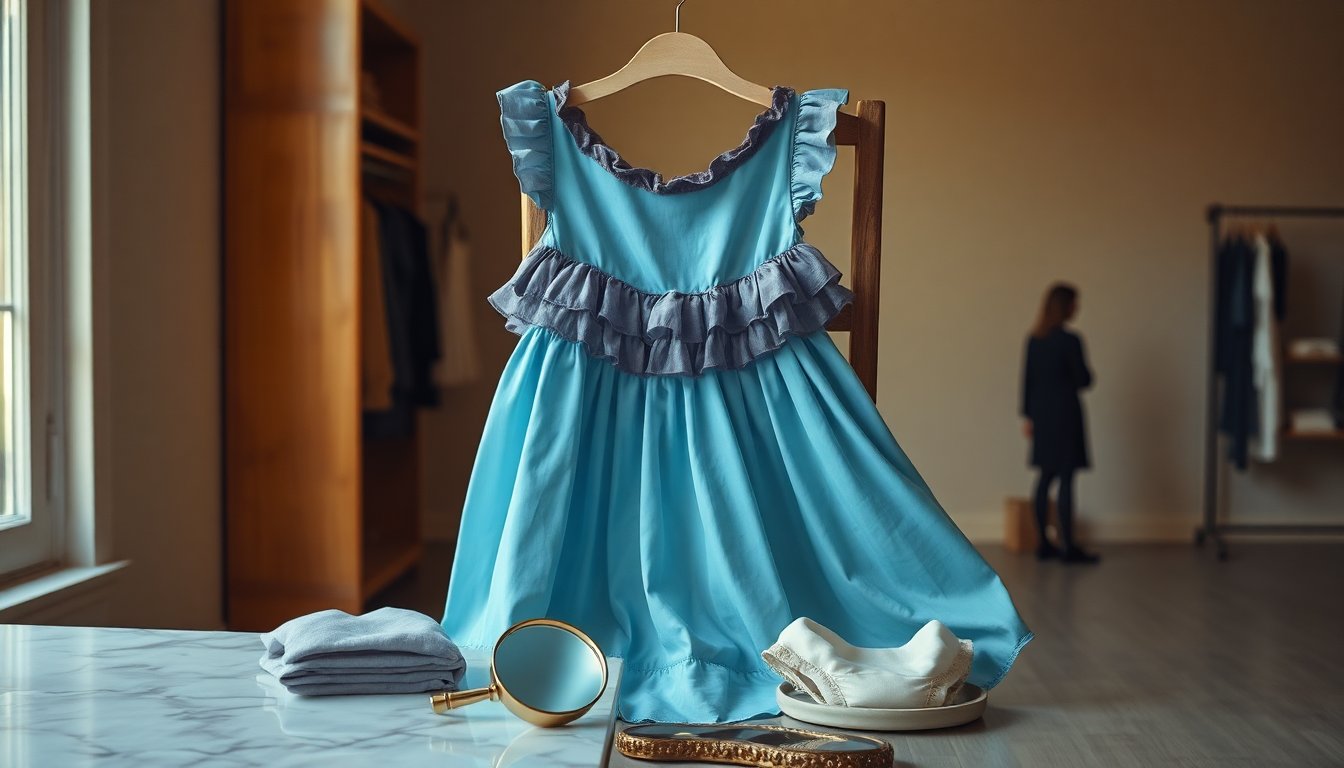
The release of “Drop Dead“ on April 17th, the lead single from the forthcoming album You Seem Pretty Sad for a Girl So in Love, reopened a familiar online argument: when is a cute outfit merely sartorial play, and when is it a signal to be suspicious? The discussion zeroed in on a particular garment — the babydoll dress — a short, ruffled silhouette in sky blue and mauve paired with silky bloomers in the video directed by Petra Collins. Many viewers read the styling as infantilizing or even provocative; others saw it as an aesthetic choice consistent with Rodrigo’s established wardrobe. The split reveals more about cultural habits of interpretation than about the clothes themselves.
To understand this moment you need context on both the artist and the creative team. Rodrigo has repeatedly expressed an affinity for the loose, youthful shapes associated with the babydoll look; she told British Vogue that her mood boards are full of such dresses and ’70s necklines. Collins, whose imagery often frames girlhood as dreamlike and self-authored, staged the video in the ornate rooms of Versailles, treating the palace as if it were a private bedroom. The result reads like a mood piece — soft light, nostalgic framing, and a deliberate emphasis on emotional texture rather than explicit suggestion.
The visual language and why it matters
When you watch the clip, the styling functions as atmosphere more than a statement of intent. The babydoll silhouette in this context operates as a shorthand for an early, suspended emotional state—first love, fantasy, and theatrical longing. Collins’s direction and Rodrigo’s lyricism create a cohesive aesthetic in which clothing contributes to tone. That matters because fashion rarely acts in isolation; garments are part of a larger visual argument. Labeling the ensemble as inherently sexual imposes a specific interpretive lens that flattens the video’s layers. It also shifts attention away from the creative choices and toward anxiety-driven readings of feminine attire.
A brief history of the silhouette
From nightgown to symbol
The babydoll dress did not begin as an eroticized costume. Originally a short nightgown in the 1940s, it migrated into mainstream wardrobes by the 1950s and was repurposed during the 1960s youthquake by figures like Twiggy and Mary Quant. Its airy lines echo older garments such as the robe à la lévite, connecting modern variations to longer historical threads of feminine dress. Across eras the shape carried a dual charge: surface-level innocence paired with a potential for subversion. Designers and performers have repeatedly reclaimed it, turning what some see as ‘childlike’ cues into tools for style-forward expression.
Why the backlash often misses the point
The current wave of scrutiny is shaped by very real and painful cultural reckonings — including the fallout of the Jeffrey Epstein case — that have made audiences hypervigilant about any signifier of youthful femininity. That vigilance is understandable and necessary when it targets systems that enable harm. But it also risks misdirecting attention, policing garments rather than confronting the structures that exploit people. When the conversation focuses on a hemline instead of the broader context, fashion exploration becomes restricted. This dynamic tends to punish aesthetics that recall adolescence, even when those aesthetics are used purposefully and without any exploitative intent.
Reclaiming softness as agency
In 2026 the return of the babydoll has more to do with artists and designers embracing a softer, emotionally candid vocabulary than with a desire to shock. Performers such as Ariana Grande, Sabrina Carpenter and Kacey Musgraves, along with designers from Chloé to Loewe and Valentino, have presented iterations that feel deliberate and contemporary. Calling these choices infantilizing erases the possibility that wearers are reclaiming the imagery of their youth as a form of authorship. Playfulness, after all, can be a deliberate political stance: a refusal to let every display of vulnerability be read as weakness or invitation.
Ultimately, the core question when someone wears a babydoll dress should not be whether the garment invites unwanted attention, but why we are so quick to apply that narrative. Clothes communicate the meanings we allow them to hold. Rodrigo’s styling in the “Drop Dead” video reads as wistful and self-directed rather than salacious. A more useful cultural response would examine where genuine threats to young people arise and preserve room for aesthetic experimentation. In short: let softness exist without immediate suspicion, and allow those who choose it to define it on their own terms.


