



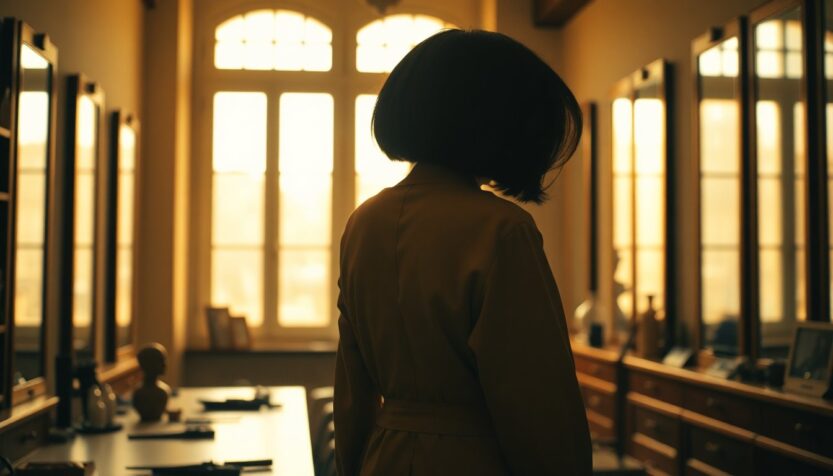
The moment Audrey Tautou appeared on screen in Jean-Pierre Jeunet’s Amélie, audiences noticed more than the character’s whimsy: they noticed her hair. Hairstylist John Nollet shaped a compact, deliberate bob that quickly read as part costume, part character trait. In an interview revisiting that work 25 years after its April 25, 2001 debut, Nollet explained how a simple haircut came to feel like an essential strand of Amélie Poulain’s identity. The cut was designed to be readable, immediate and unpretentious, a visible shorthand for the film’s tone and the heroine’s temperament. Nollet used the notion of coiffé-décoiffé to keep the style natural yet purposeful.
Director Jean-Pierre Jeunet initially imagined a ponytail, but Nollet pushed for short, dark hair that would not suggest a woman who primped at a mirror every morning. He argued that the character is outward-focused, someone who notices other people and small joys rather than obsessing over her own image. The resulting silhouette — a short cut with a small fringe and a clean, exposed nape — aimed to communicate spontaneity, freedom and a slightly bohemian spirit. Nollet framed the haircut as a mise-en-scène element: the visual signature that supported the film’s vocabulary without overwhelming it.
Design language: lines, movement and revelation
The choice of a pared-back shape was deliberate. Nollet crafted a cut with crisp contours that still allowed plenty of movement, giving the style an animated, youthful quality. By leaving the nape of the neck visible and keeping the fringe modest, the cut highlighted the face and allowed expressions to take the lead. This was not a static, sculptural bob; it was intended to read as lived-in and honest. The balance between structure and looseness produced an effect that was both modern and intimate, matching Amélie’s curious, mischievous gaze. The hairstyle served as a kind of narrative device, making the character’s approachability and directness physically legible.
Immediate impact and cultural ripple effects
When the film reached viewers, the haircut traveled fast from screen to street. Salons across France reported clients asking for the now-famous Amélie’s haircut, and the look spread into everyday life as a symbol of uncomplicated chic. For many, the style represented an accessible expression of individuality: a short, practical cut that still felt romantic and slightly rebellious. The haircut became a cultural touchstone, often cited as one of the most recognizable looks in modern French cinema. Nollet’s creation demonstrated how a hairstyle can move beyond aesthetics to become a social shorthand for attitude and lifestyle.
Behind the scenes: secrecy and strategic reveal
One of Nollet’s fondest memories from the production was the way the team kept the haircut hidden until filming began. Audrey Tautou was scheduled to attend the César Awards for her role in Vénus Beauté (Institut) just days before shooting Amélie, and Nollet wanted to preserve the surprise. The team used temporary highlights and styled her hair into a chignon for the ceremony so the short cut wouldn’t be publicized. Tautou won the César, and the transformation was revealed only when cameras rolled a few days later. That deliberate delay amplified the effect of the image and preserved the moment of discovery for audiences.
Why the reveal mattered
For Nollet, the first viewing of the completed character felt akin to a magician’s reveal: a carefully staged surprise that shapes an audience’s first impression. In both film and hairdressing, the power of a debut image is enormous; a single silhouette can frame an actor and a role for years. The reveal of Amélie’s haircut became part of the film’s mythology, a testament to how small, considered choices in styling contribute to storytelling. Nollet often compares that instant to a theatrical beat, where the audience’s reaction validates the creative gamble. The magic lies in how image and emotion lock together in memory.
Two and a half decades after the film’s release, Nollet’s bob is still referenced and imitated, proof that an elegantly simple idea can become timeless. The cut’s lasting appeal comes from its combination of clarity and ease: a hairstyle that reads instantly, supports the character, and remains adaptable in everyday life. In that sense, the Amélie bob is less a trend than a lesson in how restraint and intention can produce an enduring cultural marker.