
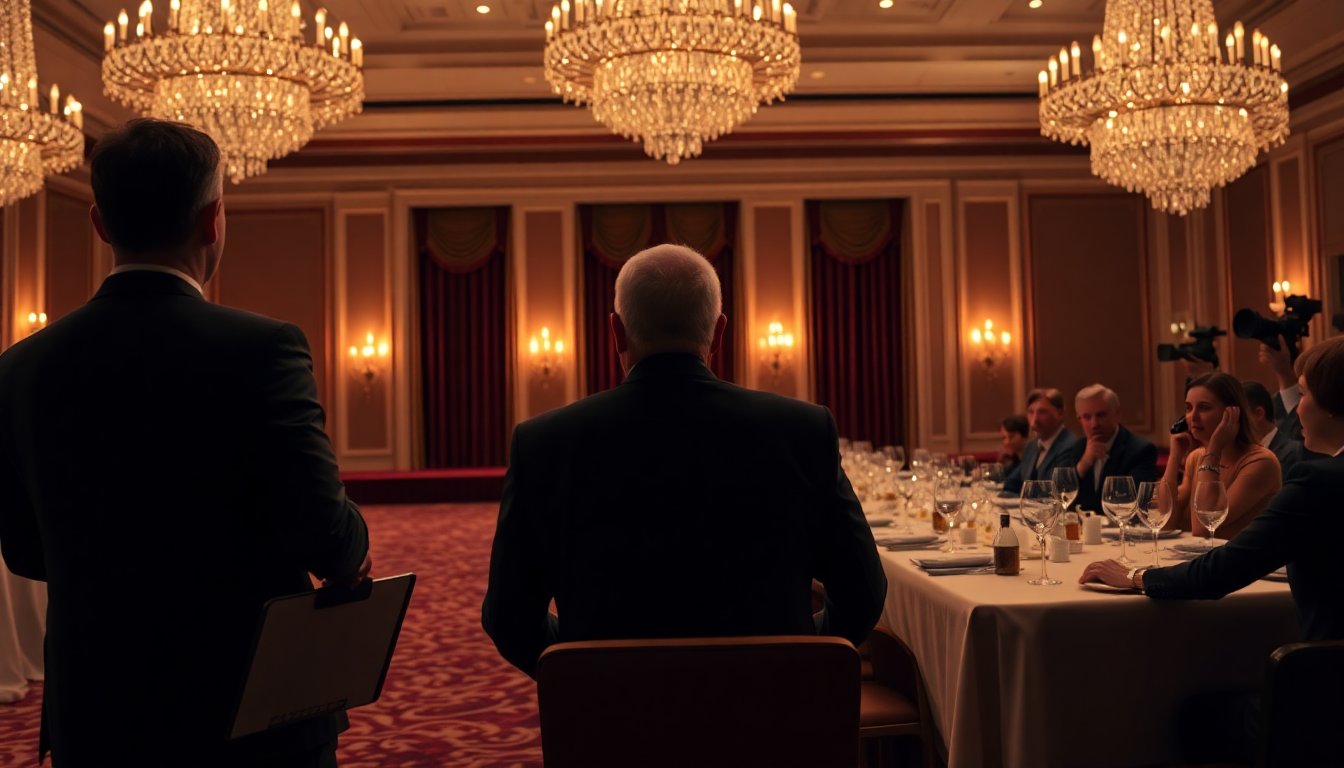
The evening began in the familiar rhythm of a high-profile press gala: a performer onstage, cameras trained on the dais, and diners mid-course. The featured entertainer, Oz Pearlman, was in the middle of a routine—writing a name on a notepad and preparing to reveal what he had guessed—when chaos erupted. Seated nearby were President Donald Trump and First Lady Melania Trump, watching as the trick approached its punchline: Pearlman had correctly guessed that White House press secretary Karoline Leavitt‘s unborn daughter would be called Vivian. The noise that followed, however, rapidly erased that intimate moment as agents from the Secret Service surged through the room.
What followed was a sudden, raw mixture of fear and logistical precision. Guests dropped beneath tables and scrambled for cover as officers in tactical gear advanced, some carrying long guns. The president was escorted offstage after a stumble; the scene gripped reporters, officials and staffers alike. The subterranean venue—the Washington Hilton, the same hotel where President Reagan was wounded in 1981—quickly became a secure perimeter and then an improvised newsroom as journalists dialed in coverage and officials conferred. Organizers ultimately called off the main event after confusing, urgent minutes that left attendees shuttling between shock and duty.
Afterparties and the decision to continue
Across town, the usual constellation of receptions and branded gatherings faced a question of tone and safety. Hosts of high-profile events—ranging from cable news outlets to magazines—convened in restaurants and private rooms even as sirens cut through the city. Some gatherings opted to press on: a network’s reception repurposed itself as a space for friends and colleagues to be together, replacing its advertised revelry with quieter consolation while still keeping a DJ and drink service. At one party a tequila cart continued to circulate and a staffer tapped the tops of bottles in a percussive flourish, an odd, nervous beat under conversation. Notable absences of diplomats and cabinet officials contrasted with the few who stayed, such as Congressman Maxwell Frost, who moved between receptions in sunglasses and a tuxedo.
Security response and the suspect
Inside the Hilton, law-enforcement protocols were enacted almost instantly. The Secret Service and allied officers formed a cordon and evacuated protected persons; witnesses later described the sound of impacts and shouted commands. Authorities recovered a long gun and shell casings near the scene and took a man into custody who was later identified by officials as Cole Tomas Allen. A law-enforcement member was reported to have been struck in a bullet-resistant vest but is expected to recover. In short order, the White House grounds and local law-enforcement agencies coordinated interviews and evidence collection while the dinner’s organizers began dismantling settings and the presidential lectern. Officials said charges would follow as the investigation continued.
Fox reception and notable attendees
Earlier in the evening, a separate reception hosted by a major network had filled a cluster of adjoining suites in the hotel basement with pundits and aides. The gathering drew an unusually high number of officials from the administration, creating a portrait of congeniality across political divides: Stephen Miller ordered a drink at the bar while his wife, Katie Miller, mingled nearby; Brendan Carr and Lachlan Murdoch circulated around the room. The atmosphere had been intended as a mild détente—a chance for partisan figures to share toast and small talk—but it, too, was cut short by the security emergency that rippled through the building.
How the night reveals a new normal
The juxtaposition of alarm and the resumption of social activity exposed a broader cultural pattern: public violence is increasingly processed as an interruption rather than an ending. Reporters, hosts and guests quickly shifted from shock to coverage, phones in hand, producing live dispatches even as they regrouped. Some partygoers framed continuation as defiance—”we can’t let bad actors cancel our evenings”—while others moved between whispered conversations and the pragmatic task of getting home. This dual response—fear mingled with the resumption of rituals—underscored how the capital’s media and social circuits absorb high-stakes incidents and carry on.
By the night’s close, the White House Correspondents’ Association announced plans to reconvene another time, and federal investigators urged anyone with information to come forward. Meanwhile, in restaurants and salons around the city, dinner plates were cleared and playlists resumed, the same rooms that had watched footage on phones just hours earlier now populated with smaller clusters trading updates and, grudgingly, jokes. The evening at the Washington Hilton was a reminder of how quickly ceremony can shift to crisis and back again, and of how security, performance and the press intersect in the capital’s most public nights.


