



Rachel Hochhauser has taken a familiar story and turned it inside out. Lady Tremaine retells Cinderella from the point of view always relegated to the wings: the stepmother. By shifting the camera, Hochhauser doesn’t simply offer a fresh origin story—she interrogates the social pressures, economic imperatives, and maternal burdens that shape a woman’s choices. The result is a novel that has readers and critics arguing about whether it will be one of the year’s most talked-about books.
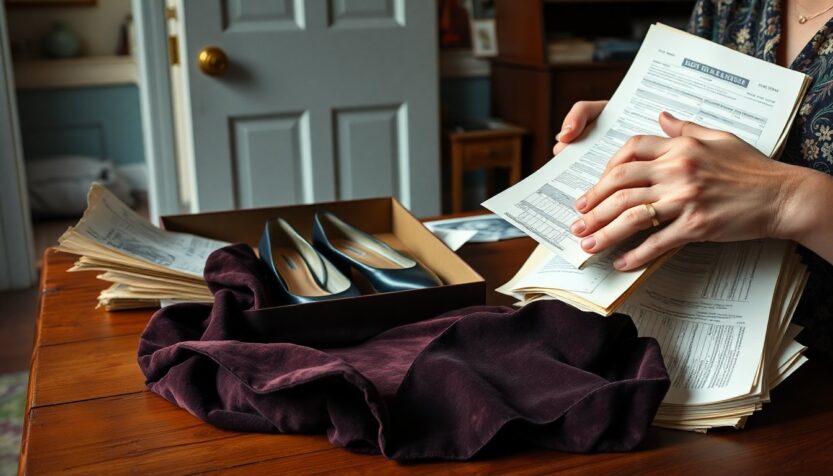
At its center is a middle-aged, twice-widowed woman who once clawed her way out of poverty and obscurity. Now, with household finances strained and two daughters’ futures at stake, she treats marriage not as romance but as strategy. Hochhauser writes intimate scenes of ledgers, dinner preparations and whispered negotiations alongside sharper observations about status and survival. The combination makes the story feel both personal and larger—a private life exposed as a response to public pressures.
Why this retelling matters
Retellings that change vantage point do more than refresh a plot; they reshape how we remember cultural stories. By making Lady Tremaine the protagonist, Hochhauser forces readers to reckon with the forces—class, gender, and precarity—that often get flattened into a villain label. The novel asks us to look past mythic shorthand and trace how institutions and scarcity steer decisions that might otherwise be read only as cruelty.
Hochhauser’s approach reframes culpability. Rather than insisting the stepmother is purely evil or wholly excused, the narrative presents a messy overlap of motive and constraint. We see a woman who exercises agency—sometimes coldly, sometimes compassionately—within narrow options. That ambiguity is the book’s engine: it invites empathy without removing moral responsibility.
Sympathy without absolution
The novel’s strength lies in its refusal to simplify. Domestic detail—household ledgers, the small humiliations of failing social capital, the logistics of raising daughters in a precarious economy—builds a believable context for otherwise harsh choices. Hochhauser renders those quotidian pressures with precision, so the reader understands how limited options can breed desperate tactics.
Still, the story stops short of absolution. Actions have consequences here, and the narrative holds them up without turning the protagonist into a cartoon villain or a sanctified victim. Instead, it asks a harder question: how do we weigh personal responsibility against structural coercion? That tension keeps the moral ground unsettled and makes the book a rich site for discussion rather than a neat moral lesson.
Plot and emotional core
This is not a plot driven by bombshell revelations but by a steady accretion of small compromises that grow into larger harms. Early chapters chart the pressures that narrow choices—marriage as economic lifeline, the daily calculations of household management, the social expectations that punish failure. Midway, reversals force characters to live with unintended consequences. The climax reframes blame without erasing it, leaving readers with a tangled sense of accountability that lingers after the last page.
Lady Tremaine as strategist
Hochhauser portrays her protagonist as a strategist of survival. The stepmother’s maneuvers—cultivating alliances, arranging matches, managing appearances—read less like melodrama and more like a sober calculus in a brittle world. Quiet domestic scenes alternate with furtive acts of social engineering, producing a portrait of resourcefulness bounded by scarcity. It’s a study in how power looks when it’s exercised from a position of constraint.
Setting and social dynamics
The world of the novel functions almost as a character in its own right. The household, the nearby streets, the drawing rooms and backstairs gossip map a fragile economy of reputation and access. Small commodities—an invitation, a ledger entry, a favor returned—ripple outward, changing prospects for survival. Hochhauser’s attention to these microdynamics makes clear how quickly social standing can slip and how marriage, for many women of that era, was less about love than about security.
Reception and cultural conversation
Critics and readers have gravitated toward the novel’s restraint and moral complexity. Many praise its emotional density and its success at embedding a once-dismissed antagonist in a wider social logic. Others wonder whether humanizing a villain blurs moral lines too much. That debate is exactly the point: the book thrives in contested space, prompting more questions than it answers and fueling book-club arguments, think pieces, and online threads.
At its center is a middle-aged, twice-widowed woman who once clawed her way out of poverty and obscurity. Now, with household finances strained and two daughters’ futures at stake, she treats marriage not as romance but as strategy. Hochhauser writes intimate scenes of ledgers, dinner preparations and whispered negotiations alongside sharper observations about status and survival. The combination makes the story feel both personal and larger—a private life exposed as a response to public pressures.0
At its center is a middle-aged, twice-widowed woman who once clawed her way out of poverty and obscurity. Now, with household finances strained and two daughters’ futures at stake, she treats marriage not as romance but as strategy. Hochhauser writes intimate scenes of ledgers, dinner preparations and whispered negotiations alongside sharper observations about status and survival. The combination makes the story feel both personal and larger—a private life exposed as a response to public pressures.1
At its center is a middle-aged, twice-widowed woman who once clawed her way out of poverty and obscurity. Now, with household finances strained and two daughters’ futures at stake, she treats marriage not as romance but as strategy. Hochhauser writes intimate scenes of ledgers, dinner preparations and whispered negotiations alongside sharper observations about status and survival. The combination makes the story feel both personal and larger—a private life exposed as a response to public pressures.2
At its center is a middle-aged, twice-widowed woman who once clawed her way out of poverty and obscurity. Now, with household finances strained and two daughters’ futures at stake, she treats marriage not as romance but as strategy. Hochhauser writes intimate scenes of ledgers, dinner preparations and whispered negotiations alongside sharper observations about status and survival. The combination makes the story feel both personal and larger—a private life exposed as a response to public pressures.3
At its center is a middle-aged, twice-widowed woman who once clawed her way out of poverty and obscurity. Now, with household finances strained and two daughters’ futures at stake, she treats marriage not as romance but as strategy. Hochhauser writes intimate scenes of ledgers, dinner preparations and whispered negotiations alongside sharper observations about status and survival. The combination makes the story feel both personal and larger—a private life exposed as a response to public pressures.4