
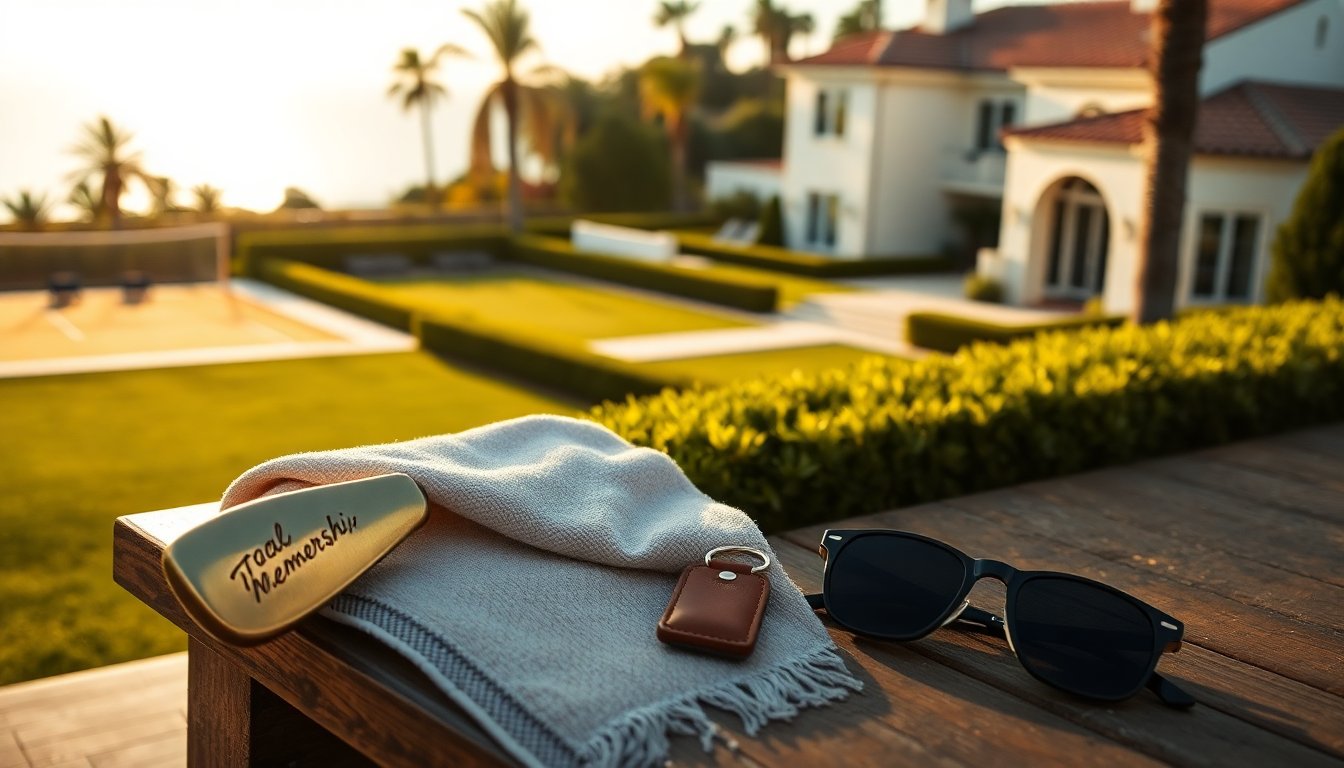
The second installment of Beef trades the valley streets of season one for manicured lawns, seaside mansions and an international detour. If you watched the season and wondered whether the sun-drenched country club and its surrounding properties were real, the answer is yes — the production stitched together several authentic Southern California sites to create the fictional Monte Vista Point Country Club. Production choices deliberately mixed locations to evoke a very specific social world: exclusive leisure, visible wealth and the friction that comes with both.
Behind those glossy exteriors is a creative team that leaned on on-location research and design to shape a consistent visual identity. The showrunner’s curiosity about private clubs inspired the central setting, while the production designer leaned into a summer palette of greens and warm yellows to suggest an endless vacation vibe. The result is a composite place you can actually visit in pieces — from tennis courts and golf fairways to great lawns and clubhouses — each filmed at distinct real-life venues.
Monte Vista Point Country Club: how the fictional club was built
The producers created the sense of a single, sprawling club by shooting different parts of the compound at separate venues. For outdoor athletics like the courts and the golf fairways, production used the facilities of the Spanish Hills Club in Camarillo; for sweeping lawns, terraces and the clubhouse exteriors they turned to the Montecito Club near Santa Barbara. This patchwork approach — common in film and TV location work — relies on careful continuity and an eye for matching materials, colors and sightlines so that disparate sites read as one unified property on screen. The design team emphasized natural topography and late-day light to sell the idea of a coastal country-club retreat.
Spanish Hills Club and Montecito Club: the practical split
In practice, the split was functional: pick a venue for its strengths and stage scenes there. The Spanish Hills Club supplied tennis courts and rolling fairways that doubled for Monte Vista Point’s athletic spaces, while the Montecito Club offered picture-perfect lawns, Spanish-style architecture and terrace shots that establish the club’s social core. By combining both, the show achieves the look of a single, sprawling estate without relying on only one location. The method is a reminder of what a location scout does: identify, adapt and weave real places into a seamless fictional geography.
Homes, eateries and the international detour
Beyond the club, the series places its characters in distinct domestic and public settings so viewers can map class and aspiration through architecture and interiors. The couple whose marriage is fraying is filmed in a rustic, partially renovated house that represents an Ojai-style life, but the actual property is located in Calabasas. Their uneasy nest plays as a metaphor for stalled plans and emotional clutter. Meanwhile, the younger couple’s apartment scenes were mainly staged in studio interiors, with establishing exteriors shot in Newhall to convey renter life and thrifted personalization. These choices help the camera tell who the characters are before a line of dialogue does.
Other scenic stand-ins: mansions, restaurants and Seoul
Several high-profile residences and public spots doubled for the lives of the wealthy: Chairwoman Park’s ultramodern California home and other opulent properties were filmed around Malibu, including hillside estates chosen for their architecture and ocean views. A ski-chalet sequence that reads as Park City, Utah, was actually shot at an estate in Thousand Oaks, underscoring how productions can mimic travel without leaving the region. For smaller, intimate scenes, the show used a real Chinese restaurant in Tarzana called Garden Wok to stand in for an on-screen lunch spot. And when characters do travel to Korea, those sequences were filmed on location at the Conrad Hotel in Seoul’s Yeongdeungpo District, lending authenticity to the overseas storyline instead of faking it on soundstages.
Other notable spots include a scenic retreat filmed in the rolling canyons of Agoura Hills that serves as a rival boutique resort, street-level scenes shot on the Spanish-arched shopping strip of Ojai Avenue, and multiple Malibu properties used for the wealthier characters’ homes. Together, these locations create a believable circuit of leisure and aspiration that grounds the season’s social conflicts in recognizably real places.
For viewers who want to follow the locations: many of the sites used for filming welcome visitors in normal circumstances, though private clubs and some estates may restrict access. If you plan to seek out the spots, respect property rules and check for public hours at restaurants and parks. Whether you’re curious about the tennis courts, the cliffside lawns or the Seoul hotel lobby, the season’s geography shows how a few well-chosen real places can be stitched into a convincing fictional world — the kind that stays with you long after the credits roll.


