
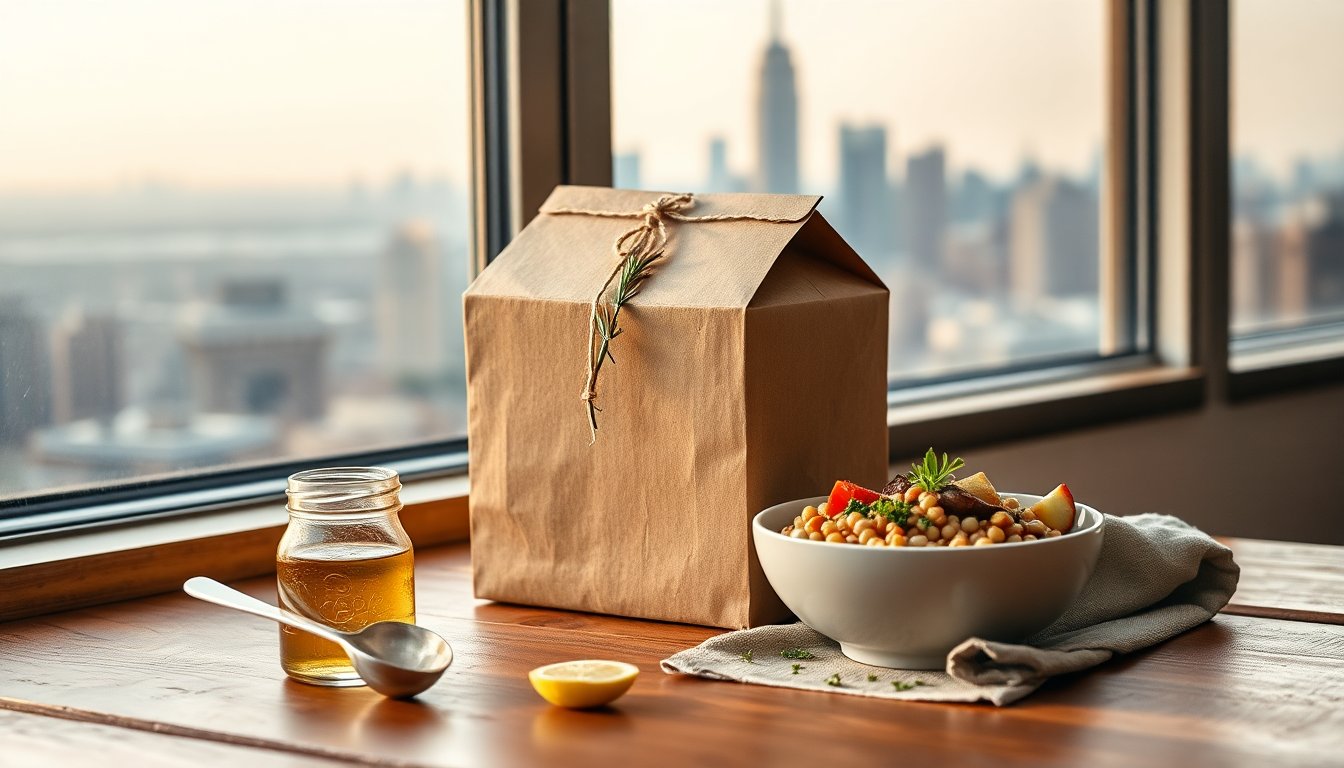
The arrival of Goop Kitchen in New York marks a notable moment for fans of curated, health-forward takeout. What began as a lifestyle newsletter by Gwyneth Paltrow has evolved into a multi-platform brand and, since 2026, a food business that built its reputation on a combination of accessible comfort dishes and intentionally sourced ingredients. The New York rollout begins with a delivery-only opening in Midtown West on April 20, and the plan includes multiple locations across the boroughs through spring, summer, and into the fall.
At its core, Goop Kitchen sells an idea as much as it sells meals: a version of clean eating that emphasizes whole ingredients, limited preservatives and refined sugars, and minimal gluten and dairy. The menu mixes familiar items — think pizza and bowls — with more wellness-leaning offerings such as bone broths and vegetable-centric plates. Early tasters and company executives alike suggest the expansion will test whether that balance can scale in a city where delivery expectations and pizza standards run high.
From lifestyle newsletter to delivery kitchens
The trajectory of Goop is a lesson in brand evolution: starting as a newsletter and growing into skincare, fashion, entertainment, and now a fast-casual food concept. In the culinary side of the business, Goop Kitchen launched in Los Angeles in 2026, operating primarily through delivery and ghost kitchens. The team later added the Bay Area to its footprint. Leadership has emphasized that the company remains a brand-and-product operation while pushing to make clean eating approachable to more diners, not only the wellness-obsessed.
What the menu looks and tastes like
New Yorkers will recognize several signature items: the Brentwood Chinese chicken salad, the teriyaki bowl, and a gluten-free pizza that has already attracted attention on the West Coast. Menu development received an industry nod when Michelin-trained chef Kim Floresca joined the team to refine recipes and sourcing. The offerings aim to be both nourishing and craveable, pairing vegetable-forward plates with dishes that evoke comfort classics — all prepared without preservatives and with limited refined sugars.
Taste highlights from an early sampling
Early tasters described the Brentwood Chinese chicken salad as unexpectedly moving, praising the freshness of the avocado and the bright carrot-ginger dressing. The teriyaki bowl was noted for its almost caramelized chicken, while the miso salmon bento presented thoughtful components like a jammy egg and edamame-cucumber salad, despite a slightly small salmon portion. The gluten-free pepperoni pizza features a crispy, thin crust that downplays chewiness in favor of a lighter bite. Desserts landed unevenly: fudgy brownies and coconut-chocolate chip cookies were office favorites, while a blueberry-lemon layer cake missed the mark for several tasters.
Business model, growth and what to watch in New York
Operationally, Goop Kitchen leans on a delivery-first model with plans to adapt storefronts for pickup and limited seating in denser neighborhoods. CEO Donald Moore has described the company as expanding beyond California into Flatiron, the Upper West Side, and the Upper East Side in 2026, aiming to serve most of Manhattan and parts of Brooklyn by fall. The company reported significant scaling: revenue grew 60% year over year in 2026 as reported in 2026, and management says the business doubled in size the following year with growth approaching 100% annually.
Market positioning and promotional strategy
Goop’s approach combines brand storytelling with operations: out-of-home advertising and social campaigns under a “Made for New York” banner feature Gwyneth Paltrow alongside New York figures like Jonquel Jones and Jovani Furlan. The company intends to experiment with pickup options better suited to Midtown foot traffic and to pilot a hybrid format called “in real life”, where roughly 80% of orders are delivery and a small sit-down component exists. Expansion beyond New York is already eyed, with South Florida mentioned as the next market test.
The big unknown is demand elasticity: can a wellness-branded delivery chain maintain desirability and profitability when fast-casual dining faces price sensitivity? Competitors and regional tastes will be formidable, especially when New York’s pizza culture is used as a litmus test. Still, for fans of intentionally sourced takeout, the arrival of Goop Kitchen offers a new option that marries celebrity-driven branding with a menu built to straddle health and indulgence.


