



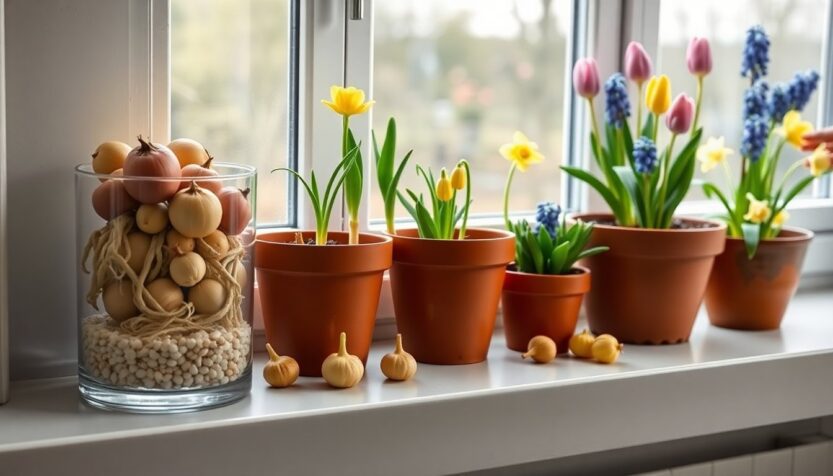
Bring spring indoors by forcing bulbs—an easy, satisfying trick that turns dormant bulbs into a living bouquet weeks before the garden wakes. By giving bulbs a simulated winter followed by gentle warmth and light, you can coax tulips, daffodils, hyacinths, crocuses and grape hyacinths into bloom on your kitchen windowsill. The essentials are simple: healthy bulbs, a pot with good drainage, a free‑draining potting mix and a reliably cool place for the chilly phase.
What to gather and how to plan
Select firm, plump bulbs. Bigger bulbs (think tulips and hyacinths) create height and drama; smaller ones (crocus, muscari) form charming edges. Mixing sizes and bloom times builds a layered, garden‑in‑miniature effect. Choose containers with drainage holes: deeper pots let you cluster bulbs tightly for a bold clump, while shallow, widely spaced planting gives a cleaner, architectural look. Plant each bulb at a depth roughly two or three times its height and leave two to three bulb diameters between them so roots can develop without shoots crowding one another. Use a light, free‑draining soilless mix, firm the soil gently, water once to settle it, then let the surface dry slightly before chilling.
Think visually as you plant
Arrange taller varieties toward the center or back of the pot (or the side facing the wall), and keep shorter bulbs toward the front. For tulips, position the flattened side of the bulb facing outward so the flowers open in a graceful arc. If you want blooms to appear one after another, plant early‑season types a touch shallower and later bloomers a bit deeper—this gives you a natural progression of color and height.
The chill that triggers blooms
Most hardy spring bulbs need around 12–15 weeks of steady cold—about 35–45°F (2–7°C)—to break dormancy and form flower buds. A consistent chill is the single most crucial step: skimping on it can mean floppy stems, few blooms, or none at all.
Where to provide that cold
A spare refrigerator works well—wrap bulbs loosely in slightly damp peat or a paper towel and keep them away from fruit to avoid exposure to ethylene gas. If you don’t have a fridge to spare, a cool garage, cellar or unheated shed can do the job, provided temperatures remain steady in the recommended range. In climates where the ground reliably freezes, you can sink pots into the soil and mulch over them or use a cold frame in milder winters.
Care during the chill
Keep the bulbs in the dark and avoid watering until green shoots appear. Check bulbs occasionally for firmness; discard any that soften or show mold. Dry, cool conditions are what you’re aiming for—think refrigerator crisper rather than wet storage.
Bringing bulbs back to life
Introduce pots gradually to light and warmth instead of moving them straight from cold to bright sun. A slow transition reduces shock and helps stems grow sturdy. When shoots reach a few centimetres high, move the pots to a bright spot out of harsh midday sun. Keep the potting mix evenly moist but never waterlogged—poke a finger into the top 2 cm and water only when that layer feels slightly dry.
Nurturing strong stems and blooms
Bright, indirect light is kinder than blazing sun. Once leaves appear, a balanced, low‑nitrogen fertiliser will support firm stems without promoting lush, floppy foliage. Deadhead spent flowers to divert energy back into the bulb for next time.
Stretching the show
Stagger your planting dates or layer bulbs by depth in the same container—early varieties near the surface, mid‑season a little deeper, late bloomers at the bottom—to enjoy weeks of color. Label pots with the variety and the chill start date; small notes make it easy to repeat successes and tweak what didn’t work.
After the flowers fade
Remove the spent blooms but let the foliage yellow and wither naturally. The leaves feed the bulb and rebuild its energy reserves. If you want to reuse the bulbs outdoors, plant them in the garden and give them a couple of seasons to recover—some bulbs need a break after indoor forcing before they’ll perform well again.
What to gather and how to plan
Select firm, plump bulbs. Bigger bulbs (think tulips and hyacinths) create height and drama; smaller ones (crocus, muscari) form charming edges. Mixing sizes and bloom times builds a layered, garden‑in‑miniature effect. Choose containers with drainage holes: deeper pots let you cluster bulbs tightly for a bold clump, while shallow, widely spaced planting gives a cleaner, architectural look. Plant each bulb at a depth roughly two or three times its height and leave two to three bulb diameters between them so roots can develop without shoots crowding one another. Use a light, free‑draining soilless mix, firm the soil gently, water once to settle it, then let the surface dry slightly before chilling.0