
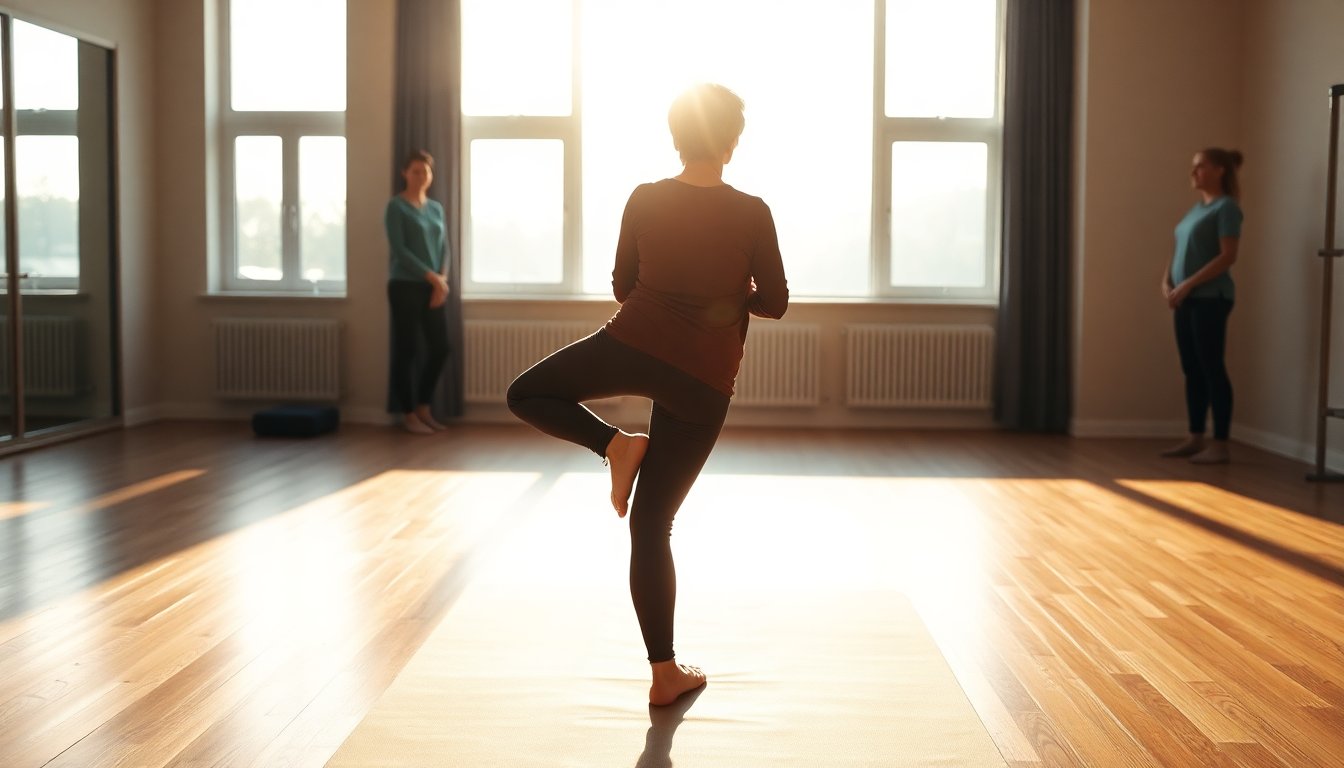
The ability to stand steadily affects more than just confidence on stairs; it is a window into overall health. Recent reporting highlights that people who cannot hold a single-leg stance for 10 seconds face a higher likelihood of death from any cause over the next decade according to a study published in the British Journal (published: 26/04/2026 21:36). That stark statistic reframes balance as a vital sign rather than a luxury. This article explains how Pilates targets the systems that underpin stability and offers practical guidance for adults seeking to prevent falls and maintain independence.
Why balance matters after 50
Balance is an interplay of muscles, joints, nerves and the brain. As we age, declines in vision, lower-limb strength and reaction time can reduce functional steadiness. Researchers use simple checks such as the single-leg stance — standing on one foot — to gauge risk. The link between failing that 10-second benchmark and later mortality suggests balance deficits are markers of wider physiological vulnerability. By treating balance as a measurable component of health, clinicians and individuals can take targeted steps. Regular practice that improves postural control and mobility helps lower the odds of falls and the complications that follow, making proactive exercise a practical form of prevention.
How pilates improves balance
Core strength and alignment
Many people picture Pilates as gentle stretching, but its emphasis on precise, controlled movement serves a deeper purpose: it trains the trunk and hip stabilizers that directly support upright posture. Strengthening the core — including the deep abdominal muscles and the pelvic floor — improves how forces pass through the body during walking and turning. This reduces wobble and distributes load more evenly across joints. In Pilates practice, exercises focus on alignment, breath coordination and repeated, intentional contractions that enhance neuromuscular efficiency. Over weeks, these changes translate into steadier standing, more controlled stepping and improved performance on functional balance tests.
Proprioception and controlled movement
Beyond strength, balance depends on proprioception, the internal sense of where the body is in space. Pilates uses slow, mindful transitions and single-leg variations that sharpen sensory feedback from muscles and joints. Exercises such as controlled leg lifts, standing balance flows and gentle weight shifts challenge the body’s automatic responses without high impact. Practicing these patterns improves timing and coordination, which are critical when recovering from a stumble. Emphasizing controlled movement also teaches safer strategies for everyday tasks — for example, turning to reach for a cup or navigating uneven sidewalks — reducing the likelihood of a fall in the first place.
Practical pilates routine and safety tips
For adults over 50, a sensible approach combines consistency with adaptation. Begin with two to three Pilates sessions per week of thirty to forty minutes, focusing on exercises that promote balance, hip stability and ankle mobility. Simple progressions include seated core activations, standing single-leg reaches, and slow tandem walking practice. Use props like a chair or wall for support when learning new movements. If pain or dizziness occurs, stop and consult a healthcare professional. Many instructors offer classes tailored to older adults; look for teachers who emphasize modifications and fall-prevention principles.
Small, regular improvements compound: increasing single-leg hold time, improving gait confidence and reducing fear of falling. Track progress with the single-leg stance test and functional tasks such as sit-to-stand or timed walking. Combining Pilates with aerobic activity and strength work for the lower limbs creates a comprehensive strategy to prevent falls and protect long-term health. By treating balance as a trainable skill rather than an inevitable decline, adults can preserve mobility and independence well into later years.


