

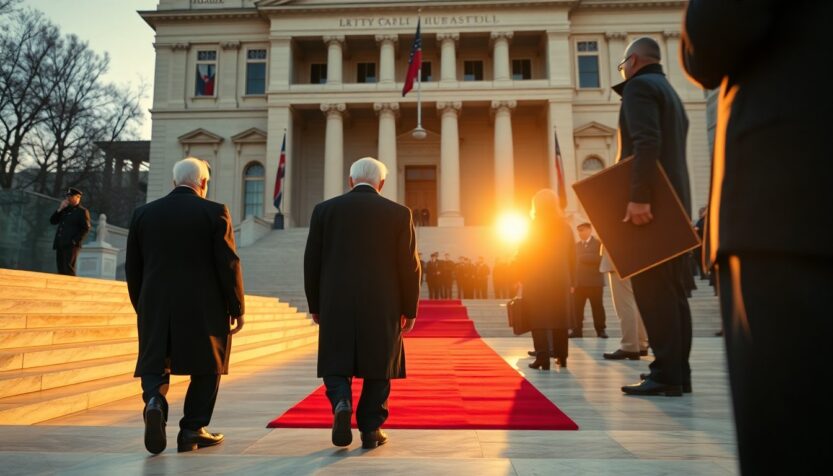
The British sovereign King charles and Queen Camilla have arrived in the United States to undertake a tightly scheduled, four-day state visit. The trip, hosted by President Donald Trump and the First Lady Melania Trump, includes stops in Washington, D.C., New York and Virginia and coincides with events marking the nation’s semiquincentennial celebrations. A state visit is a formal diplomatic invitation extended to a head of state; in this instance it is intended to highlight both longstanding historical ties and current bilateral cooperation.
Arrival ceremonies at Joint Base Andrews set a formal tone: military honors, national anthems and a red-carpet welcome reflected the visit’s ceremonial weight. This engagement is the first full state visit by a British monarch to the United States since 2007, and comes after King Charles’s coronation in 2026. Throughout the programme, the royal couple will move between public commemorations, private bilateral talks and cultural events designed to balance protocol and outreach.
Washington: ceremony, meetings and symbolic gestures
In the U.S. capital, the agenda centers on both hospitality and high-profile ceremonial moments. The royals will attend a private afternoon tea at the White House, tour recent additions to the grounds such as the new White House beehive installation, and later participate in a garden party at the British ambassador’s residence — a gathering that recalls a rare tradition last held in Washington in 1939. Key elements of state ceremonial life are planned, including a formal military review and a 21-gun salute that mark the visit’s diplomatic formality.
Address to Congress and the evening state dinner
A central feature of the trip is the address to Congress, when the King will speak to both houses — an occurrence that echoes Queen Elizabeth II’s speech in 1991 and underscores the visit’s historical resonance. That same day, the royals will be guests of honor at a white-tie state dinner, where formal speeches and gift exchanges will punctuate the evening. These moments combine personal diplomacy with public pageantry and are designed to reinforce the tone of alliance between the two countries.
New York: remembrance, culture and civic encounters
Leaving Washington, the couple will travel to New York to pay respects at the 9/11 Memorial, meet first responders and families affected by the 2001 attacks, and attend events tied to business and the arts. The King is expected to join community gatherings and meetings with civic leaders, while the Queen will participate in a literary engagement celebrating a beloved children’s character. A reception for the creative industries will showcase cultural exchange and attract figures from film, publishing and other sectors.
Public tributes and community meetings
The 9/11 Memorial visit will be a solemn, high-profile moment intended to acknowledge shared loss and solidarity. Alongside memorial activities, the itinerary includes meetings with community groups, business leaders and cultural organisations — a mix intended to display both empathy and a mutual commitment to social and economic ties between the United Kingdom and the United States.
Virginia and wider outreach: conservation, heritage and celebration
The final day of the programme shifts toward regional outreach and grassroots celebration. In Virginia the King will visit a national park and meet Indigenous leaders involved in environmental stewardship, reflecting his longstanding interest in conservation. The couple will also join an “America at 250” block party celebrating the country’s 250th anniversary, and attend commemorative events at Arlington that honour military ties between the two nations. These engagements emphasize cultural connection and public diplomacy beyond the capital.
Following the United States visit, the King is slated to travel to Bermuda in his capacity as head of state of that territory. Throughout the week, organizers have balanced ceremonial protocol, security contingencies and outreach priorities as the visit proceeds. Buckingham Palace and U.S. officials have stated the programme will continue as planned despite recent security concerns, and the royal couple has expressed gratitude to those working behind the scenes to ensure the visit runs smoothly.
Diplomacy, public perception and what the visit symbolizes
Observers note that while the monarch must refrain from party politics, the trip provides a platform for soft power and the projection of the monarchy’s role as a statesman on the international stage. The King cannot take sides in contemporary political disputes, but through ceremonial leadership, cultural engagements and symbolic gestures he can influence public sentiment and reinforce diplomatic bonds. At the same time, the itinerary avoids contentious private meetings with certain family members and has declined proposed encounters related to sensitive legal matters, choices that reflect both legal prudence and reputational considerations.
Overall, the four-day visit is structured to blend formal ritual, public commemoration and cultural exchange, articulating a message of continuity in the Anglo-American relationship while observing the constraints and opportunities of modern royal diplomacy. The schedule’s mix of ceremony, remembrance and community engagement aims to leave a multifaceted impression across Washington, New York and Virginia.