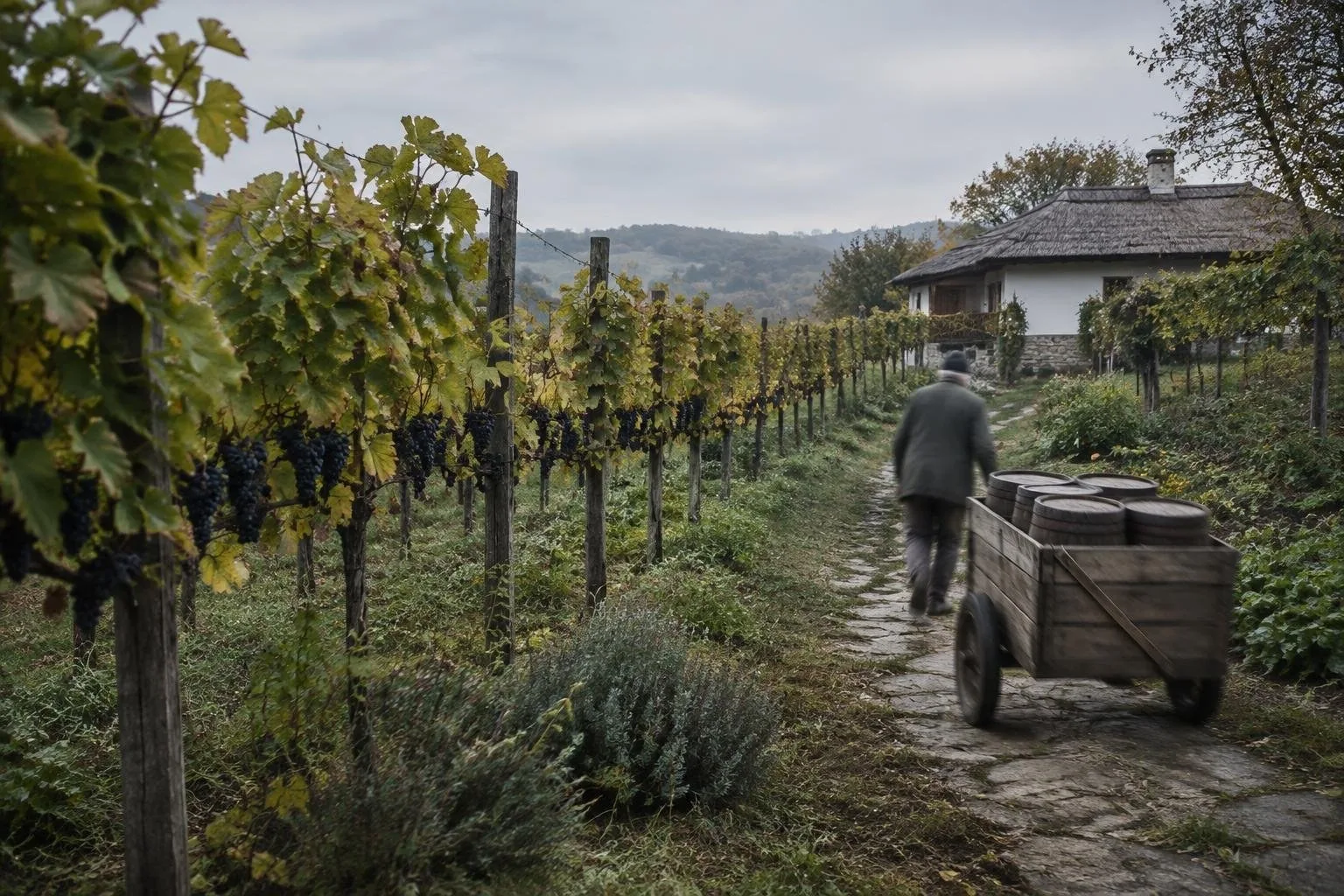
When we settled in a quiet Bulgarian village, the sight of grapevines winding through our garden felt like an invitation. Both of us adore a glass of red, so the idea of crafting our own seemed inevitable. The prospect reminded us of the long-running sitcom that celebrated youthful enthusiasm at any age, and we approached the project with the same buoyant spirit.
Local shops stocked everything needed for a modest wine-making venture, from fermenting buckets to a sugar thermometer. The community’s familiarity with home-produced drinks made the purchase easy, and soon we were surrounded by tools that promised a new hobby for our retirement years.
Harvesting and Preparing the Grapes
Our first challenge was stripping the fruit of its woody stems. The process proved painstaking; each bunch required careful handling to avoid bruising. We learned that leaving a thin sliver of stem can contribute tannins, the bitter compounds that give wine structure, but excess stem material sends the flavour into bitterness. The balance is delicate, and the lesson was clear: precision matters even in a backyard batch.
After cleaning, the grapes were transferred to large buckets where we monitored sugar levels with the thermometer. This step, essential for estimating alcohol potential, felt technical yet exciting. The daily routine of stirring the mash turned the garden into a makeshift winery, and the anticipation built as the mixture began to ferment, a natural process where yeast converts sugars into alcohol and carbon dioxide.
Fermentation, Bottling, and the Unexpected Result
Once the initial activity subsided, we moved the liquid into a demijohn, a glass container that allowed the brew to breathe while keeping out contaminants. For days the vessel bubbled gently on the kitchen counter, a visual reminder that something was happening inside. When the time finally arrived to sample, the aroma hinted at fruit, but the taste revealed a sharp, vinegary edge.
The final product proved to be red wine vinegar rather than the hoped-for plum-rich wine. Though disappointing, the outcome taught us that home production is as much about trial and error as it is about tradition. The vinegar, while not the celebrated drink we imagined, stands as a tangible record of our effort.
What the Experience Taught Me About Aging, Community, and Simpler Times
Retirement can leave a quiet space once filled by work, yet the village’s emphasis on self-sufficiency offered endless tasks to fill that void. Making wine, despite its failure, gave us a shared project, a reason to learn together, and a story we now laugh about over meals. The experience echoed the sitcom’s message: age does not forbid us from stumbling, and those stumbles become part of a richer narrative.
Our new friends in the village, despite language differences and varied backgrounds, have shown that friendship does not require fluent conversation. A smile, a helping hand, and shared laughter bridge any gap. Next time we attempt the craft, a local will likely guide us, sparing another batch of vinegar.
Living among cobblestone streets, occasional horse-drawn carts, and shops where owners pause for a chat feels like stepping back into a slower era. The sense of security and community, where doors stay unlocked and strangers greet each other, fuels a nostalgic longing for a pace of life that modern technology often erodes. Our YouTube channel, named Escape to a Simpler Place and Time, captures that sentiment.
While we may try winemaking again, the lesson remains clear: the value lies not in perfection but in the journey, the connections forged, and the gentle reminder that ordinary moments still hold extraordinary meaning.