In the last few years, the notion of a luxury getaway has mutated into something more akin to a personal health retreat. Travelers board private jets not only to unwind, but to hand over their sleep scores, heart-rate data and even glucose readings to experts who promise a measurable reset. This pivot is being championed by brands such as Aman Resorts, which recently announced a partnership with tennis legend Novak Djokovic and a suite of on-site health laboratories.
Aman’s medical-grade vacation model
At Aman’s latest property, guests can schedule a full blood panel, hormone profiling and metabolic assessment before setting foot on the resort. The data, collected in a purpose-built lab, is interpreted by physicians who then tailor nutrition, movement and recovery protocols for the stay. Djokovic’s involvement adds credibility: the champion, who famously tracks his own biometric data, lends his name to a signature “Peak Performance” package that blends sports-science insights with traditional spa therapies. The offering goes beyond a massage; it includes sleep-architecture analysis, vitamin D optimization and personalized supplementation, all delivered in a setting that still feels unmistakably luxurious.
Data-driven programming across elite resorts
Other high-end hideaways are following suit. At The Leela Coorg Forest Sanctuary, roughly half of the wellness clientele arrive equipped with Oura rings, smartwatch sleep logs or continuous glucose monitors. Staff use these metrics to design custom itineraries that may feature Ayurvedic consultations, cold-water immersion or guided breathwork. ELE|NA’s senior vice-president notes that the shift from “spa add-on” to “booking reason” has sparked a 12 % rise in per-guest spend since 2023-24. Likewise, Sun Siyam Resorts reports that guests who pre-book a structured week—often including a multi-day detox, stress-reduction workshops and nutritional coaching—stay twice as long as those who simply request a massage.
Wearable-enabled precision
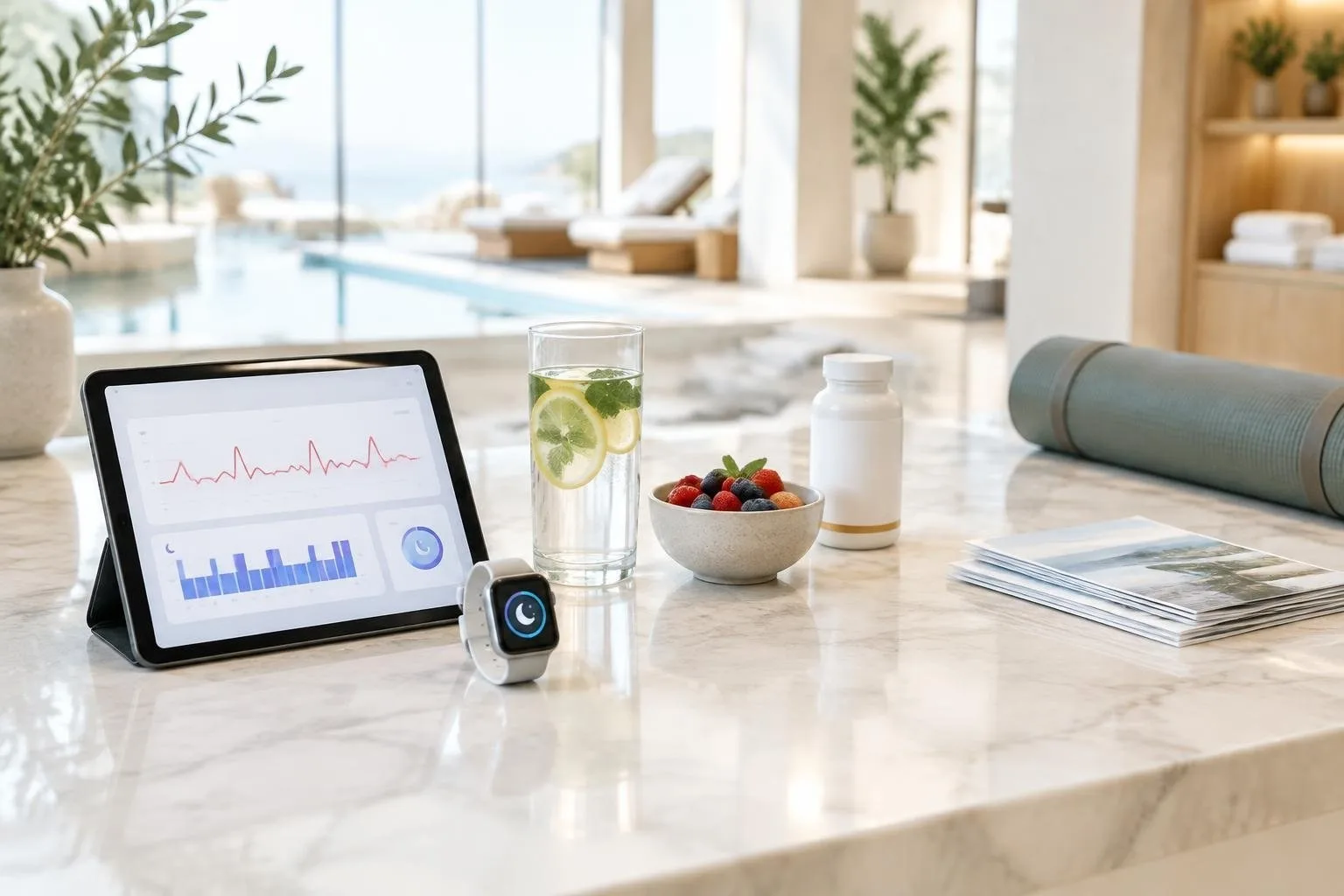
Across these properties, the most common data points are sleep efficiency, heart-rate variability and daily energy expenditure. The numbers are not treated in isolation; clinicians pair them with a thorough interview to gauge how the guest actually feels. As one resort manager explains, “Data alone does not always translate into better health—context matters.” Consequently, many destinations now run on-site screenings that complement guest-provided wearables, ensuring a holistic view of wellbeing.
From one-night escapes to multi-week transformations
Sleep has emerged as the primary luxury commodity. Approximately 60 % of program participants cite fatigue or poor sleep as their chief objective. To address this, resorts adopt a “nervous-system-first” philosophy, integrating breathwork, somatic movement and ocean-front meditation to coax The Body into restorative states. Longer stays—four nights at Sun Siyam, up to fourteen days for Panchakarma at Ayurbay—give guests the time needed for lifestyle adjustments to stick. Shorter weekend getaways, meanwhile, serve as a “reset button,” offering a concentrated dose of relaxation and education.
Aftercare and continuity
Even after the checkout, many programs provide virtual follow-ups, diet guidance and brief daily reset rituals. Sun Siyam notes that 10 % of guests continue with remote check-ins, while 20-30 % elect to return for deeper, multi-phase treatments. This post-stay engagement underscores an industry-wide recognition that true transformation requires ongoing support, not a single weekend.
While the integration of clinical testing into hospitality raises eyebrows, a consensus is forming: the most successful resorts treat medical expertise and lavish service as complementary forces. When executed thoughtfully, a guest can leave feeling both *scientifically optimized* and *pampered*, proving that the future of luxury travel is as much about measurable health outcomes as it is about indulgent experiences.