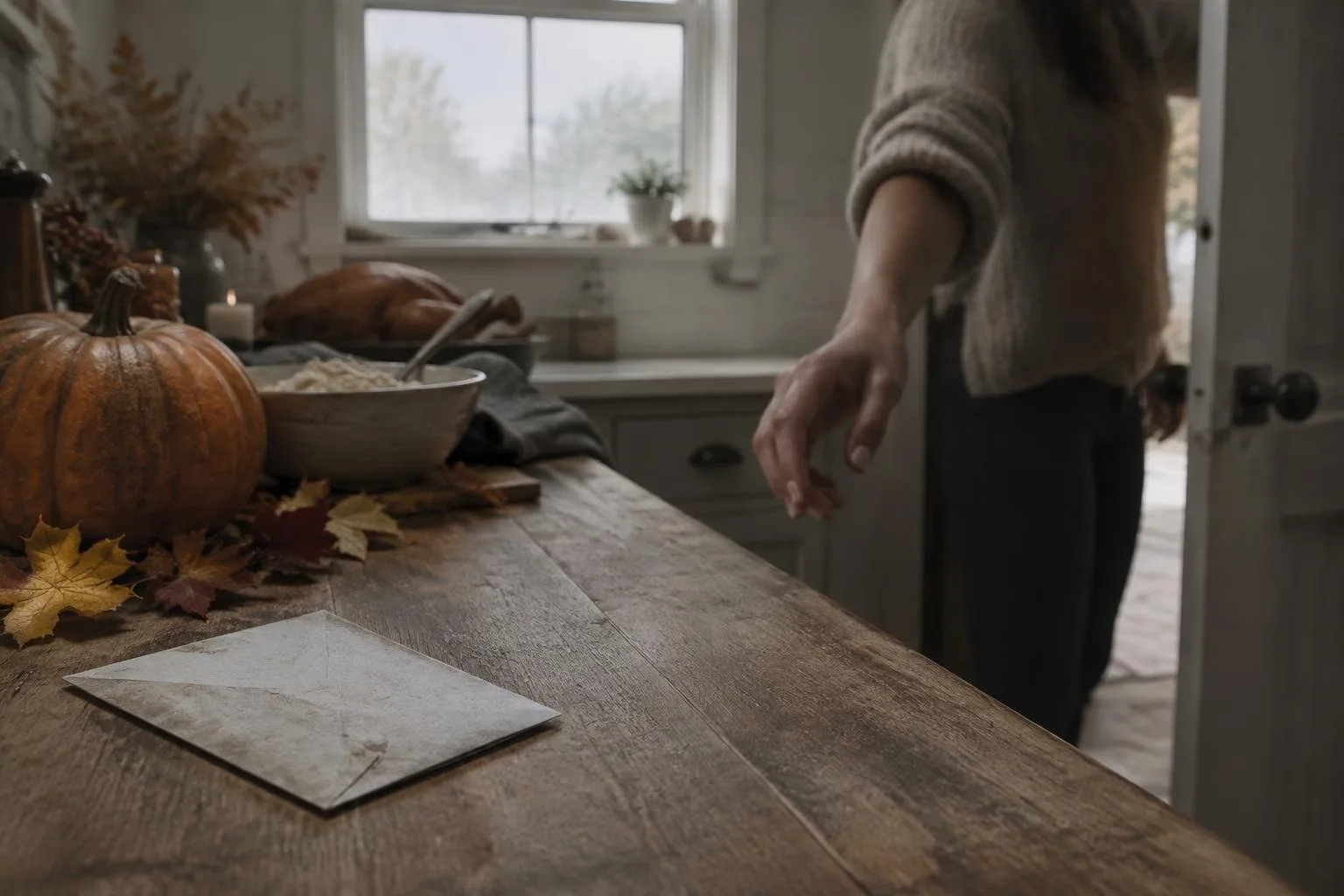
The first invitation arrived in early October, and it said a lot about the friends who sent it. One friend texted to say that because my daughters would not be with me this year, I was welcome to join her family for Thanksgiving dinner. She loves to cook, so she told me I only needed to bring myself. A week later, another friend asked me to join her family for the pre-Thanksgiving Turkey Trot in our town, where they dress up as poultry every year. A third invitation came from a newer acquaintance, who offered dessert and a few hours of football on Thanksgiving Day.
My situation is simple. One of my daughters is traveling to spend the holiday with her fiancé’s family, and the other is spending it with her dad. Real life has a way of reshaping the holiday calendar, and in this case nobody needs me to run the feast. That leaves me with an open Thursday in late November, several kind offers, and the task of deciding how I want to spend the day: alone, or at someone else’s table.
Three invitations, one very full day
The ambitious plan is to accept all three. I could run the Turkey Trot in the morning, eat an early dinner at one house, and then settle in for dessert and football at another. I have already started thinking about the wardrobe this would require: workout clothes for the race, festive attire for the midday meal, and team gear for the evening. Then there are the hostess gifts and the handwritten thank-you notes. With that schedule, I would almost certainly spend Black Friday on the couch, recovering.
Still, the invitations mean a great deal to me. Being welcomed into my friends’ traditions tells me that the friendships I have built over the years are real, and that people noticed I would be alone and did something about it. There is also something odd about arriving at another family’s holiday. Everyone would be gracious, and I would be glad to be there. Yet I would be a guest watching someone else’s traditions unfold, and that would make me a little sad about not having my own family’s rituals to share.
The case for staying home with soup
The other option has been sitting in the back of my mind for several weeks. I could stay home with a bowl of tomato soup, a grilled cheese made with good bread and too much butter, and a movie marathon that starts after lunch and ends whenever I fall asleep. Love Actually and The Holiday rank at the top of my list of holiday favorites, and watching them in my coziest pajamas feels like the right way to start the season.
The appeal is obvious. There is no driving across town, no polite effort to finish a family favorite that may be an acquired taste, and no wondering whether it would be rude to leave at halftime if your team is losing. After decades of making the holiday happen for everyone else, there is real freedom in letting it happen without me.
I am honest enough to admit that I do not know how I would feel by evening. Staying home could feel wonderful at two in the afternoon and lonely by six, when I start picturing everyone gathered around a table. Or it might not. I can picture both versions of the afternoon equally well, which is probably why I have not answered anyone yet.
What I learned from a small Friendsgiving
My favorite holiday memory involves a Friendsgiving that my husband and I hosted in our tiny house in Atlanta. We had no dining room. We could barely fit a foldout table in the living room, and one guest sat in an office chair because we ran out of seating. Still, having our friends in our home, however cramped, made me proud. As a young adult hosting my first holiday, I felt pressure to get everything right. I planned the menu for weeks, shopped well in advance, and spent days cooking. I also enjoyed the freedom to make the meal my own, so I skipped some traditional family dishes, tried showy magazine desserts, and bought linens and dishes for a table I had imagined. I knew I could not match the scale of my Grandma’s gatherings, but I wanted the event to reflect my own taste.
Hosting a Friendsgiving also taught me that the work does not have to fall on one person. Friends who do not enjoy cooking can bring drinks or snacks, while someone who loves trying new recipes can take on the main course. The key is being honest about how much time and money each person has, and then shaping the gathering around the group. Asking guests to bring a dish already cooked saves the oven for the turkey, and sending everyone home with Tupperware makes sure the leftovers get eaten.
So my decision is not really about a turkey or a race. It is about whether I want to spend the day as a guest or as the one who makes the plan. I have not answered my friends yet, but I suspect that whichever choice I make, the holiday will look different from the ones I remember, and I will be the one deciding how it takes shape.