



How wearable remote monitoring is reshaping chronic care
Wearable remote monitoring is moving from pilot projects into routine clinical use. Clinical trials show that continuous at-home sensing can detect early deterioration, guide therapy adjustments, and reduce hospitalizations for selected chronic conditions.
Who is affected? Patients with heart failure, chronic obstructive pulmonary disease, diabetes, and other long-term conditions are the primary beneficiaries. What changes? Continuous physiologic measurements enable earlier intervention and more tailored treatment plans. Where is this occurring? Adoption is expanding across outpatient clinics and integrated health systems in multiple countries.
From the patient perspective, continuous monitoring can reduce uncertainty and support self-management. According to the scientific literature, remote data can inform medication titration and prompt timely escalation of care when predefined thresholds are crossed. The data real-world evidenc e highlights improvements in care continuity and reductions in unplanned admissions for selected cohorts.
Ethical and operational challenges remain. Data privacy, algorithmic transparency, and equitable access are central concerns. Peer-review evidence underscores the need for validated algorithms and prospective clinical validation before widescale deployment. Health systems must also address reimbursement, clinician workflow integration, and patient digital literacy.
Implications for clinicians and policymakers are clear. Evidence-based implementation requires standardized outcome measures, interoperable data platforms, and trials that include diverse populations. From a regulatory standpoint, ongoing collaboration between industry, regulators, and academic investigators is necessary to align safety and effectiveness standards.
Looking ahead, hybrid care models that combine remote monitoring with targeted in-person visits are likely to become the standard for many chronic conditions. Clinical trials show that such approaches can improve outcomes when supported by clear clinical pathways and robust data governance.
1. The unmet clinical need
Chronic conditions such as heart failure, chronic obstructive pulmonary disease and diabetes drive the bulk of long-term morbidity and health-care use. From the patient’s perspective, episodic clinic encounters miss early physiological changes that herald decompensation. Real-world delays in recognition and treatment frequently result in avoidable hospital admissions.
Clinical trials show that continuous home-based monitoring can detect early deterioration when it is still reversible. Peer-reviewed studies indicate that timely alerts tied to clear care pathways reduce readmissions and emergency visits. These findings depend on sustained clinical workflows and strong data governance.
The clinical requirement is specific: access to continuous, actionable measures of relevant biomarkers that clinicians can interpret and act upon promptly. From the point of view of the patient, this means fewer crisis visits and more care delivered proactively at home.
For health systems, remote biomarker monitoring promises to shift resources from acute care to prevention. The evidence base supports implementation, but success hinges on interoperable platforms, validated algorithms and equitable access for diverse patient populations.
2. The technological solution: wearables and remote monitoring platforms
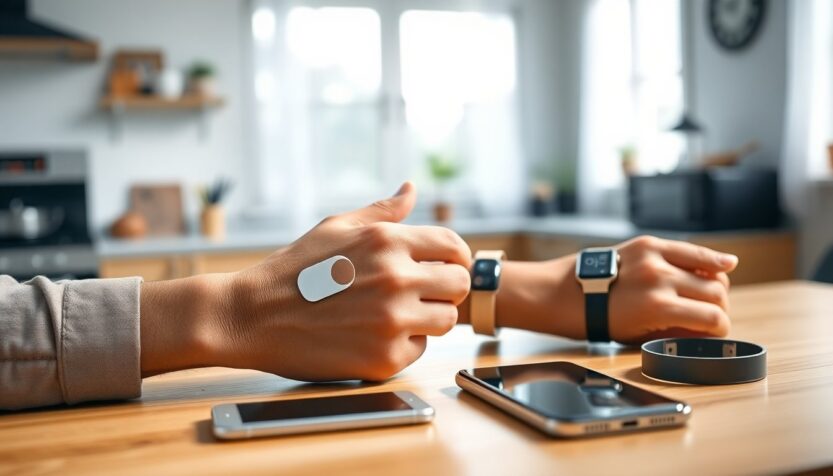
Wearable sensors—including patches, wristbands and smart garments—pair with smartphone-linked platforms to capture physiological signals. They record heart rate variability, respiratory rate, activity, continuous glucose and other digital biomarkers.
Devices stream data to cloud analytics and to clinical workflows. Integrated systems deliver alerts, trend reports and decision support to clinicians and care teams. From the patient’s perspective, remote monitoring can reduce in-person visits and enable earlier, personalized interventions.
Clinical trials show that remote monitoring yields measurable benefits in selected chronic conditions, while real-world data highlight variability across populations and settings. Implementation success depends on interoperable platforms, validated algorithms and equitable access for diverse patient groups.
Operational requirements include secure integration with electronic health records, clear clinical escalation pathways and prospective validation against clinical endpoints. Ethical considerations cover data protection, algorithmic transparency and strategies to prevent digital exclusion.
From the health-system perspective, scalable deployment requires standardized data formats, regulatory alignment and clinician training. For patients, evidence-based device selection and support for digital literacy are essential to realize the potential of continuous remote monitoring.
3. Evidence from peer-reviewed studies
Clinical trials show that randomized and observational research supports benefits of remote monitoring in selected patient groups. Trials and systematic reviews published in journals such as Nature Medicine, NEJM and Lancet Digital Health report reductions in heart failure readmissions when implantable or wearable monitors prompt timely therapy adjustments. PubMed-indexed cohort studies document improved glycemic control when continuous glucose monitoring is combined with telehealth coaching for insulin-treated patients.
According to the scientific literature, effectiveness varies across settings. Device accuracy, algorithm performance, user adherence and the clinical pathway that responds to alerts are key determinants of impact. Meta-analyses highlight substantial heterogeneity in outcomes when these factors differ between trials.
Real-world data evidence from large registries points to operational challenges that can erode trial-level benefits. Signal drift, false positives and variable clinician engagement recur in registry reports and observational datasets. From the patient perspective, digital literacy, access to follow-up care and clear escalation protocols determine whether monitoring translates into better outcomes.
For health systems, evidence-based device selection and integration of validated algorithms into care pathways are essential. Clinical trial data encourage targeted deployment in high-risk populations, while real-world studies urge ongoing post-market surveillance and workflow redesign. Future research should prioritize pragmatic clinical trials and registry-linked evaluations to align regulatory approval with routine practice and patient-centred benefits.
4. implications for patients and health systems
Clinical trials show that properly deployed remote monitoring can increase patient safety, preserve autonomy and improve quality of life by enabling timelier, personalized interventions. From the patient perspective, continuous monitoring also raises legitimate concerns about privacy, data ownership and the psychological effects of persistent health feedback. Patients may experience increased anxiety from frequent alerts, unequal access to devices, or unclear pathways to contest data use.
For health systems, remote monitoring offers potential gains in resource allocation and reduced acute admissions if programs are evidence-based and well integrated. Operationalizing these systems requires investments in interoperable IT, validated algorithms, clinician training and measures to ensure equitable device access. Implementation should define clear clinical thresholds for action, integrate alerts into existing care pathways and monitor for alarm fatigue to protect clinician capacity and patient safety.
Evidence-based deployment demands prospectively collected outcome measures and registry-linked evaluations to assess real-world effectiveness and equity. From the perspective of clinicians and payers, prioritizing pragmatic clinical trials and continuous post-deployment surveillance will align regulatory approval with routine practice and measurable, patient-centred benefits.
5. ethical and regulatory considerations
Clinical trials show that ethical safeguards are essential when digital monitoring moves into routine care. From the patient perspective, consent must be informed, specific and ongoing.
Informed consent for continuous data collection should detail what data are collected, how long they are stored and who can access them. Patients must retain easy avenues to withdraw consent without care disruption.
Algorithmic transparency requires clear descriptions of model inputs, outputs and limitations. According to the scientific literature, explainable models and accessible documentation reduce harm and support clinical trust.
Equitable access must guide deployment. Systems should be validated across demographic groups and socioeconomic contexts to avoid amplifying existing disparities.
Regulatory agencies such as FDA and EMA have issued guidance on software as a medical device and on the use of real-world evidence. Compliance with these frameworks and peer-review validation of algorithms are necessary to protect patients.
Post-deployment surveillance must be continuous and structured. Real-world performance monitoring, adverse-event reporting and mechanisms for timely model updates align approval with measurable, patient-centred benefits.
From an ethical standpoint, governance should combine technical auditability, clinical oversight and patient representation. The evidence-based approach supports both safety and equitable value for health systems and patients.
6. future perspectives and research needs
The next phase of research must prioritize large, prospective studies that measure outcomes that matter to patients. Who benefits, by how much and at what cost are the central questions. Clinical trials show that multi-site pragmatic trials and robust real-world evidence protocols are essential to move remote monitoring from innovation to routine care.
What is needed first are adequately powered randomized and pragmatic trials that report hospitalization, mortality and quality of life. External validation of digital biomarkers across populations and device types remains a critical gap. Cost-effectiveness analyses in varied health systems will determine scalability and reimbursement viability.
Why governance matters: federated learning and other privacy-preserving methods can mitigate data-sharing barriers. Improved interoperability with electronic health records will support clinician workflows and reduce implementation friction. From the patient perspective, transparency about data use and clear consent processes will be decisive for uptake.
According to the literature, combining clinical trials with coordinated real-world studies provides complementary evidence. Peer-review remains the benchmark: technologies should be adopted only when trials and observational research collectively demonstrate net clinical value and ethical deployment.
For patients and health systems, the immediate implication is cautious, evidence-driven adoption. The priority should be measurable benefit to patients, equitable access and protection of patient data. The most impactful developments will tie validated digital biomarkers to clinical decision pathways and reimbursement policies.
Looking ahead, investment in multi-disciplinary consortia and standardized evaluation frameworks will accelerate progress. The expected development is a gradual shift from pilot projects to integrated services once clinical and economic value are proven.
References and suggested reading
The expected development is a gradual shift from pilot projects to integrated services once clinical and economic value are proven. For readers seeking primary evidence and implementation guidance, prioritize systematic reviews and original research published in peer-reviewed journals such as NEJM, Nature Medicine and Lancet Digital Health. Regulatory guidance from the FDA and the EMA remains essential for compliance and deployment. Clinical trials and pragmatic studies indexed on PubMed provide the best source of real-world evidence on outcomes that matter to patients.
Clinical trials show that meta-analyses and phase 3 reports are particularly useful for assessing effectiveness across populations. From the patient perspective, implementation studies and pragmatic trials detail usability, adherence and workflow impacts on care teams. The literature emphasizes peer-reviewed evidence, transparent methodology and measurable clinical endpoints when evaluating remote monitoring interventions.
Keywords: wearable sensors, remote monitoring, digital biomarkers